The idea was to make a short trip to Paris by bus at the end of November 2023. Calculated time of departure 9.30 hours, which became 9.50 hours.
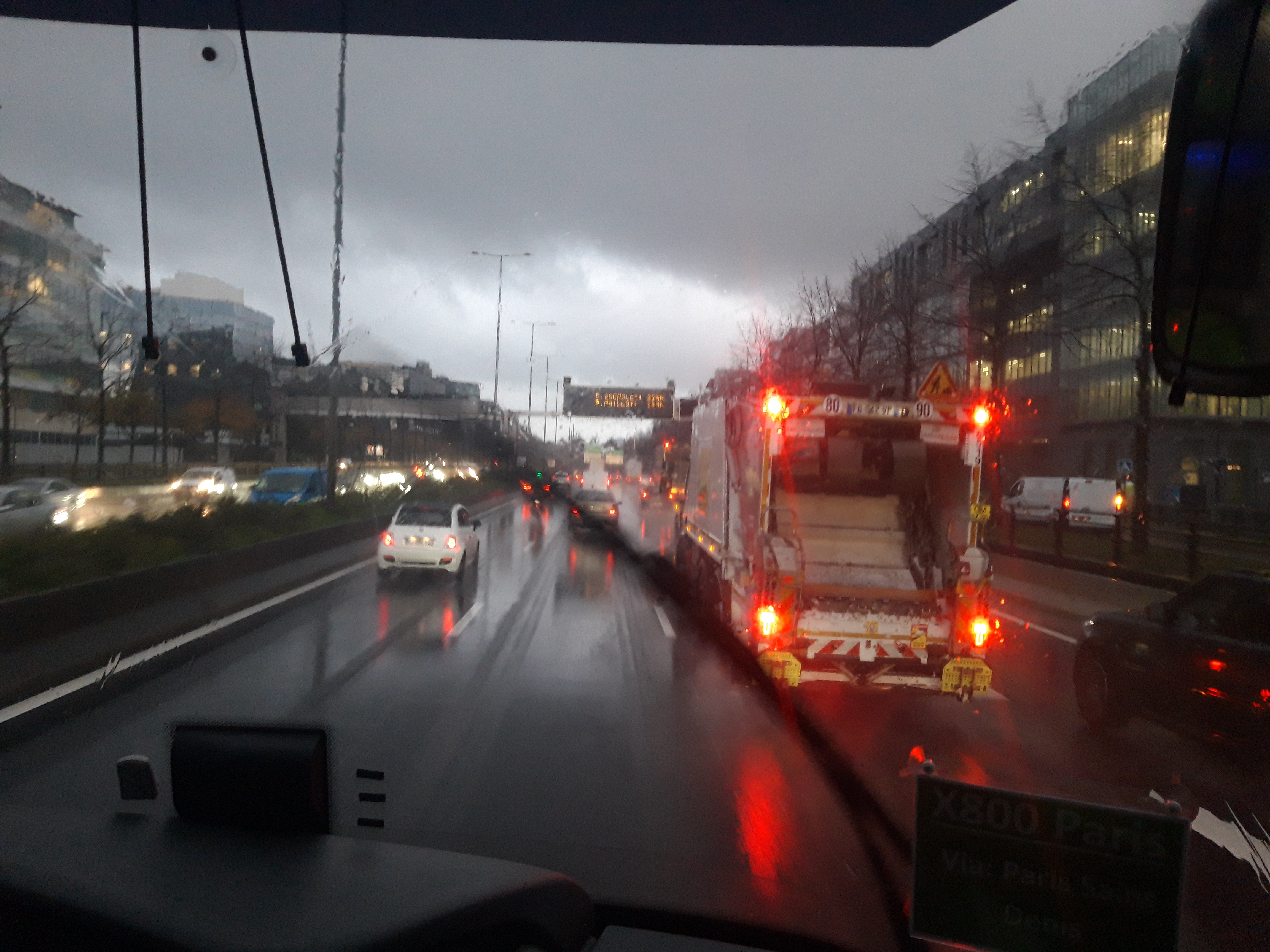
This seems like a dull road trip, at 2 hours 30 minutes on the way, N BelgiumA17 in N France, 4 hours on the wayAbout 4 hours and one minute on the way, now in N FranceHigh way in N France, 5 hours and a minute on the way
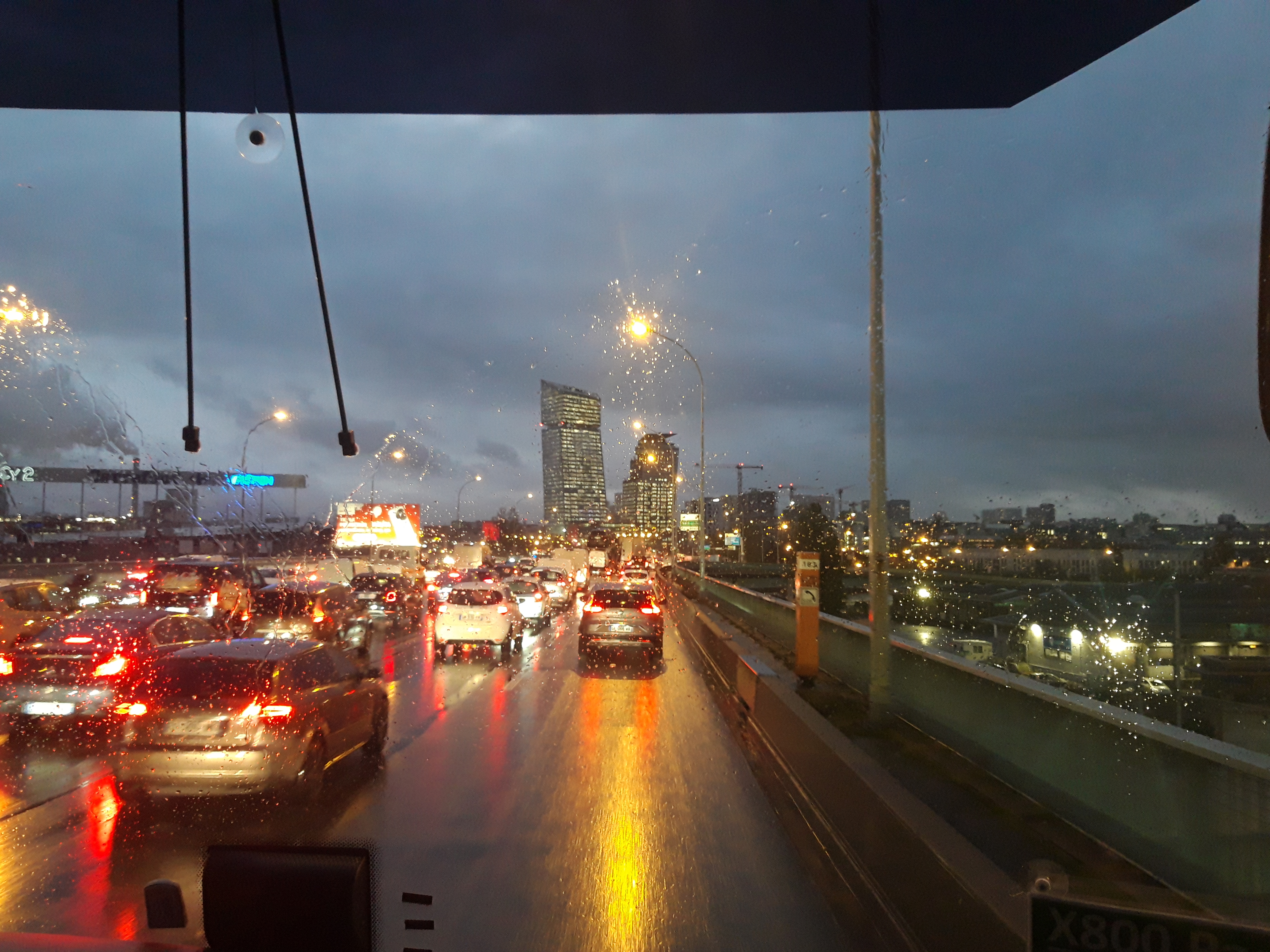
On this road hoping for good or better / while seated on the front row in a bus / heading for La Ville Lumière (the City of Light) / rain came pouring, slashing the windows / and changing the experience into murk and flashing screen scenes / of viaducts crossing the motor road.
At the entry of the ‘Peage’ (Toll road), time 14.47 hrsAt the exit of the ‘Peage’ (Toll road) at 16.07 hrs
The driver from Eastern Europe / talking to another driver crossing / the content in a different direction / in their own language / endlessly.
In the tunnel (1)In the tunnel (2)At about 6.5 hours drive, Paris is near.
Still, the driver paid attention to the traffic on the road, the lights / and he drove peacefully to the terminus / at Gare de Bercy.
Getting close to the ‘Peripherique’Readiness to remove our rubbishKeep left for the Peripherique (at 16.39 hrs)We are very near now, at 17.19 hoursExit to Gare de Paris: Gare de Bercy.
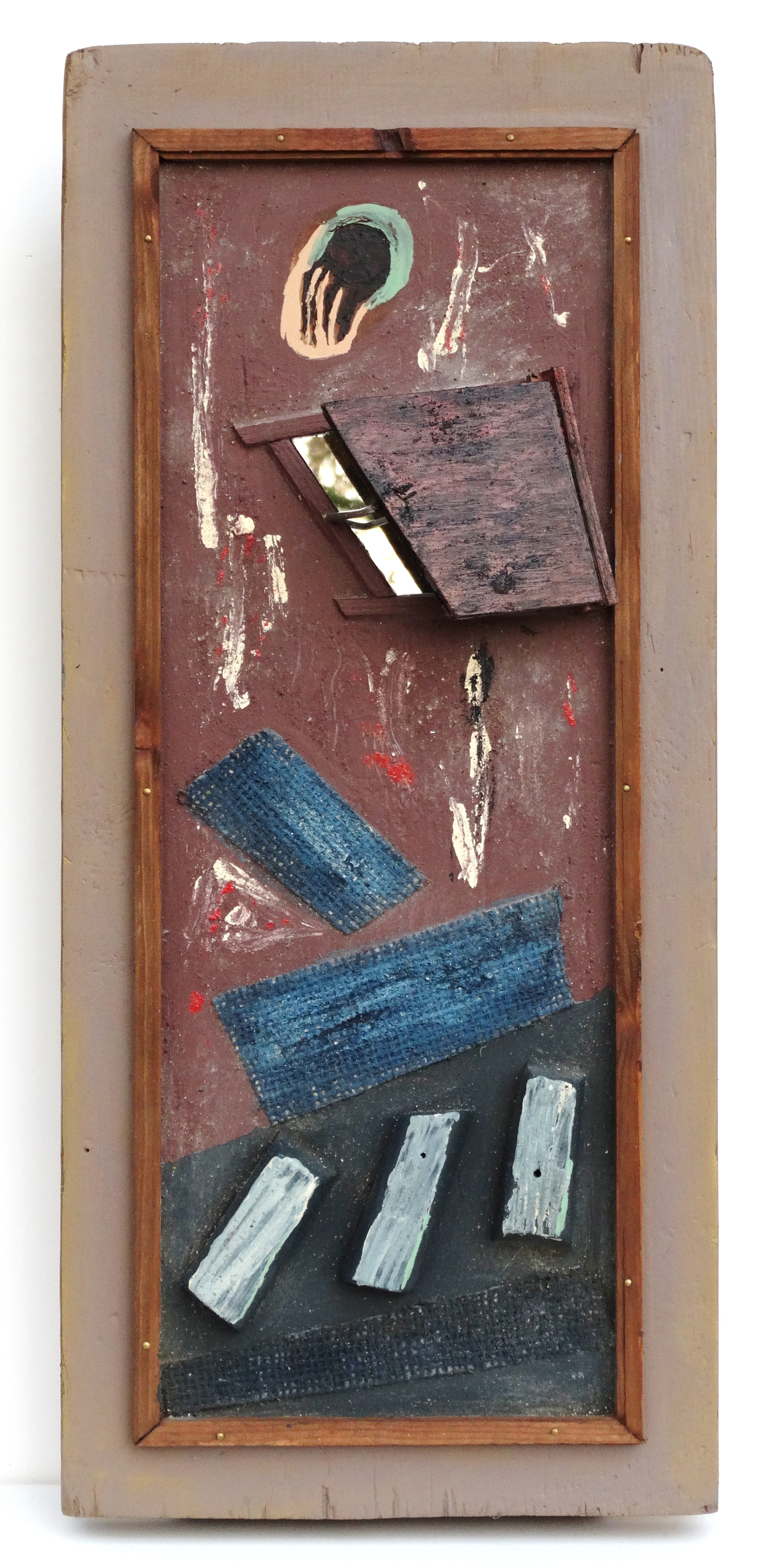
A visit to old leather factory in Oisterwijk (NL) May 8, 2014, combined with a view of paintings by WOLS in Museo Sofia Reina in the same year, Madrid (E) made me create assemblage.
old leather factory in Oisterwijk
With group of 12 photographers, we were allowed to search for good places to photograph.
One Way Out
One way out
“So, there is only one way out. // But there are no stairs. // There is no rope, no trampoline. // You have no wings even. // Knowing that the heat will become intolerable / how do you get out?!”
Concrete benches for machinesCrypt in the “church” named Leather Factory Oisterwijk, NL
Not to be seated
“Here one stands in awe / and one’s mind lingers / about those, who once were sitting on the benches. // But after what happened / the holiness of this sacred site / does not allow anyone to be seated here / anymore.”
Three Trestles under the Hatch
“Three trestles under the hatch: Even, / if the memory / of an empty room / with stone trestles, that once
all photos, texts & art (c) Drager Meurtant, 2014 – 2024
Today, the world looked safer / without sirens, no shooting till 14 hours / and the car moved smoothly
accross the border / separating two countries for long / only in war having been united by force.
One hour later, the friends did meet / first time in almost 4 months.
It took two hours to talk down / the big C that shaped lives / and for leaving the extra coat / worn for safety.
And then they took a dive where it was / forbidden / followed by coffee on / a terrace looking at the river Rhine.
(terras aan de rivier de Rijn)
Vandaag kwam de wereld veiliger over / zonder sirenes, geen schieten tot 14 uur / en de auto bewoog langzaam / langs de grens / die de twee landen lang had gescheiden / alleen verenigd in de oorlog / door macht.
Eén uur later, ontmoetten de vrienden / elkaar voor het eerst in bijna vier maanden. / Het nam twee uur om de grote C / omlaag te praten, die het leven beheerste / en om de extra jas – gedragen voor de veiligheid – achter te laten.
En toen doken ze in het water waar het verboden was / gevolgd door koffie op / een terras dat uitkeek op de rivier de Rijn.
Drager Meurtant, June 24, 2020 (during lift of first Covid19 lockdown, minor corrections Jan 29, 2024)
When stones dance and move along the rythm of the surges of flowing times // and take a leave from the geometry imposed by builders seeking comfort and utility // and trees push out residing memories or on some occasion take place side by side // then eyes may wander in slow pace, step by step.
Wanneer stenen dansen en bewegen op het ritme van de golven van de tijdstroom en verlof nemen van de geometrie, opgelegd door bouwers die comfort en nuttig gebruik zochten // en bomen er de gezetelde herinneringen wegduwen; bij gelegenheid naast elkaar plaats nemen // dan kunnen ogen hier zwerven in langzaam bewegen, stap voor stap.
(Drager Meurtant, analog photo in The Provence, early 1980s, text 2017)
“We gaan op weg, ja, maar overal botsen we op grenzen: Grenzen die anderen stellen: fysiek, met douanecontrole, hoge hekken of soms zelfs met landmijnen. Of we botsen op limieten in normen en moraal. En, vroeger of later stuiten we op grenzen die ons lijf of geest tegenkomt”
Tentoonstelling in Kunstruimte De Melkfabriek, ‘s-Hertogenbosch, 27 mei tm 18 juni, 2023
Drager Meurtant – Staande voor het hek, lino-snede, 2018
Achttien kunstenaars uit acht landen laten hun visie zien in beeld of woord. In bijgaand boek tevens vijf essays van Richard Candidá Smith, Zhinia Noorian, David Estrada, George Kabel en Drager Meurtant, en achtergrondinformatie over over achtergrond en motief van de kunstenaars en beeldmateriaal.
Deelnemende kunstenaars
Initiatief van kunstenaars Drager Meurtant (NL), Jeanine Keuchenius (NL) en Petra Senn (D)
Verder nemen deel:
Katherine Chang-Liu (USA), Brian Dickerson (USA), Nina Fraser (Portugal), Joris van Gennip (NL), Carlo Grassini & Bill Thomas (USA), Sylvia Hubers (NL), Michal Iwanoski (Poland / UK), George Kabel (NL), Max King Cap (USA), Anna-Maria Komorowska (D), Oliver Merce (RO), Dorothee Mesander (GR), Ruth Philo (UK), Martien Vogelesang (NL).
The Milkfactory / De Melkfabriek, Guldenvliesstraat4H, 5211 AM, ‘s Hertogenbosch, The Netherlands
Brian Dickerson: ‘Vroman’ is een drie-dimensionaal ‘constructed painting’ dat aansluit bij het thema ‘Grenzen en Begrenzingen’ door het loslaten van vaste, fysieke posities
Preview (op uitnodiging) op 26 mei vanaf 15 uur
Formele opening 27 mei 14 – 17 uur
Openingstijden: Za 27/5, Zo 28/5, Ma 29/5, Za 3/6, Zo 4/6, Za 10/6, Zo 11/6, Za 17/6, Zo 18/6
Dagelijks van 13 – 17 uur.
Bill Thomas & Carlo Grassini – Welcome, collage, 2021
From early youth, with walks in province of Limburg (NL) I was attracted by half timbered houses.
The architecture consists of a construction with partitions shaped by wooden beams, often made of oak, with in the partitions twigs with loam, later bricks.
Near Slenaken / bij Slenaken, Limburg, NL (Drager Meurtant, 2012)
Van mijn vroege jeugd, met wandeling in Limburg (NL) was ik aangetrokken door vakwerkhuizen.
De bouwstijl bestaat uit een constructie met vakken gevormd door ruwe, veelal wat gekromde balken, vaak van eiken, met in de vakken vroeger takken met leem, later baksteen.
Nu kunst tot m’n dagelijks leven behoort, is er vorm gegeven aan collage – relief van een vakwerkhuis.
“Haus zur Frieden” (Collage – Relief, Drager Meurtant, 2021)
In current time, with art being part of every day’s life, a half timbered hhouse was created with collage-relief.
This year, also wood cut was used to create an image of a hamlock with half timbered homes in the mountains.
Houses and mountains / huizen en bergen (DM, 2022)
En dit jaar is er ook het medium houtsnede aangewend om vorm te geven aan een gehucht in de bergen, bestaande uit vakwerkhuizen.
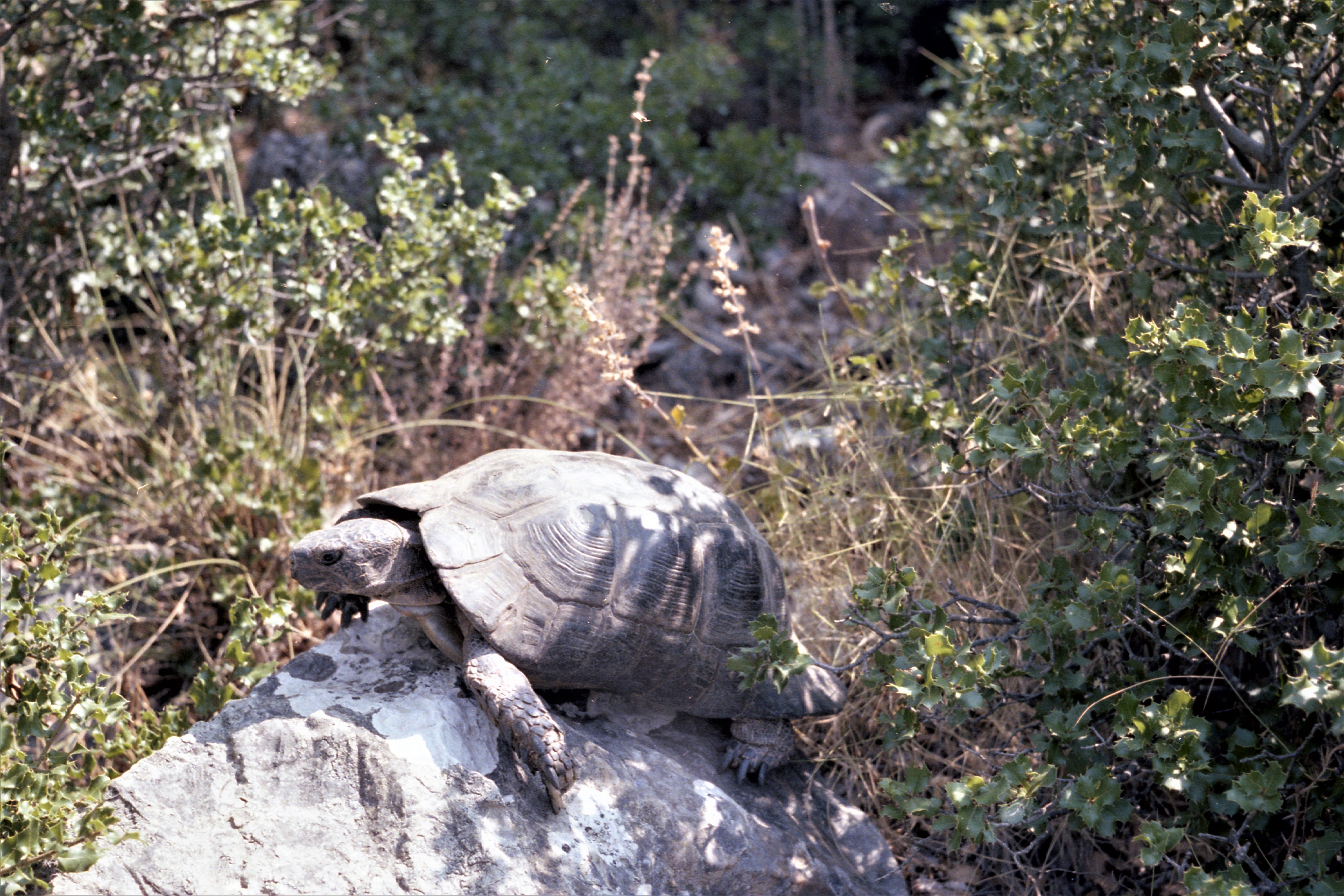
As indicated in previous post (December 11, 2021), my journey in Greece from Dimitsana onward continued as hike mostly on feet, with myself as only company. An imprecise map helped me define Adritsaina as next ‘goal’, and I had the sun, time and a compass as lead. The Arcadian hills grown with small greek oak trees were hot and dry. The day passed without meeting any bipeds, and only a greek turtle crossed my path.
Mountains in ArcadiaGreek tortoise (Testudo graeca) encounter underway
After mid-day, I had to take care not to get over-heated, but some rivers provided refreshment at times.
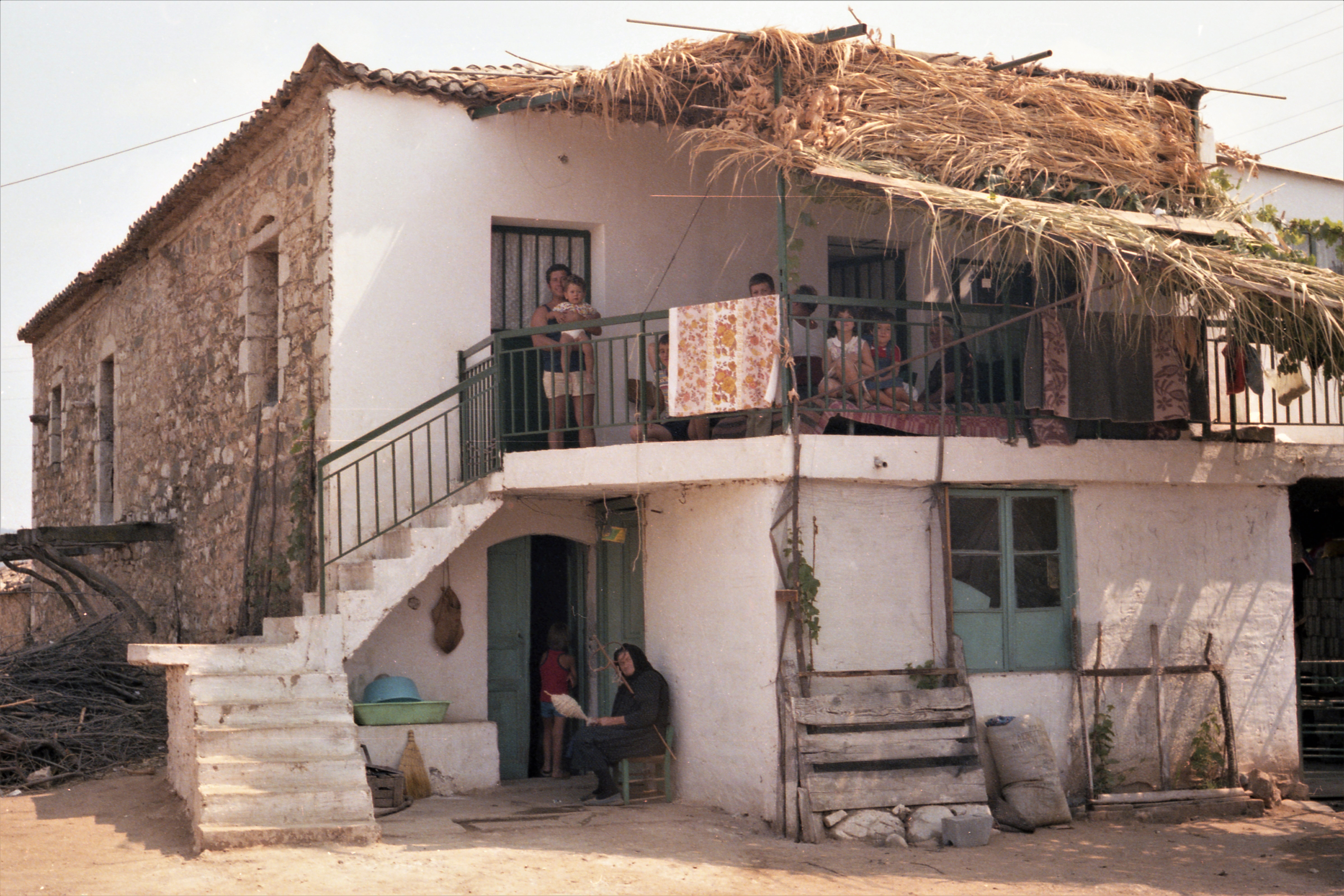
In hammock of Bardaki (Μπαρδάκι) I was invited – when filling water bottle at local pump – to have retsina and tomato salad in plenty olive oil on the veranda. The hospitable folks advised a cool moment at nearby river Alfeios.
Bardaki (Μπαρδάκι) houses (1)Bardaki (Μπαρδάκι), the house with veranda
After passing through Andritsaina, and after following a small path through the hills, I came close to a temple with just a few visitors. Some supportive structures had been raised, as an early step towards conservation. It is now an Unesco Monument, and restoration would start in 2001, with a tent (hood) placed over the temple remains. This Temple of Apollo Epicurius at Bassae of Phigaleia has been raised in 5th century BC. In retrospect, the photo is unique with respict to point-of-view.
Temple of Apollo Epicurius at Bassae of Phigaleia, 5th century BC.
At the end of the next day I came to a place, where several big rectangular boulder stones had been neatly arranged providing a plateau to camp. I had arrived at the ancient site of Lycosura (Λυκόσουρα) with the temple of Despoina. At the nearby village an elderly lady had the key to small historic museum, with some big antique statues, and a lot of dust. The entree did cost two drachmes.
Ancient Lykosura (Λυκόσουρα), temple of Despoina (1) Ancient Lykosura (Λυκόσουρα), temple of Despoina (2)
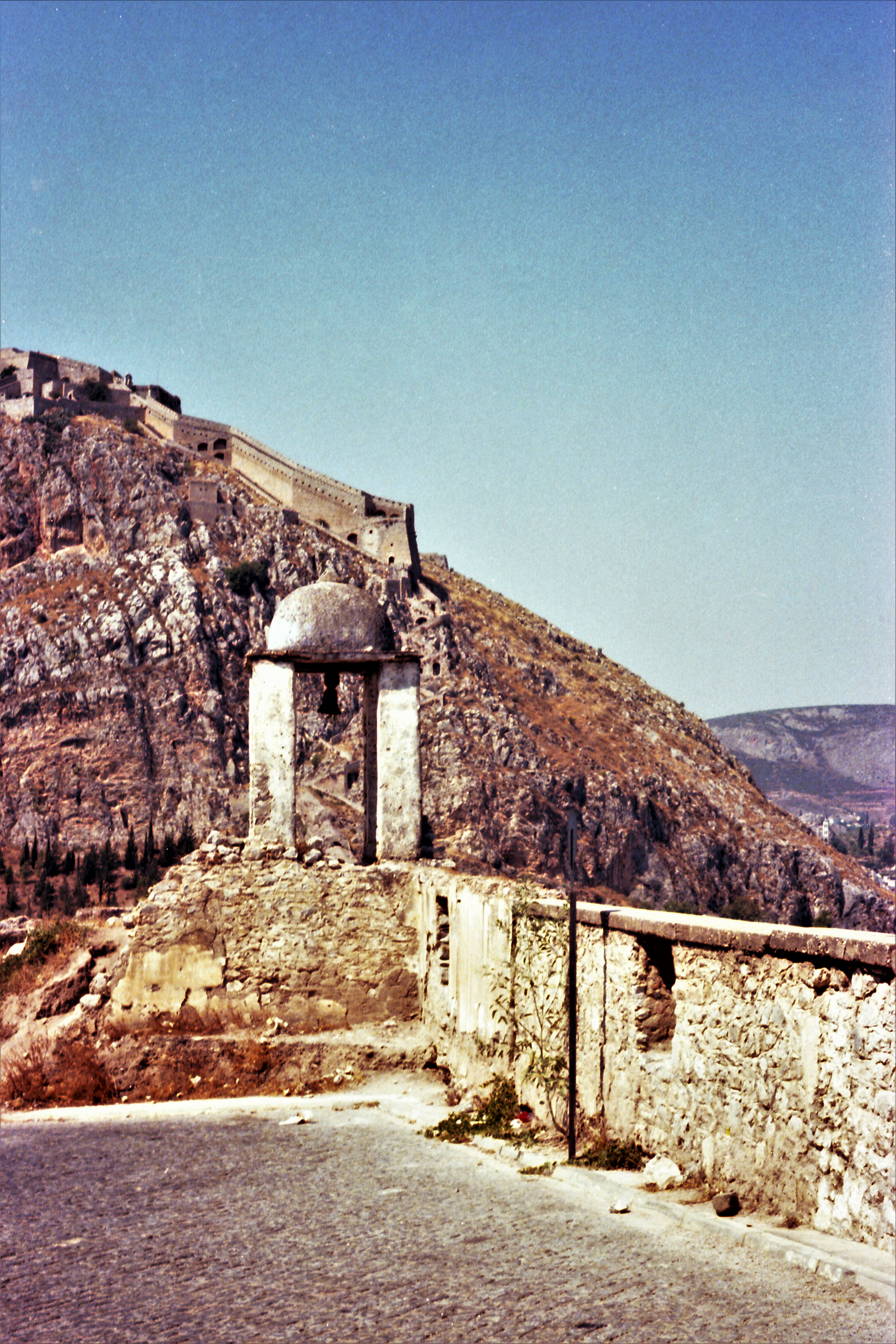
From there the trip continued on feet or by hitch hiking or bus, via Megalopolis to historic Argos, Mycene and coastal city of Nafplion. On the quay outside this city, several young people camped and took a swim in the sea, not bothering to put on cloths between dives. Several times during the day, a ripple of unrest traveled along this quay, when a police officer came to tell nudity would be punished.
View from port of Nafplion to Palamidi Castle (1978)
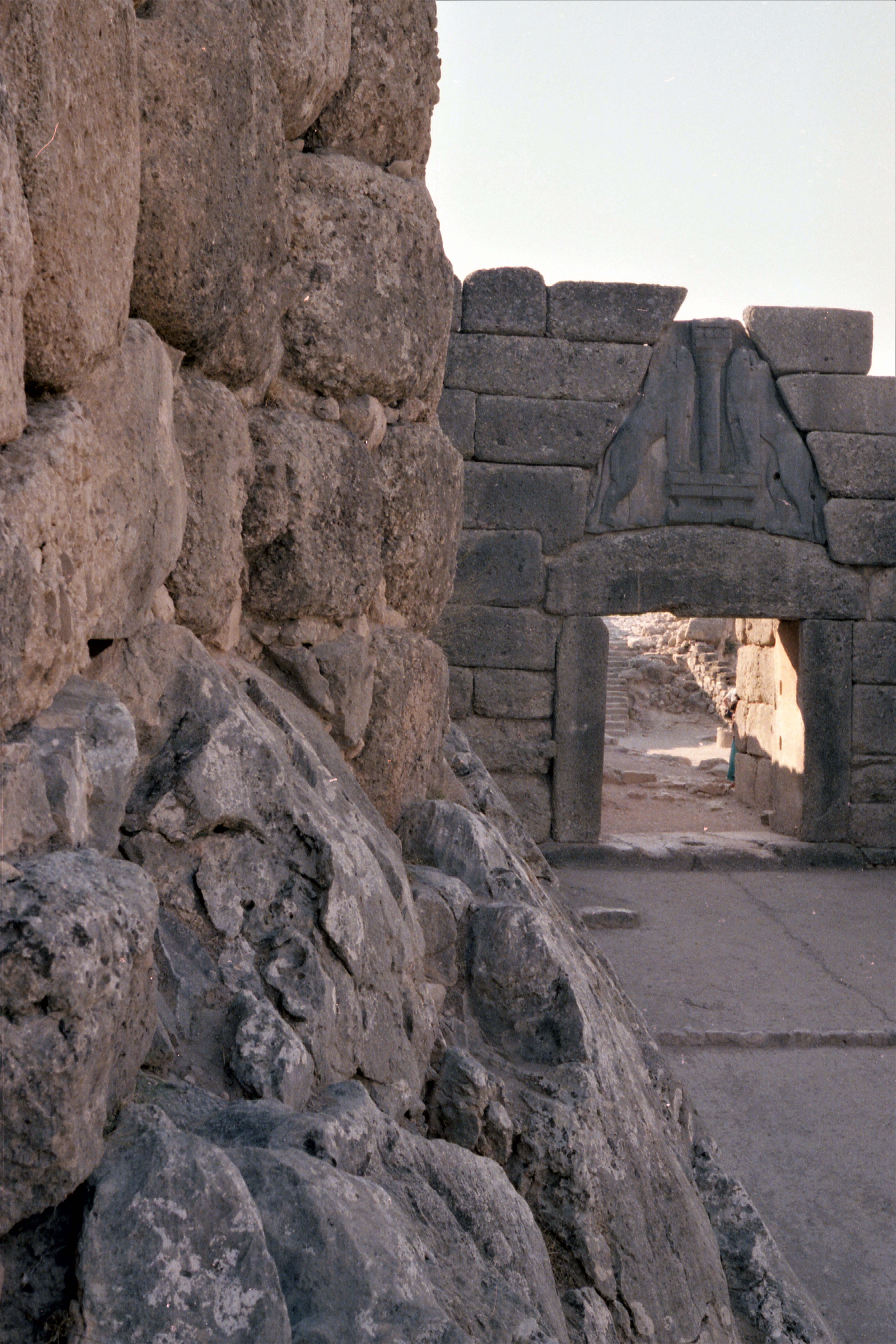
From Nafplion, a regular buss service brought tourists to ancient Mycene.
Castle of Mycene, with Agamemnon’s Palace in evening light, empty of touristsCastle of Agamemnon, Mycene, the Lion Gate
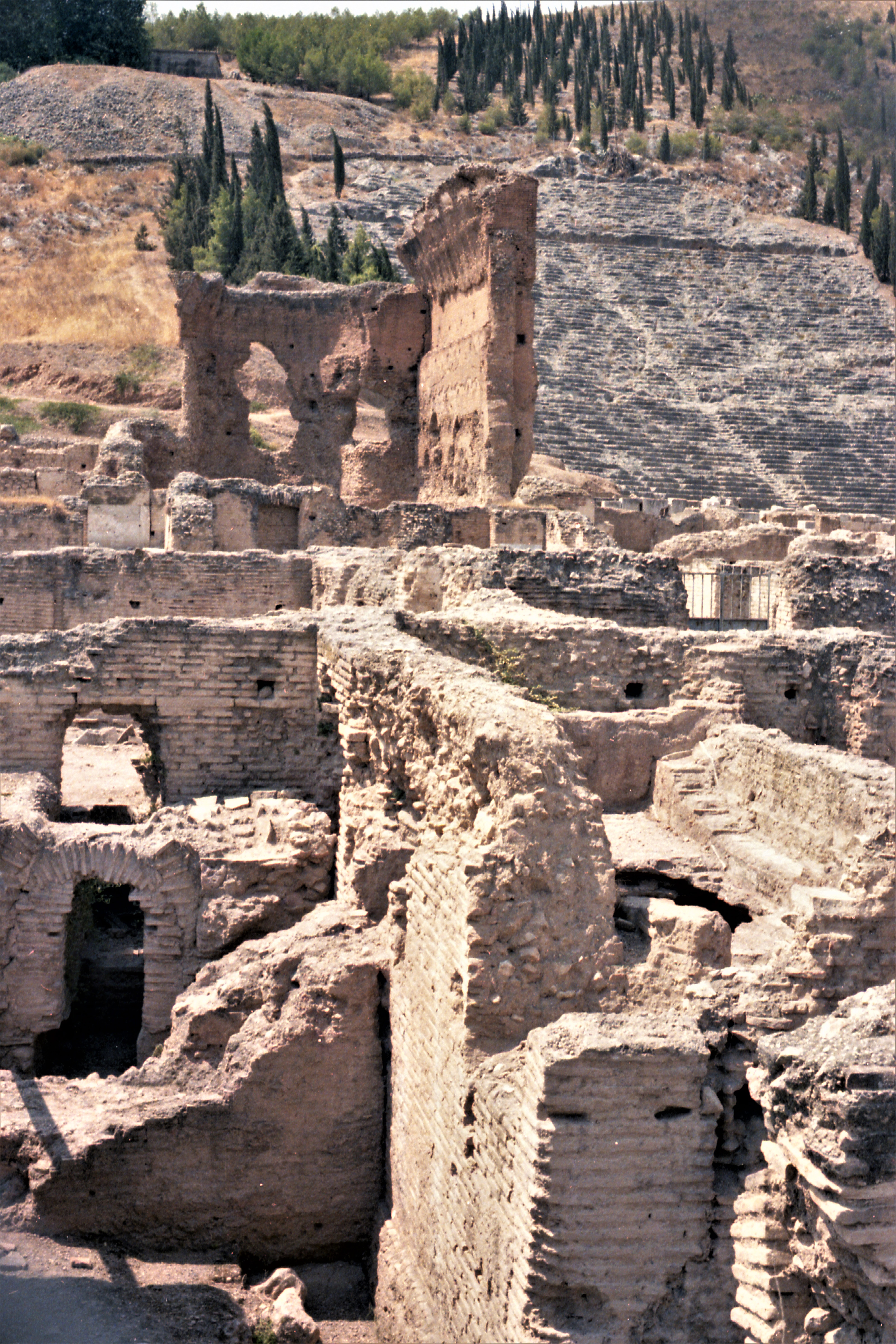
From Nafplion an easy walk along busy motorway brought me to ancient Argos, with its huge amphiteatre.
Ancient Argos amphitheatre
In the city of Argos, a funeral service was hindered by the defect of historic funeral coach.
Motor trouble of funeral coach (Argos, 1978)
Small garages are scattered all over Greece, like here near Nafplion.
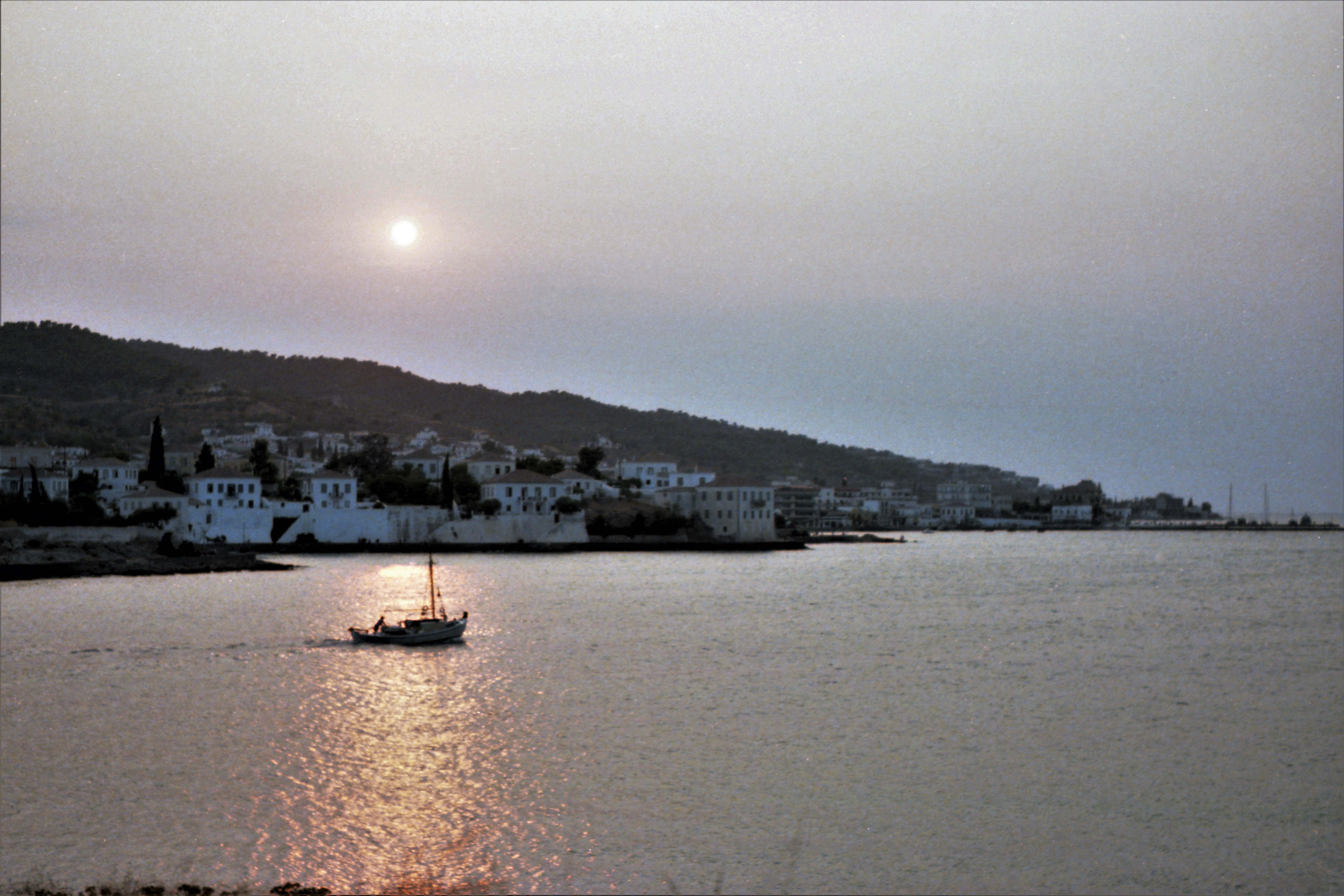
By ferry a short visit was brought to Spetse, the island where the book “The Magus” by author John Fowles is situated. By taking some distance to the tourist crowds, – talking about 1978 – at almost all places something of rural Greece could be found. I walked a few miles from the port, and near the lighthouse I got permission from the guard to camp with my little tent, after having accepted the offer of a glass of ouzo and some fresh tomatoes.
Evening view from lighthouse to port of Spetse.
From Spetse another ferry brought me to Pireas and a bus to Athens, and that is where this story ends.



















 drager-meurtant