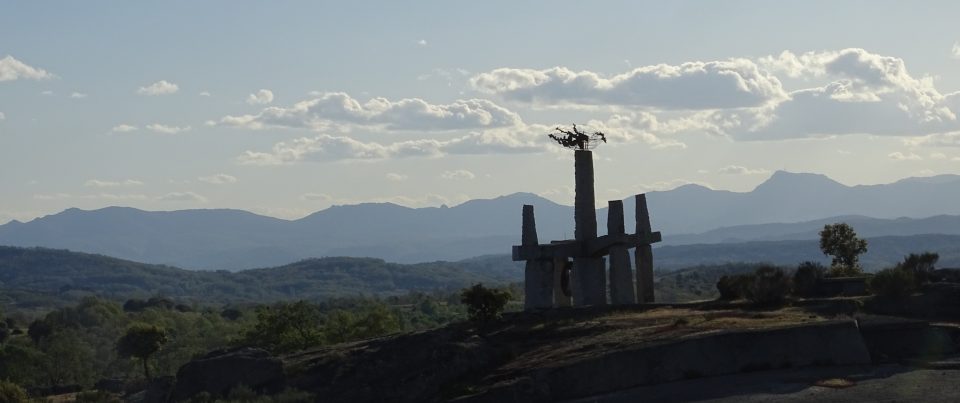
Buzzing mobile phones, steered by logarithms dictated by emperors that tear society apart were left behind. There are still ‘quiet’ places where insects tell other news. Those that survived the pest of ecocidal chemicals.
Web
catch
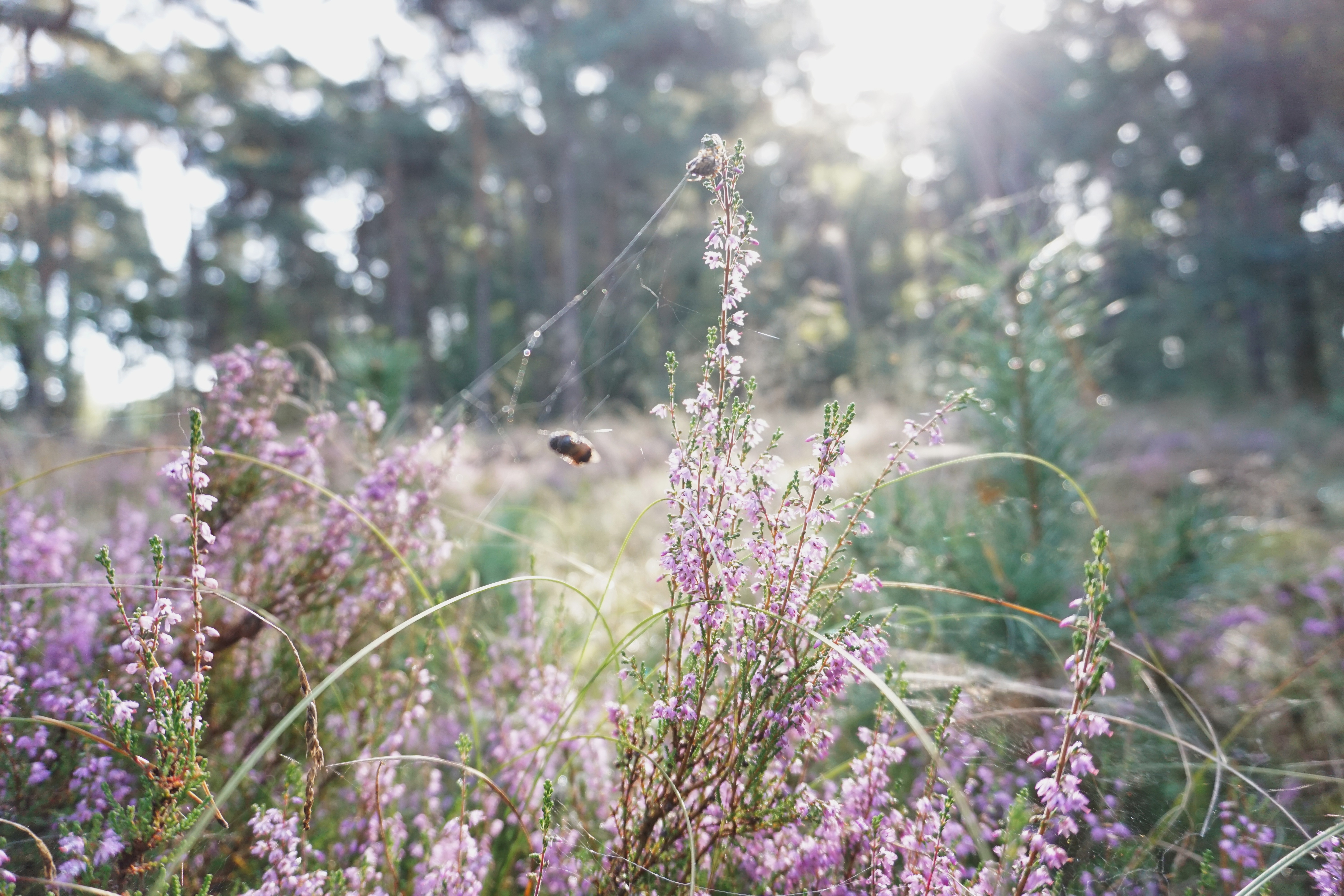
A heathy landscape harbors spiders / catching pollen-spreading bees.
Organic
Bark
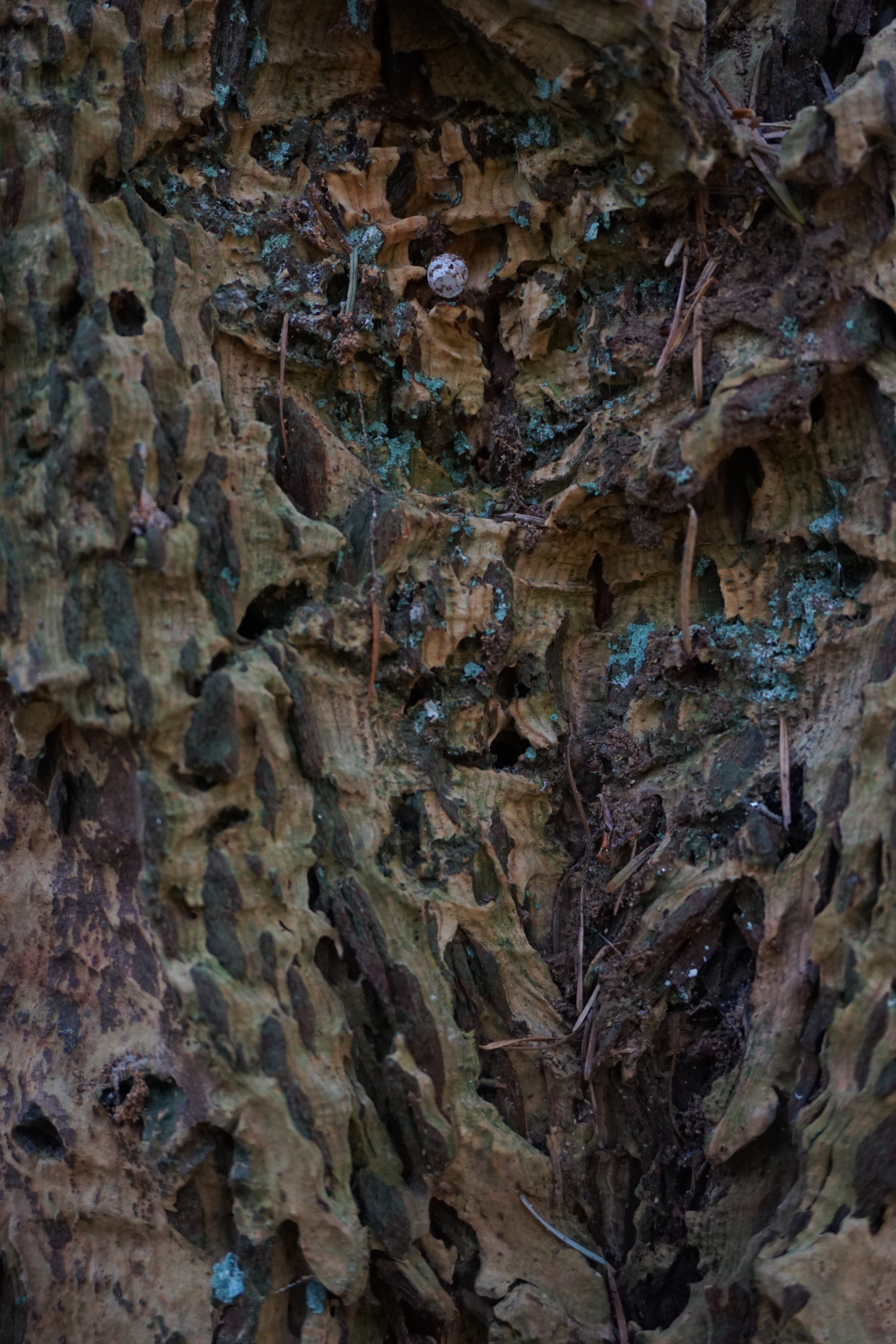
The bark was fissured / a voice lamented /
blown apart,
yet unheard amidst / the turmoil, basic /
at an organic / glorification.
(photos and texts by Drager Meurtant, September 12-13, 2025)
In the summer of 2010 we made plan to hike in ‘greatest and wildest natural mountain park of Western Europe’.
By train arriving in Milano end of August 2010, the two of us checked in at Hotel Berna and had one day to explore the city.
Milano Cathedralwaiting for connection (Arona)
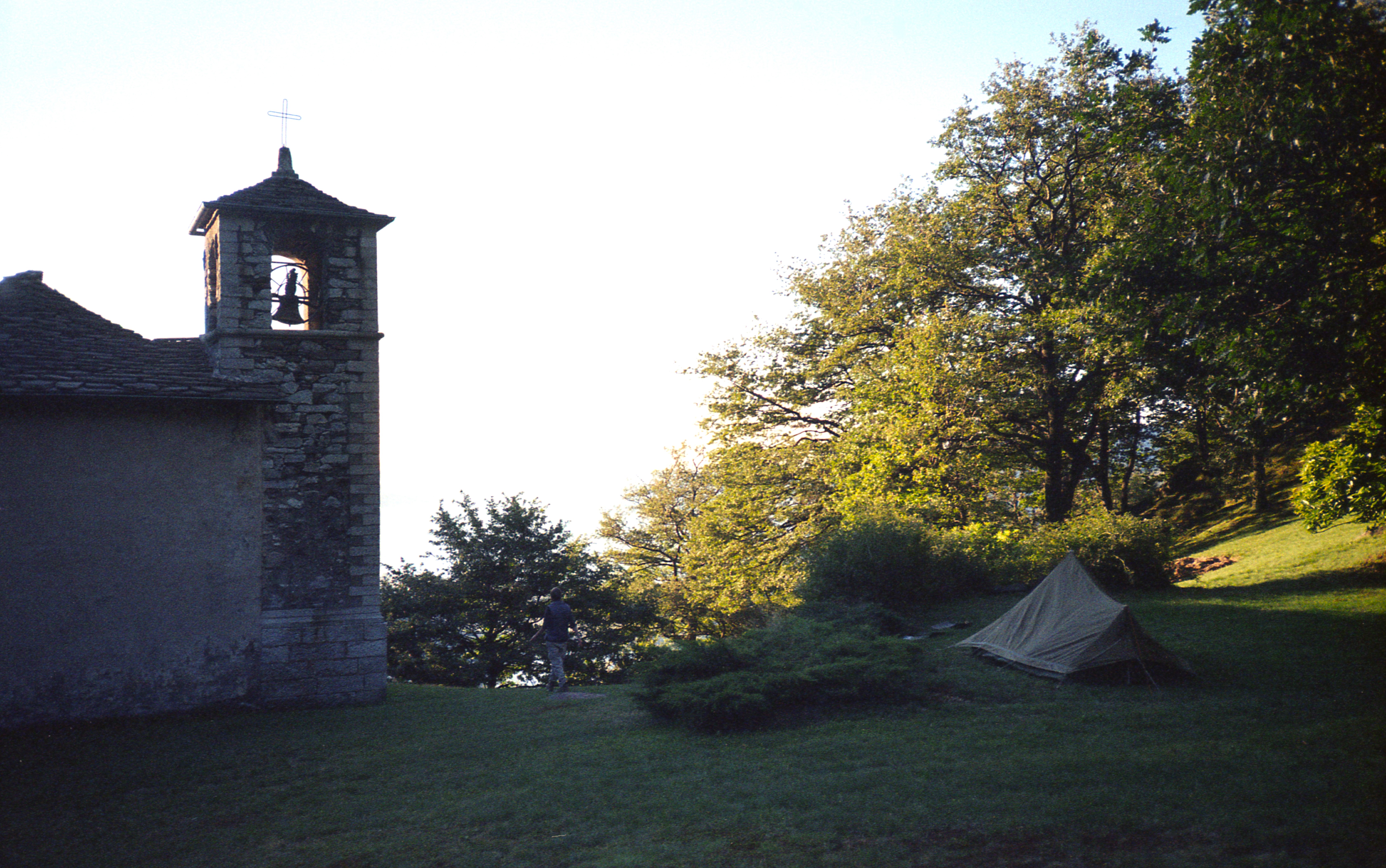
The third day a train took us to Premosello, and we hitch-hiked to Colloro. From there we walked to camp at alm of Chapella Madonna di Lut.
There the sole of one shoe turned out to be completely broken. We had to return and then take train to Domodossola to buy new shoes. Next attempt started in Mergozzo and we walked via Bracchio, towards Vercio with Sanctuaria Di Madonna de Grazio (camp). A lady very early in the morning sang for hours.
L’Oratorio della Beata Vergine delle Grazie
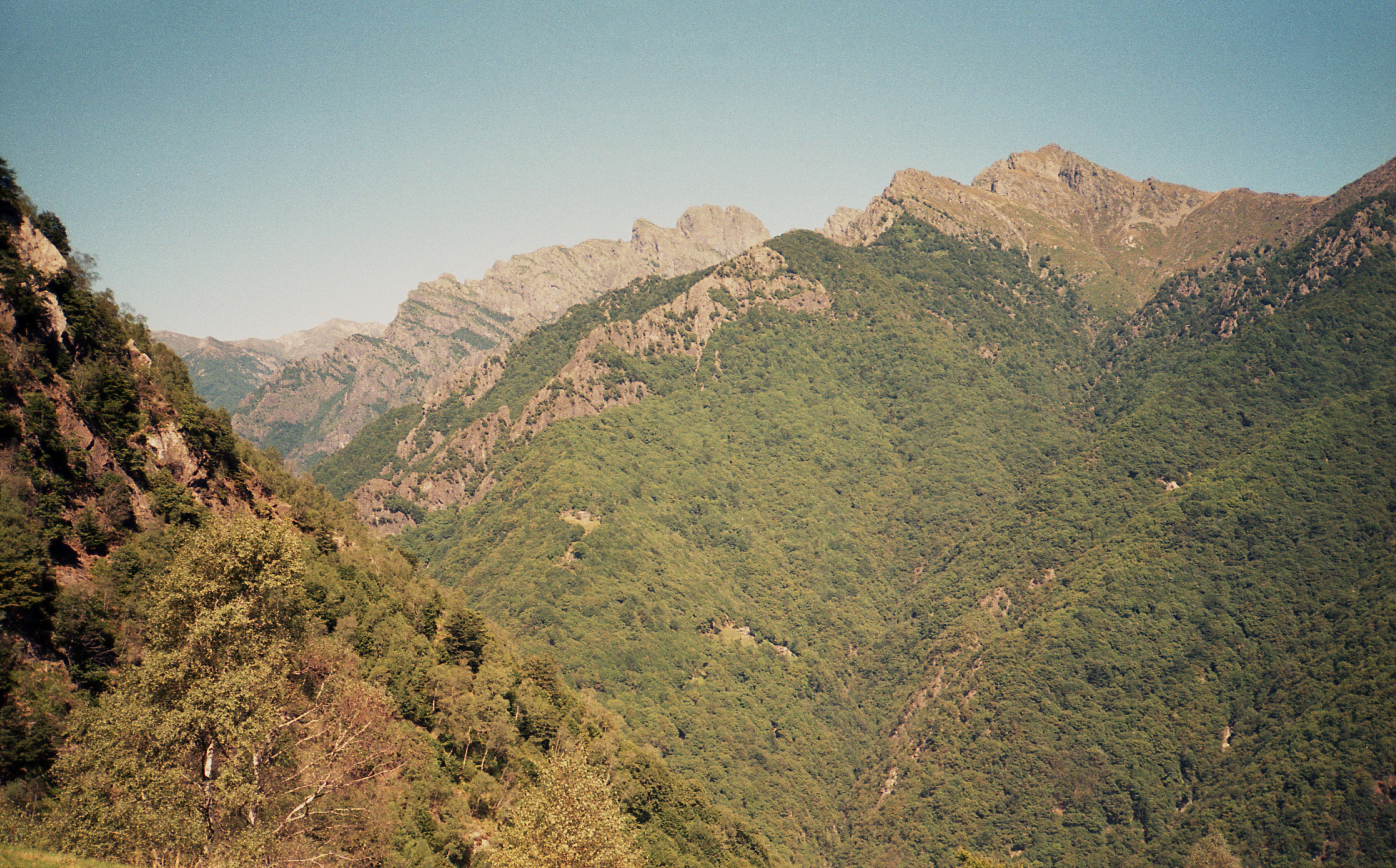
From there a long walk in beautiful mountain area and forest followed. On the way we passed many abandoned houses, alone on itself or in small group.
Forest and mountains in Parco Nazionale de Val GrandeAlong the way, house of farmer
Our path continued via Cortecca to Alpa Ompio, from there north to Alpe Basseno then down to bridge “Ponte di Velina” crossing ravine with river, and further north to Velina and Baserga. A sign indicated that in 1944 partisans escaped from nazis with 50 prisoners at an enduring trek through these mountains.
Baserga, hide-out for partisans in WW-II (if memory is right…)
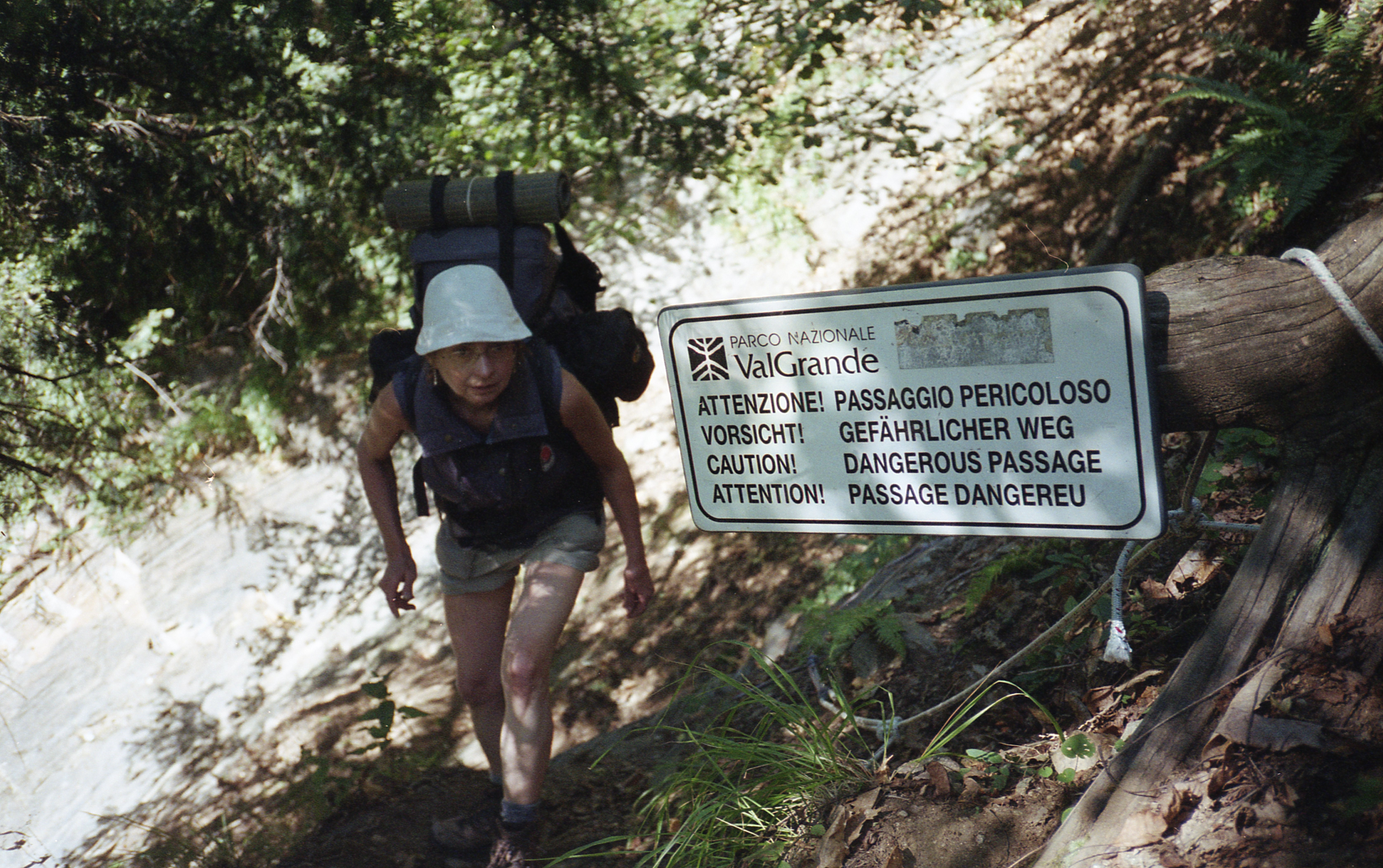
Route went further N. East to Baserga (signs indicating risky passage), Alpe Vota, Montazzo, a overgrown abandoned hamlock. The path became stairs and had steep crossings of rivulets.
note the sign…
Along the way we did encounter several abandoned houses in the woods.
someone created stone creatures…
At sundown and over 14 hours on the way we arrived at Corte de Merino, where we could set up the tent and have simple dinner.
In the morning the trail went to Cicogna, then followed sentiero Struttenheim (1891) towards Pogallo, where we had camp along the Rio Pogallo.
Rock cairn or stone man
Return was to Cigogna with several steep mountain clefts.
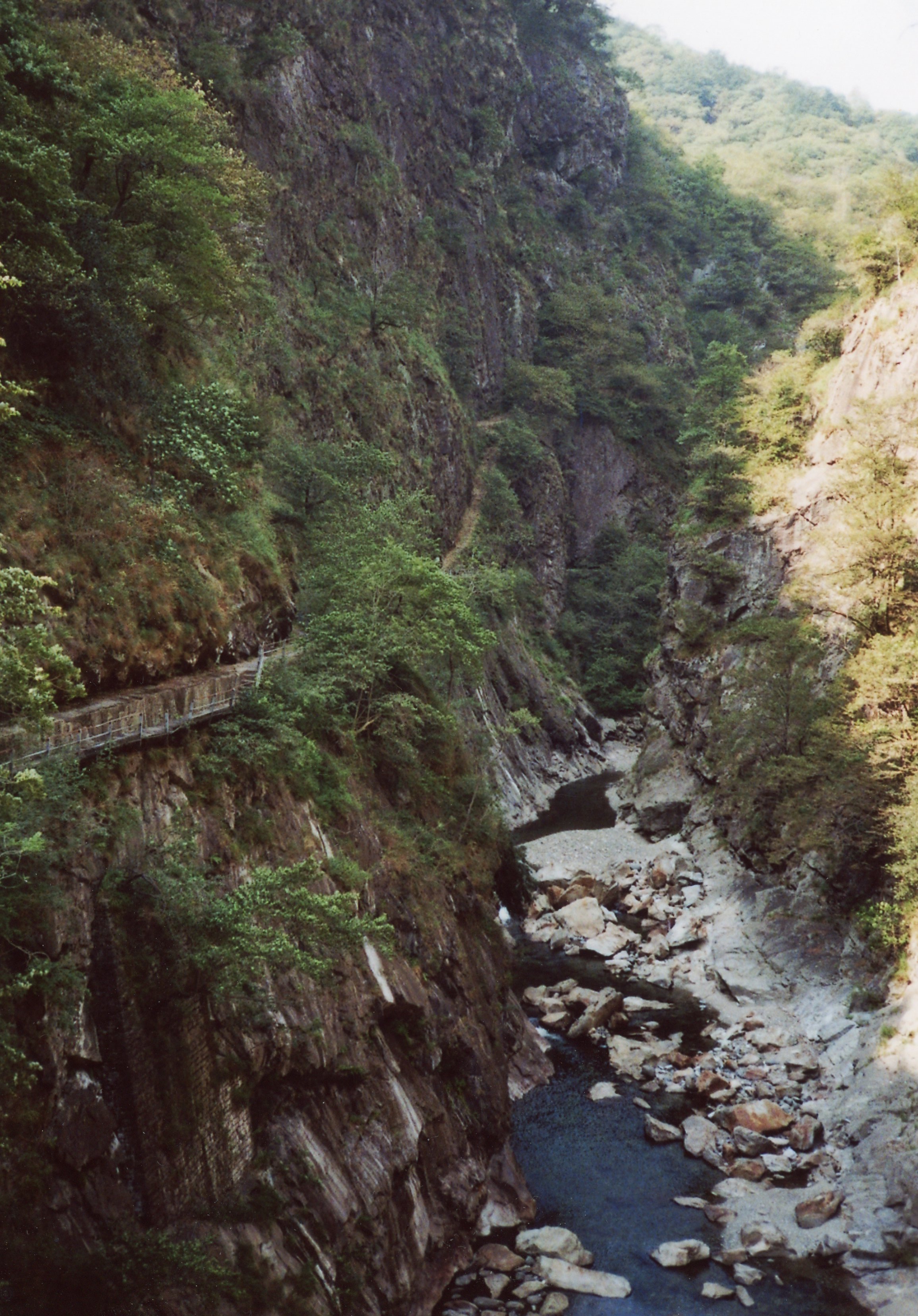
A mountain cleft of hundreds of feet…A river deep down
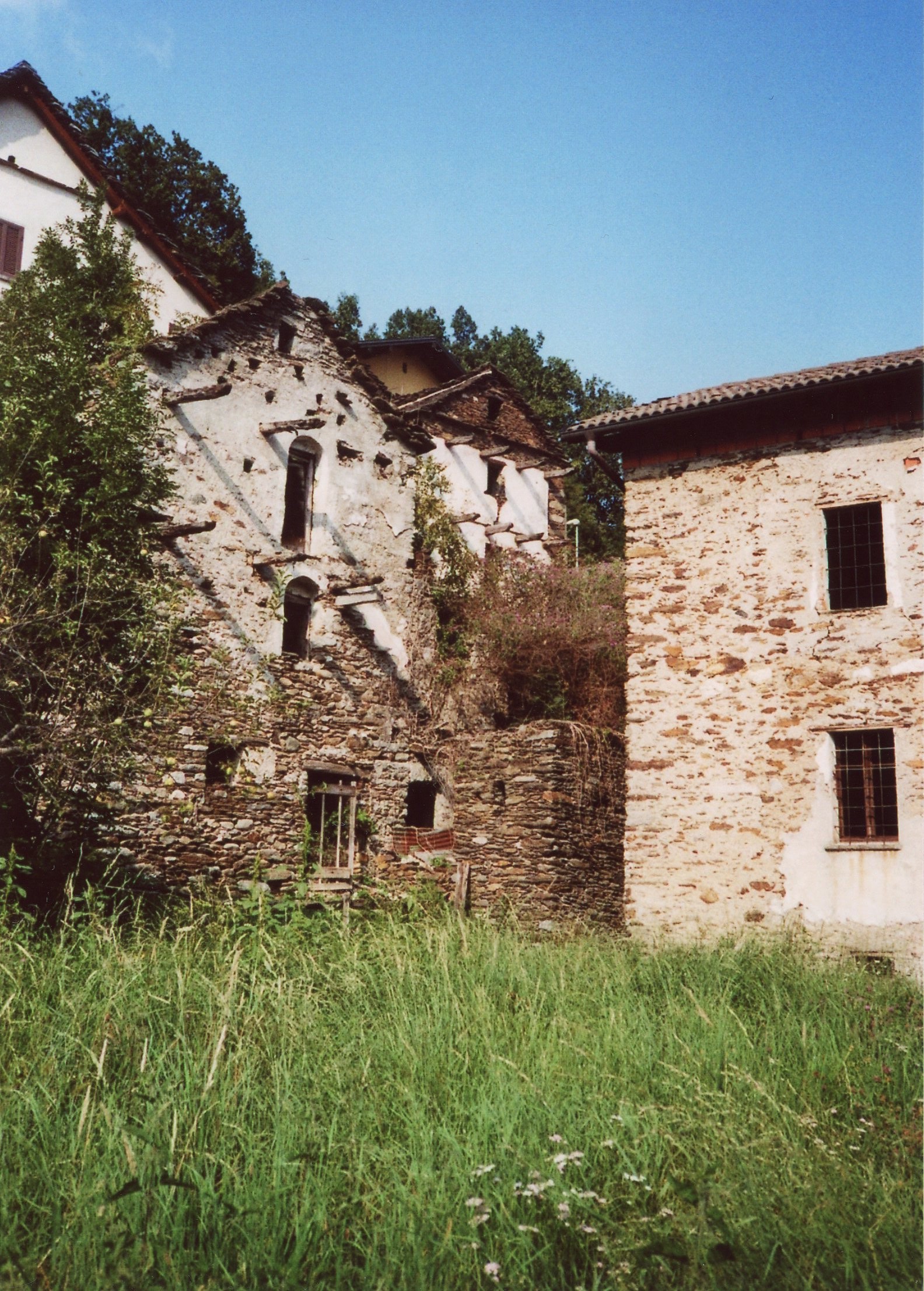
Then we went all the paved way to Rovegro (no hitch hike available), a village that looked like poverty ruled. There old roman way did lead us to Cossogno, after passing the “Ponte Romano di Cossogno e Cascate”.
Ancient houses
In this village citizens allowed us to camp on small terrace of the Campo de Sport for our last night in the mountains…
Camp in Cossogno
From Cossogno we hiked to Verbania where we took ferry across the Lago Maggiore to Baveno and boarded train to Milano.
On the ferry towards Baveno
Photos by Drager Meurtant 2010, analog film, taken with Chinon compact camera and Fuji film
In creating art, this artist examines human actions and the resulting society, with bonds and clefts.
>>>>>>>>>>>>>>>>>>>>>>>>>>>>>>>>>>>>>>>>
Bij het scheppen van kunst, onderzoekt deze kunstenaar het menselijk handelen en de maatschappij die hieruit volgt, met verbindingen en kloven.
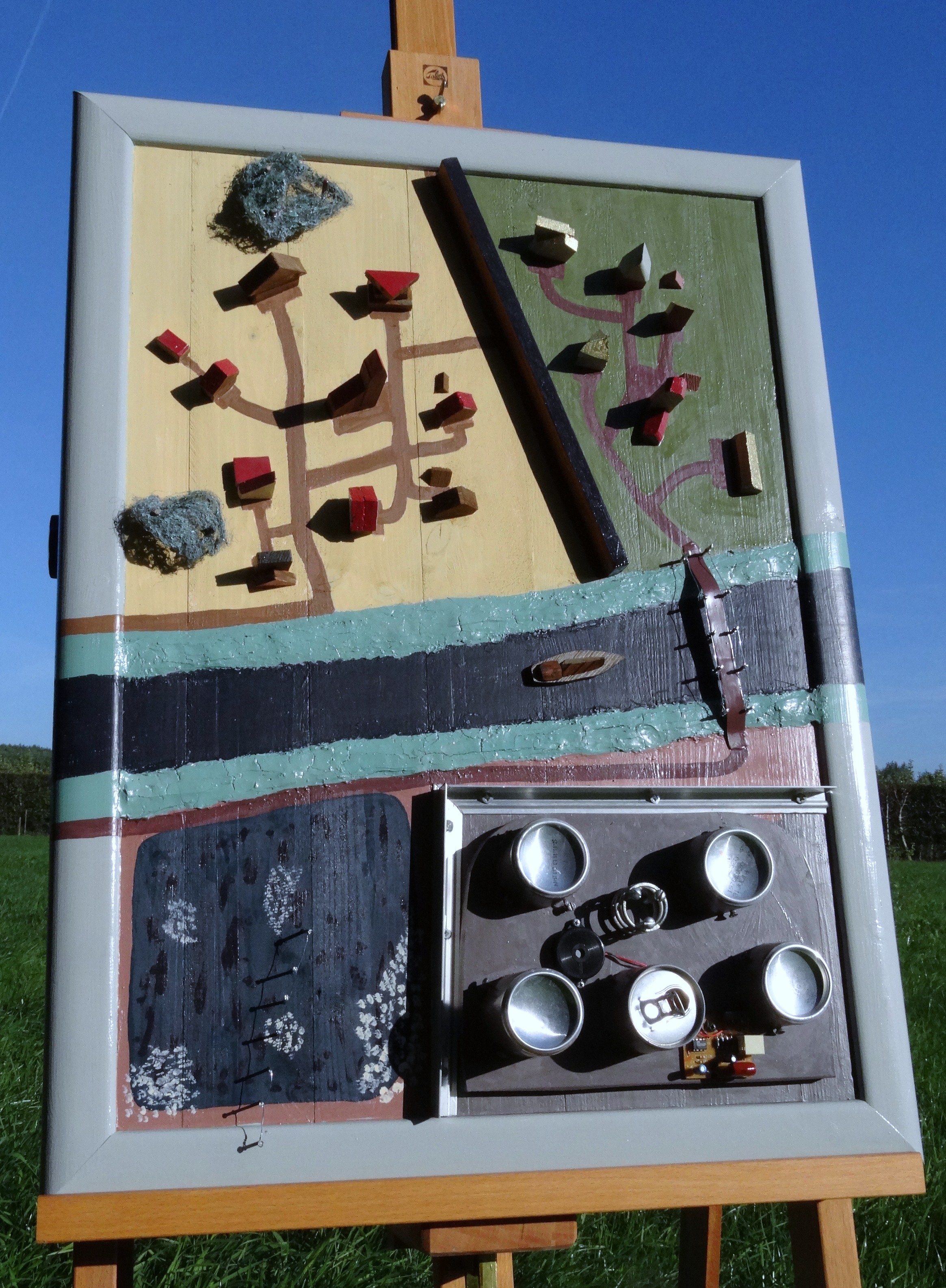
The Oil Terminal at Dissension
After one village a second was build // and as so often / these contained two communities / with different beliefs. // After peevishness came quarrel / and this raised high: a full five meters. // The arrival of the oil-terminal / changed little apart from more fencing. // The bridge does not unite the inhabitants / but enables them to dwell on different paths.
>>>>>>>>>>>>>>>>>>>>>>>>>>>>>>>>>>>>>>>>>
De Olieterminal bij Tweespalt
Na één dorp werd een tweede gebouwd / en als zo vaak, / waren het twee gemeentes in het geloof. // Na wrevel kwam ruzie / en die liep hoog op en wel vijf meter. // De komst van de olieterminal veranderde weinig / behalve nog meer heining. // De brug verenigt geen bewoners, / maar maakt dat de wegen gescheiden voortgaan.
the oilterminal at dissension / de olieterminal bij tweespalt
At the age of one year, the artist Drager Meurtant (b. 2012) wanted to create a vision of the world in it’s infancy.
With mountains, a lake and mystical homonoid figures standing idle.
“With a few”
“The mountains that I encountered, the swamps and gadflies: for milennia remained nearly unchanged: One time the first people came, or were Neanderthals earlier? People won, but whether that was the best outcome? “
In the years that followed, the increased tendency in our world to strengthen frontiers, raise walls, and push back ‘illegal’ immigrants, became a worry and cause to doubt progression of human society.
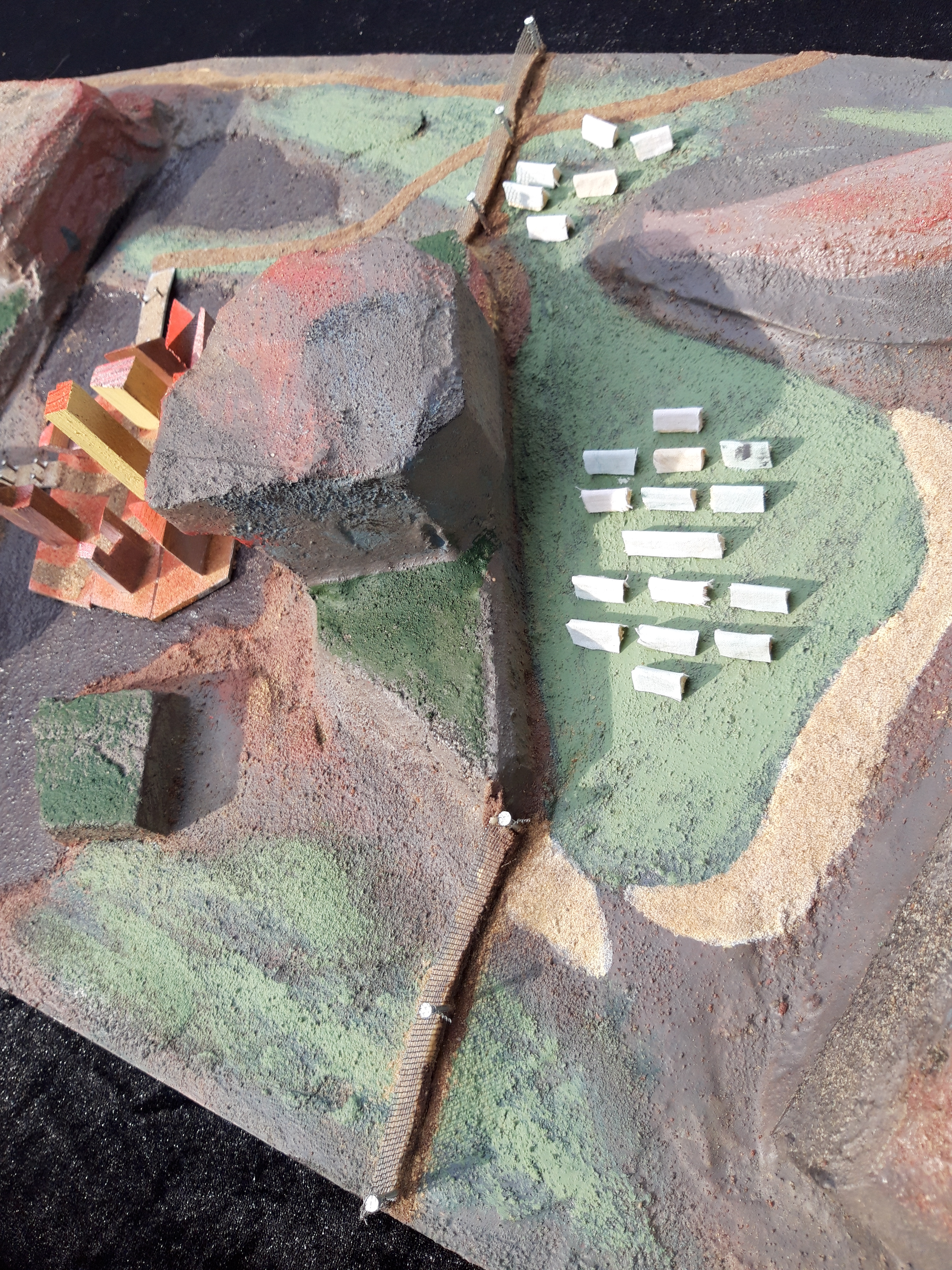
This did in 2023 lead to transformation of the above sculpture – assemblage, into “Borders and Fences”
The lake became a place for a small city with skyscrapers.
“Borders and fences – 1”
A high gate was raised, on a scale that in real life would be 10 m high, and that makes existing roads and path dead-ends. And a refugee camp was created on the other side of the fence.
“Borders and fences – 2”
Two societies come into existence, populated by the ‘haves’ and the ‘have nots’.
“Borders and Fences – 3”
After the ‘Chinese Wall’ and the ‘Hardrian’s Wall’, modern society got to know the ‘Iron Curtain’, and became aware of the fences that separate Northern and Southern Korea. However, in 2024 the length of walls and fences that separate Israel from Palestine, the (U)SA from Mexico, and in several countries in Europe to impair crossing the borders for immigrants impossible stretch of thousands of kilometers…
“Borders and fences – 4”
All images and texts by Drager Meurtant, 2013 – 2024.
When stones dance and move along the rythm of the surges of flowing times // and take a leave from the geometry imposed by builders seeking comfort and utility // and trees push out residing memories or on some occasion take place side by side // then eyes may wander in slow pace, step by step.
Wanneer stenen dansen en bewegen op het ritme van de golven van de tijdstroom en verlof nemen van de geometrie, opgelegd door bouwers die comfort en nuttig gebruik zochten // en bomen er de gezetelde herinneringen wegduwen; bij gelegenheid naast elkaar plaats nemen // dan kunnen ogen hier zwerven in langzaam bewegen, stap voor stap.
(Drager Meurtant, analog photo in The Provence, early 1980s, text 2017)
From early youth, with walks in province of Limburg (NL) I was attracted by half timbered houses.
The architecture consists of a construction with partitions shaped by wooden beams, often made of oak, with in the partitions twigs with loam, later bricks.
Near Slenaken / bij Slenaken, Limburg, NL (Drager Meurtant, 2012)
Van mijn vroege jeugd, met wandeling in Limburg (NL) was ik aangetrokken door vakwerkhuizen.
De bouwstijl bestaat uit een constructie met vakken gevormd door ruwe, veelal wat gekromde balken, vaak van eiken, met in de vakken vroeger takken met leem, later baksteen.
Nu kunst tot m’n dagelijks leven behoort, is er vorm gegeven aan collage – relief van een vakwerkhuis.
“Haus zur Frieden” (Collage – Relief, Drager Meurtant, 2021)
In current time, with art being part of every day’s life, a half timbered hhouse was created with collage-relief.
This year, also wood cut was used to create an image of a hamlock with half timbered homes in the mountains.
Houses and mountains / huizen en bergen (DM, 2022)
En dit jaar is er ook het medium houtsnede aangewend om vorm te geven aan een gehucht in de bergen, bestaande uit vakwerkhuizen.


















 drager-meurtant