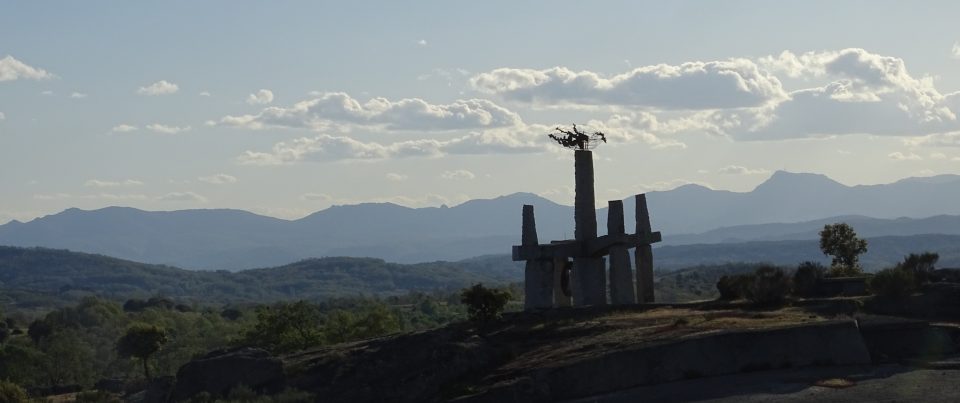
At the age of one year, the artist Drager Meurtant (b. 2012) wanted to create a vision of the world in it’s infancy.
With mountains, a lake and mystical homonoid figures standing idle.
“With a few”
“The mountains that I encountered, the swamps and gadflies: for milennia remained nearly unchanged: One time the first people came, or were Neanderthals earlier? People won, but whether that was the best outcome? “
In the years that followed, the increased tendency in our world to strengthen frontiers, raise walls, and push back ‘illegal’ immigrants, became a worry and cause to doubt progression of human society.
This did in 2023 lead to transformation of the above sculpture – assemblage, into “Borders and Fences”
The lake became a place for a small city with skyscrapers.
“Borders and fences – 1”
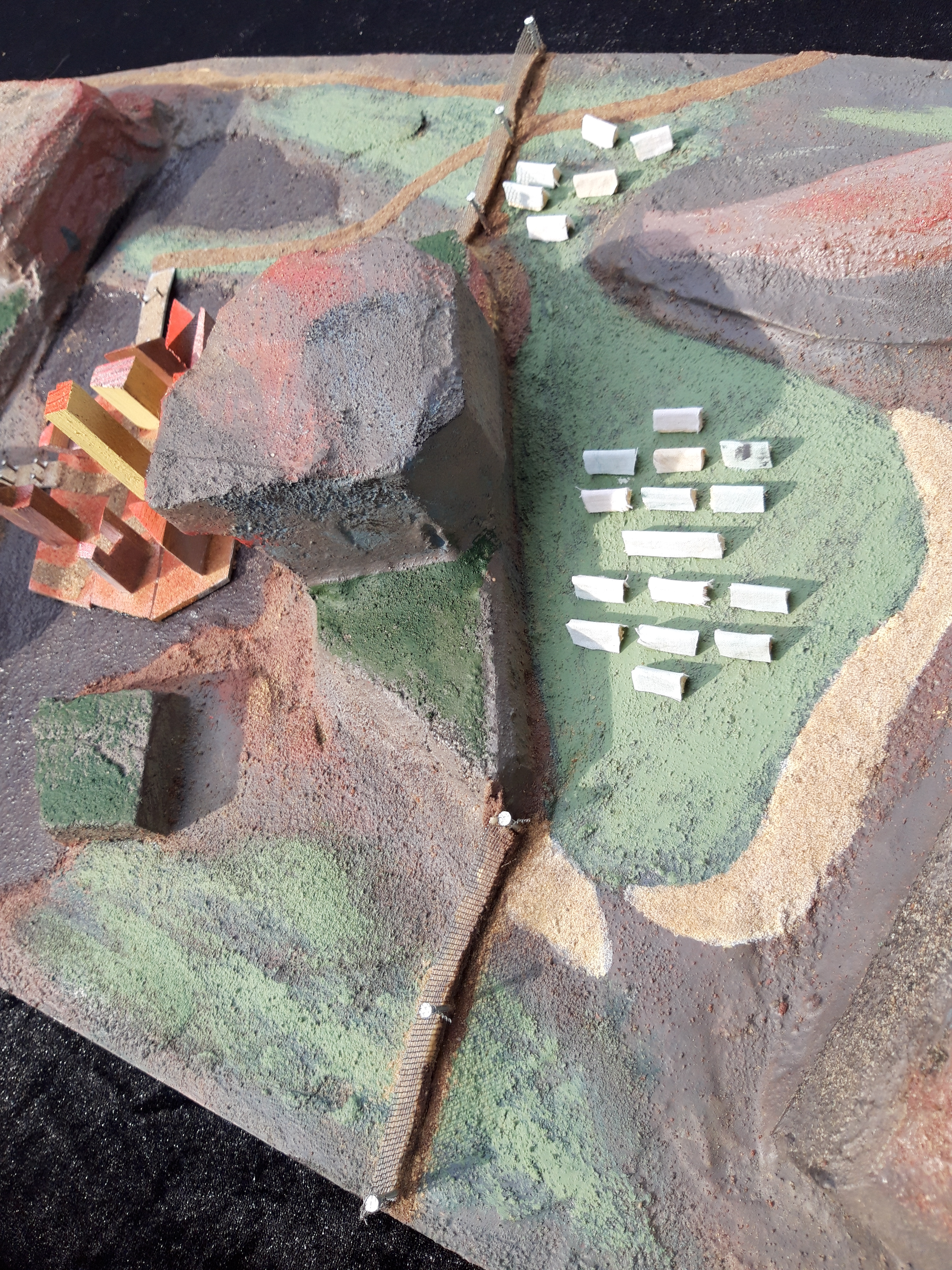
A high gate was raised, on a scale that in real life would be 10 m high, and that makes existing roads and path dead-ends. And a refugee camp was created on the other side of the fence.
“Borders and fences – 2”
Two societies come into existence, populated by the ‘haves’ and the ‘have nots’.
“Borders and Fences – 3”
After the ‘Chinese Wall’ and the ‘Hardrian’s Wall’, modern society got to know the ‘Iron Curtain’, and became aware of the fences that separate Northern and Southern Korea. However, in 2024 the length of walls and fences that separate Israel from Palestine, the (U)SA from Mexico, and in several countries in Europe to impair crossing the borders for immigrants impossible stretch of thousands of kilometers…
“Borders and fences – 4”
All images and texts by Drager Meurtant, 2013 – 2024.
Often the drive is caused by the wish / need to improve living conditions and procreation.
However, the effects may be a disaster for groups indigenous for a specific area. The Black Death, or plague, caused by Yersinia Pestis is related to migration due to war or trade. In the Americas, the arrival of European conquerers did lead to massive slaughter by violence and introduction of diseases for which native people were very vulnerable.
In the 21st century, migration is composed of people hired by companies as well as refugees from counries stricken by war and / or poverty. Increasingly, migration is caused by consequences of climate change.
There is often resitance against the arrival of migrants, often with focus most at refugees.
Walls are created in Europe that exceed mileage manyfold as compared to the former ‘Iron Curtain’.
Still, demographic changes in Europe and some other areas lead to a shift towards old age and insufficient numbers of young workers to keep business going, and threats of deficient care for elderly people…
At NDSM-Fuse the exhibition – curated by Ellen Klijzing – with 35 artists has focus on the experience of refugees.
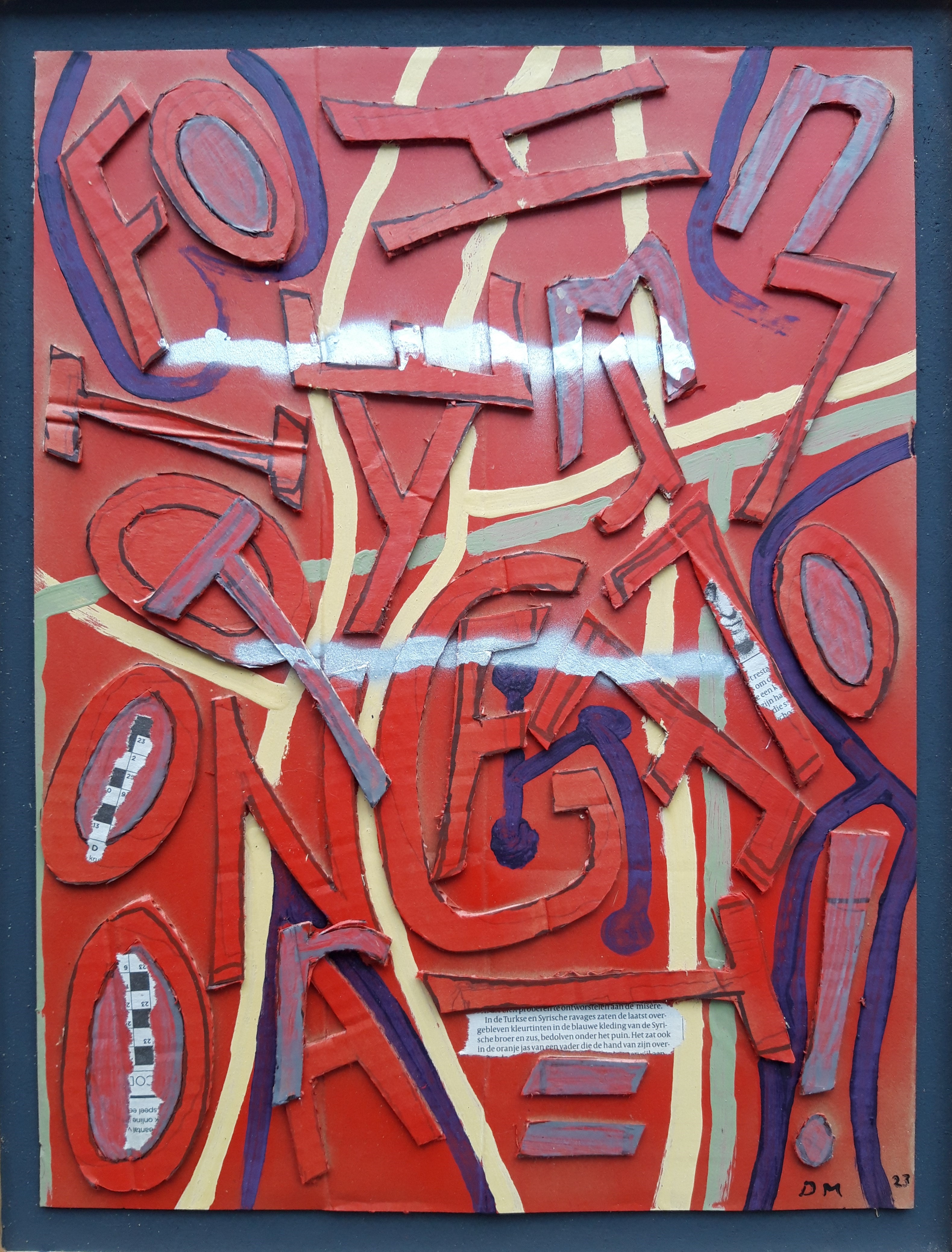
The contribution of Drager Meurtant deals with slogans / banners telling refugees to
“Go To Hell = If You Are Not From Here”
Next to the banner with this text, separate words on pieces of wood, as advised by the curator, are present to charge visitors in seeking for word combinations.
Drager Meurtant, “Frontex – 2”. 2023
Finally, the letters cut from carton to serve as template for the painted banner, are assembled as collage with additional transformation.
Drager Meurtant, “Frontex – 3”, 2023
NDSM-Fuse ON THE RUN (OP DE VLUCHT), September 1st 2023 – January 28th, 2024.
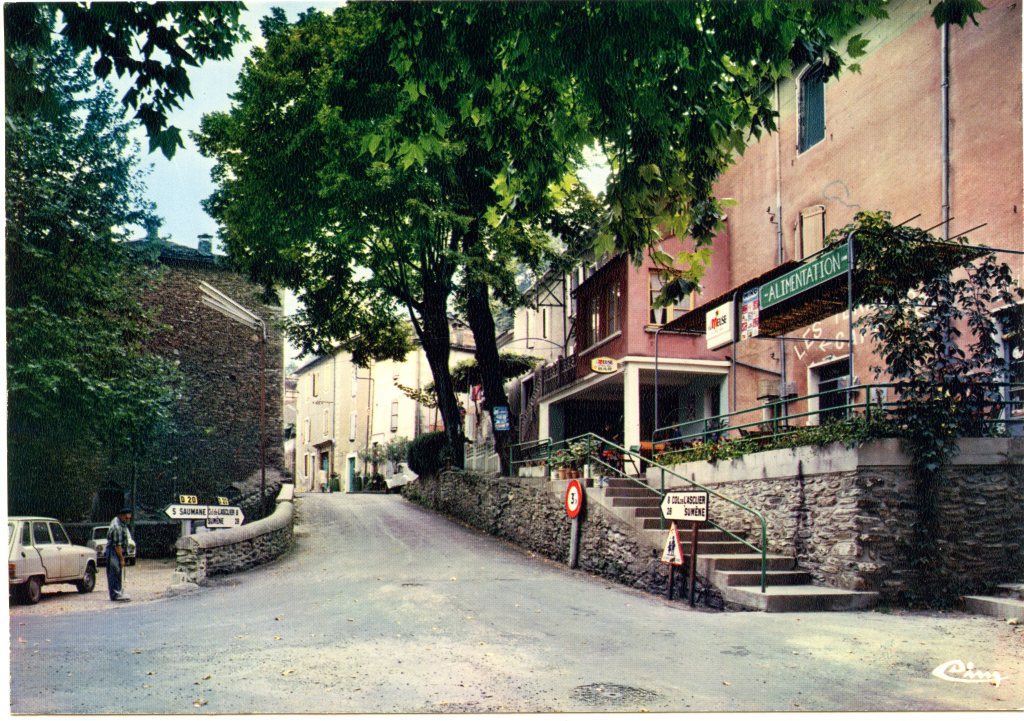
Up until about thirty years ago, villages in France each had their ‘alimentation*’, ‘boulangerie’, boucherie and one or more cafes. In larger villages – as in cities – there was also the ‘quincaillerie’.
Elder men sat on benches smoking pipe while looking at others playing ‘petanque’.
Alimentation in Les Plantiers, (Departement Gard,) about 1980, postcard
As prehistory tells, the earliest humanoid presence in France dates from > 1.5 million years. Up untill 5.000 years ago pockets of human inhabitation consisted of small settlements. In the neolithic period (circa 4500-1700 bc) agriculture was adopted, with parallel development of appropriate tools to work the land and store produced foods. As such, potteries became established. Settlements increased in size.
The following era’s were defined – in archeological terms – by the metal that dominated in tools (and ornaments), with iron, copper, followed by bronze. A major change occurred with the colonization of France (‘Gaul’) by the Roman Empire, of which period many remains are still scattered across the country.
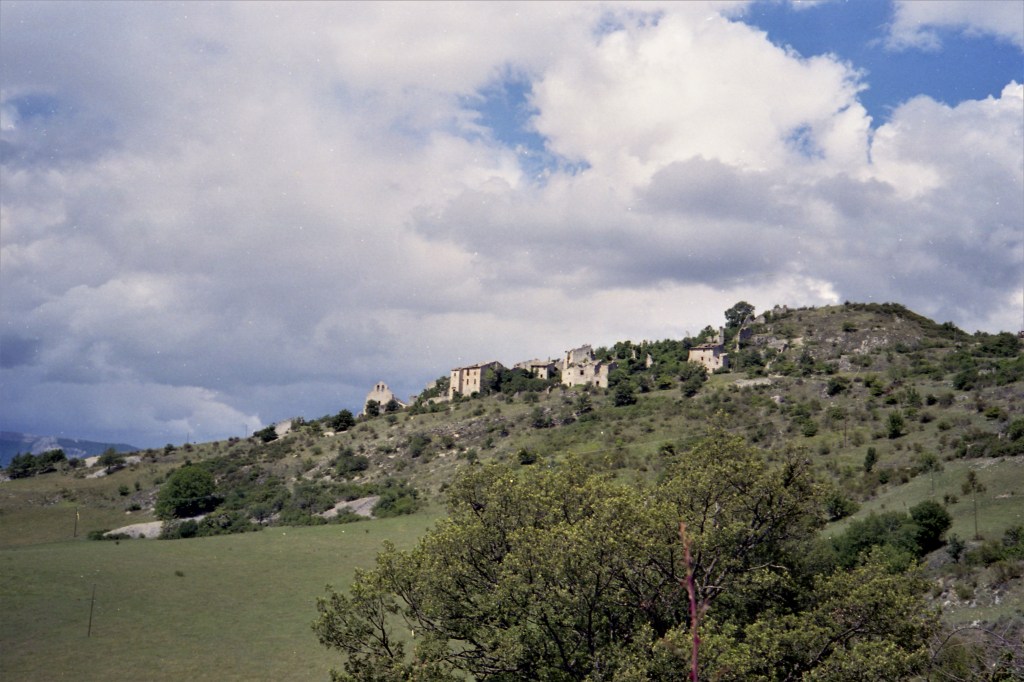
With industrialization in the 19th century the rate increased at which urbanization occurred – with people departing from agricutural regions, a process that continues up to today. Examples of ‘villages abandonnées’ are found all over France’s rural areas. In some regions erosion added to the abandonment of villages.
Abandonned village in The Provence, ca 1980, photo DM
In addition, there occurred the devastating effect of “La grande Guerre” (WW-I), in particular in the north of France. Whole villages were destroyed to the ground, never to be rebuild. In the area above Verdun several of these destroyed villages (‘villages detruits’) can be found. In villages that survived – which ever the size – memorials were raised incised with long lists of victims.
Mort pour la France (Grancey le Chateau, Dep. Côte d’Or) photo DM 2017
However, despite the fact that grenates and bodies were being dug up for decades after the war, life gradually resumed it’s normal course.
Farmer ploughing, Haute-Marne, photo DM 2017
Society in these areas for most of the 20th century still can be defined as people with their connection to their family, work, village, the church, the school, and trade at markets and shops. For travel – if not by car – many railways served to link villages and cities.
Gare de Veynes-Devoluy, (Dep. Hautes-Alpes), photo DM 1997.
Now in 2017
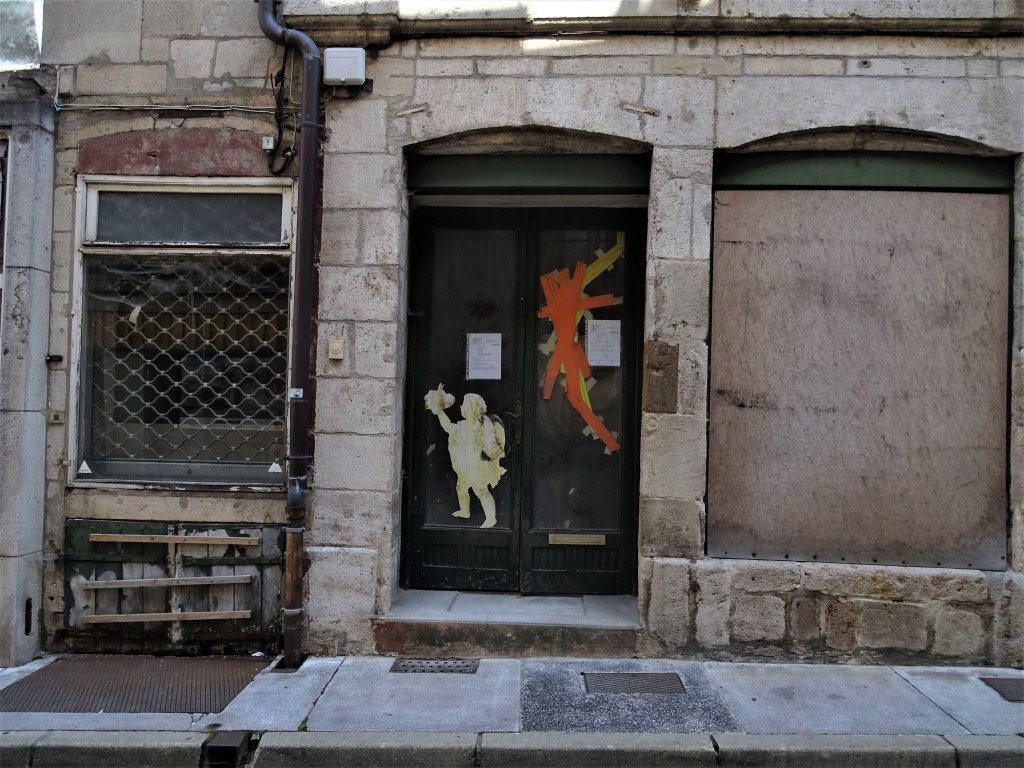
Many villages no longer have their ‘alimentation’ or even ‘boulangerie’. People must go to large shopping centers on the outskirts of larger cities.
Abandonned bakery (‘boulangerie’, in Langres, Dep. Haute-Marne), photo DM 2017.
In small cities like Langres, the same pressure closing smaller stores exists, but the population plus tourists serve to maintain the economy of others.
Boulangerie Maison Gallien, Langres, photo DM 2017
Yet, even in Langres this nice bakery, “Boulangerie Maison Gallien” is threatened with closure, since neighbours – unlike in previous times – now complain about the noise of the bakery at 4 o’clock in the morning. (sign on door: “Nuisances Sonores – une boulangerie en difficulté”, or “Noise Disturbences – a bakery in problems”, post from Le Journal de la Haute-Marne). Likely, ‘modern city people’ working from 8.30 till 17 hours, tolerate less than earlier inhabitants.
Many railroads have ceased to exist. Schools have closed or are threatened with closure. The ‘cementos’ of society crumbles. Foreigners (mostly dutch) buying houses for use during holidays stop decay of abandoned houses to some extent, but leave emptiness during many months in the year.
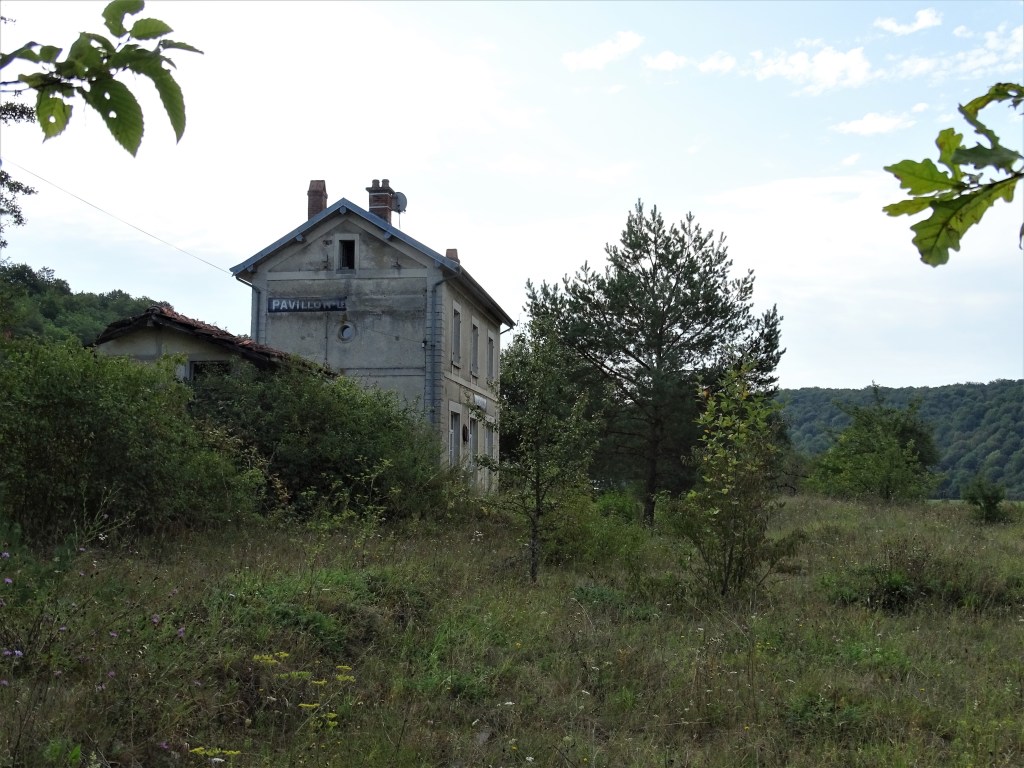
Grancey le Chateau-Neuvilles, Le Pavillon (Dep. Côte d’Or) . Abandonned railway station and former track. photo DM 2017
Perspective
The sometimes exorbitant prices of houses / appartments and of living in large cities such as Paris, plus the unhealthy environment (pollution) and the increased number of retired people are all factors that lead to a move out of these cities towards the country. The existence of rapid trains supports this option. For retailers of small shops, however, future remains uncertain.
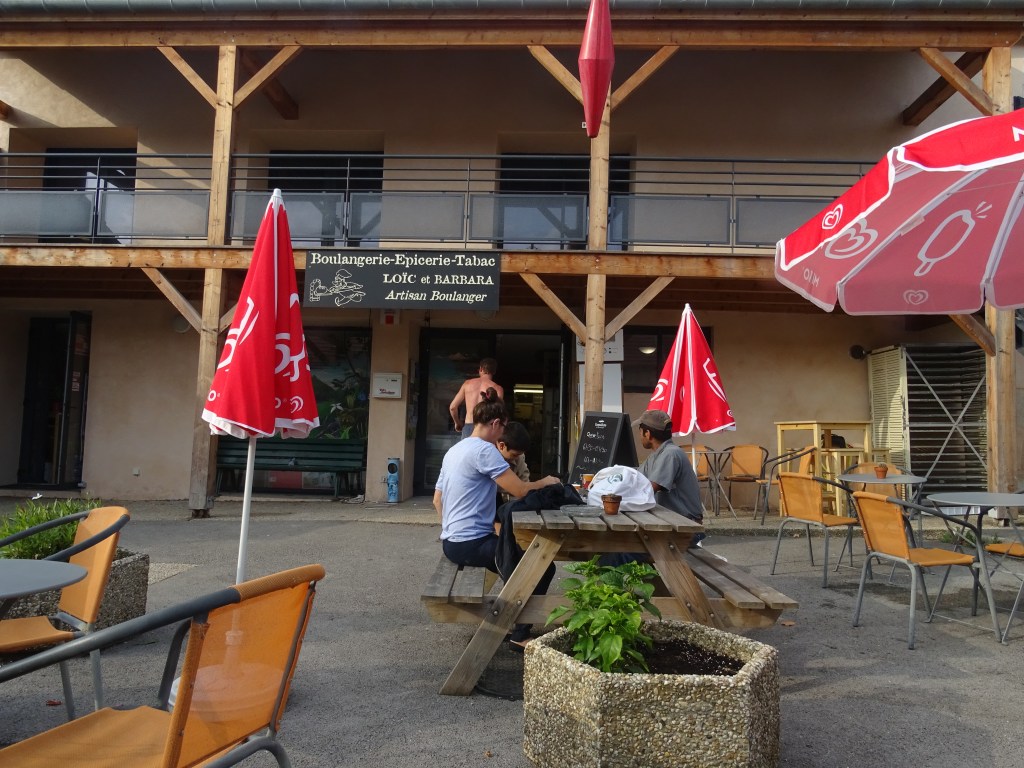
The presence of places of interest, like former Abbey of Auberive, now also Museum of Contemporary Art (focus on ‘independent art’) helps to maintain enterprises such as Boulangerie – Alimentation & Café de l’Abbatiale in Auberive. (Departement de Haute-Marne)
Boulangerie – Alimentation & Café de l’Abbatiale in Auberive, photo DM 2017
Note, added June 1st 2020
The COVID19 Corona-virus pandemie, that also struck France heavily, and led to a lock-down (including inability to move freely for > 1 km from home) for more than 2 months, might stimulate a move from the city to the country.









 drager-meurtant