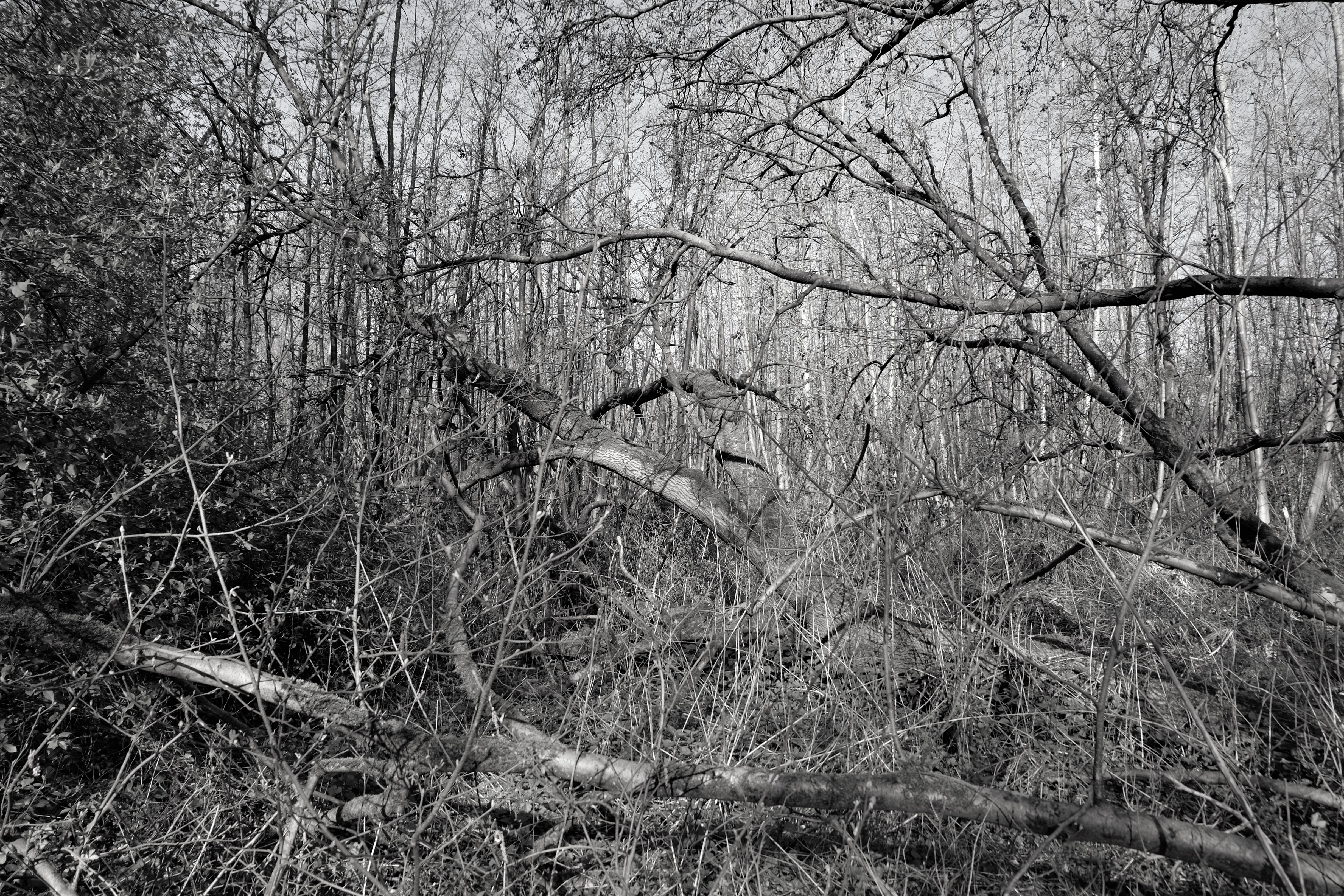
Only after crossing trenches / and brooks, and raising / fallen trees upright, // followed by rubbing out / the dirty ground from narrow eyes, // and by calling loud: “I’m alone!” // motion started behind / the bushes.
Slechts na oversteek van greppels / en kreken, en het rechtzetten / van omgevallen bomen, // waarna de vuile grond uit geknepen ogen / werd gewreven , // en door luid te roepen: “ik ben alleen!” // kwam er beweging vanachter / het struikgewas.
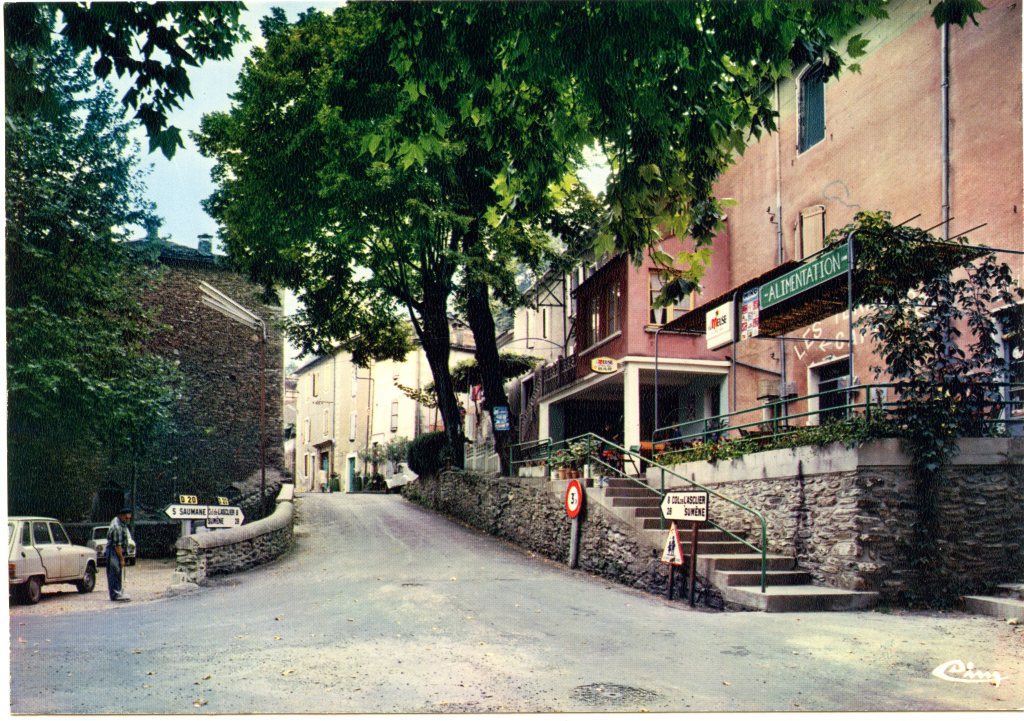
Up until about thirty years ago, villages in France each had their ‘alimentation*’, ‘boulangerie’, boucherie and one or more cafes. In larger villages – as in cities – there was also the ‘quincaillerie’.
Elder men sat on benches smoking pipe while looking at others playing ‘petanque’.
Alimentation in Les Plantiers, (Departement Gard,) about 1980, postcard
As prehistory tells, the earliest humanoid presence in France dates from > 1.5 million years. Up untill 5.000 years ago pockets of human inhabitation consisted of small settlements. In the neolithic period (circa 4500-1700 bc) agriculture was adopted, with parallel development of appropriate tools to work the land and store produced foods. As such, potteries became established. Settlements increased in size.
The following era’s were defined – in archeological terms – by the metal that dominated in tools (and ornaments), with iron, copper, followed by bronze. A major change occurred with the colonization of France (‘Gaul’) by the Roman Empire, of which period many remains are still scattered across the country.
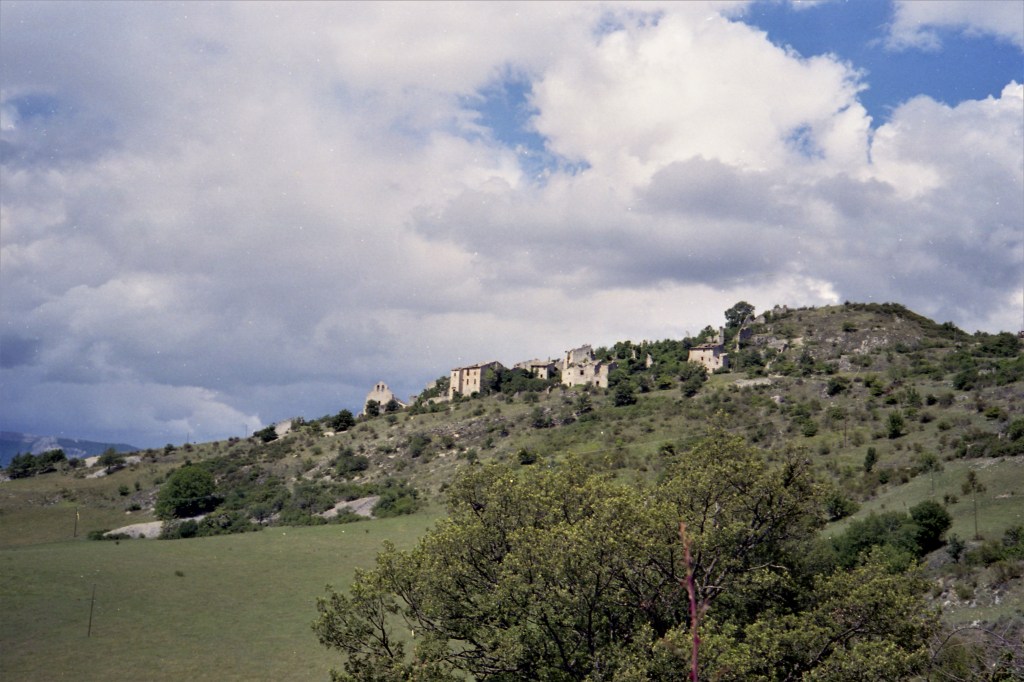
With industrialization in the 19th century the rate increased at which urbanization occurred – with people departing from agricutural regions, a process that continues up to today. Examples of ‘villages abandonnées’ are found all over France’s rural areas. In some regions erosion added to the abandonment of villages.
Abandonned village in The Provence, ca 1980, photo DM
In addition, there occurred the devastating effect of “La grande Guerre” (WW-I), in particular in the north of France. Whole villages were destroyed to the ground, never to be rebuild. In the area above Verdun several of these destroyed villages (‘villages detruits’) can be found. In villages that survived – which ever the size – memorials were raised incised with long lists of victims.
Mort pour la France (Grancey le Chateau, Dep. Côte d’Or) photo DM 2017
However, despite the fact that grenates and bodies were being dug up for decades after the war, life gradually resumed it’s normal course.
Farmer ploughing, Haute-Marne, photo DM 2017
Society in these areas for most of the 20th century still can be defined as people with their connection to their family, work, village, the church, the school, and trade at markets and shops. For travel – if not by car – many railways served to link villages and cities.
Gare de Veynes-Devoluy, (Dep. Hautes-Alpes), photo DM 1997.
Now in 2017
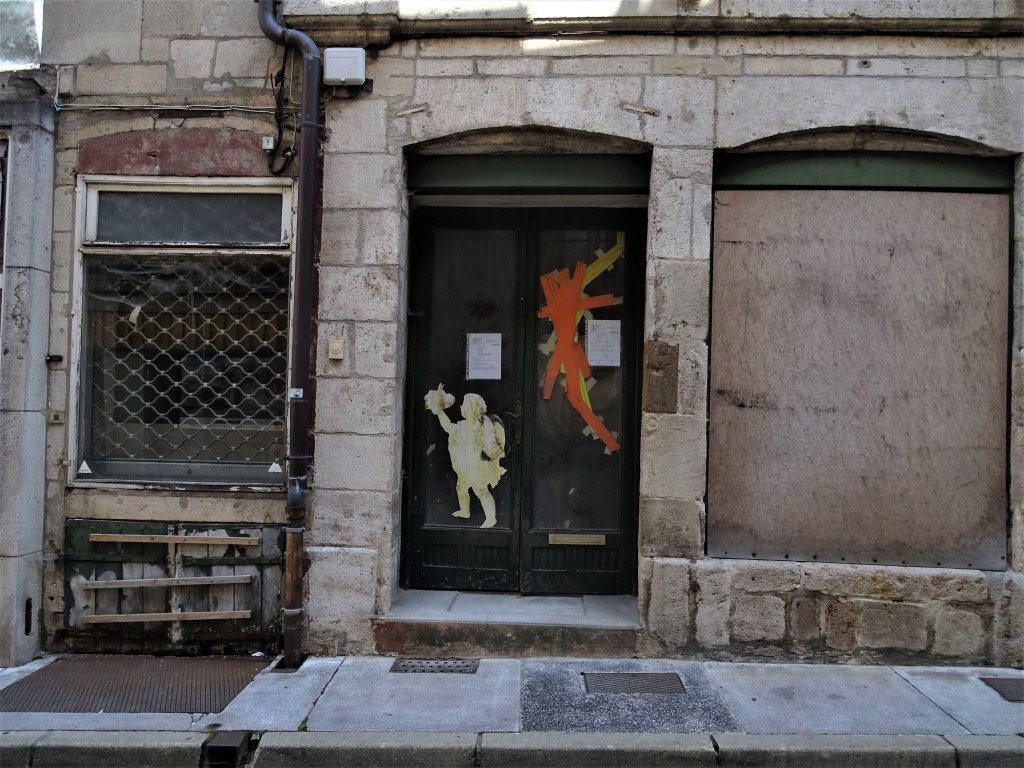
Many villages no longer have their ‘alimentation’ or even ‘boulangerie’. People must go to large shopping centers on the outskirts of larger cities.
Abandonned bakery (‘boulangerie’, in Langres, Dep. Haute-Marne), photo DM 2017.
In small cities like Langres, the same pressure closing smaller stores exists, but the population plus tourists serve to maintain the economy of others.
Boulangerie Maison Gallien, Langres, photo DM 2017
Yet, even in Langres this nice bakery, “Boulangerie Maison Gallien” is threatened with closure, since neighbours – unlike in previous times – now complain about the noise of the bakery at 4 o’clock in the morning. (sign on door: “Nuisances Sonores – une boulangerie en difficulté”, or “Noise Disturbences – a bakery in problems”, post from Le Journal de la Haute-Marne). Likely, ‘modern city people’ working from 8.30 till 17 hours, tolerate less than earlier inhabitants.
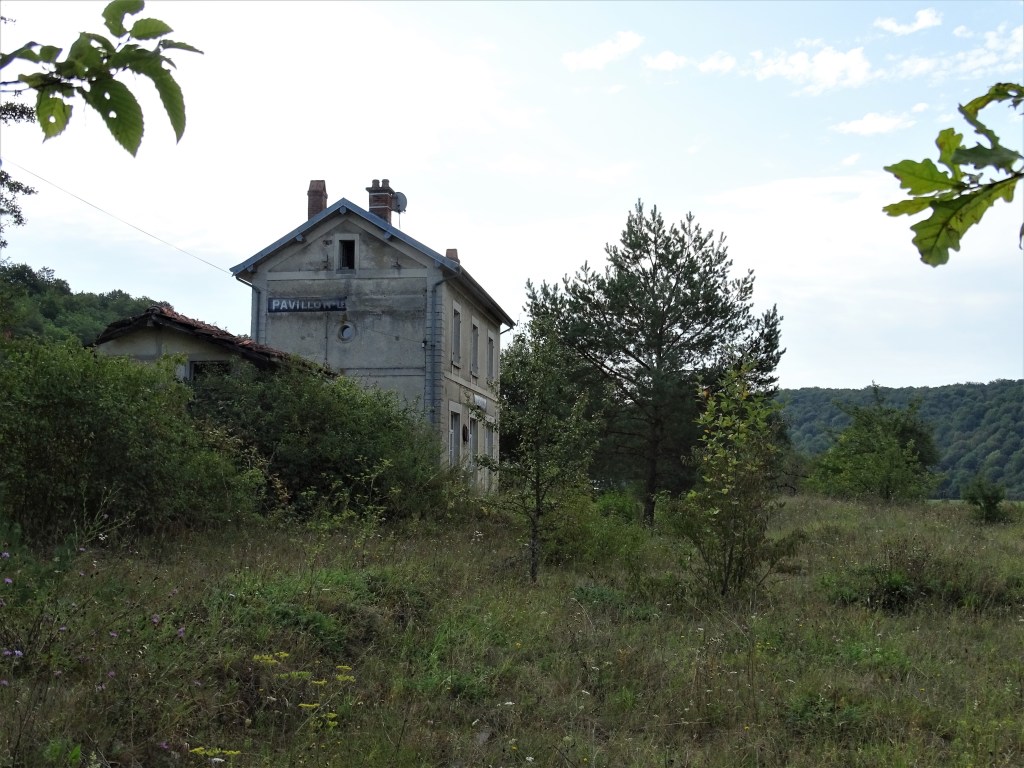
Many railroads have ceased to exist. Schools have closed or are threatened with closure. The ‘cementos’ of society crumbles. Foreigners (mostly dutch) buying houses for use during holidays stop decay of abandoned houses to some extent, but leave emptiness during many months in the year.
Grancey le Chateau-Neuvilles, Le Pavillon (Dep. Côte d’Or) . Abandonned railway station and former track. photo DM 2017
Perspective
The sometimes exorbitant prices of houses / appartments and of living in large cities such as Paris, plus the unhealthy environment (pollution) and the increased number of retired people are all factors that lead to a move out of these cities towards the country. The existence of rapid trains supports this option. For retailers of small shops, however, future remains uncertain.
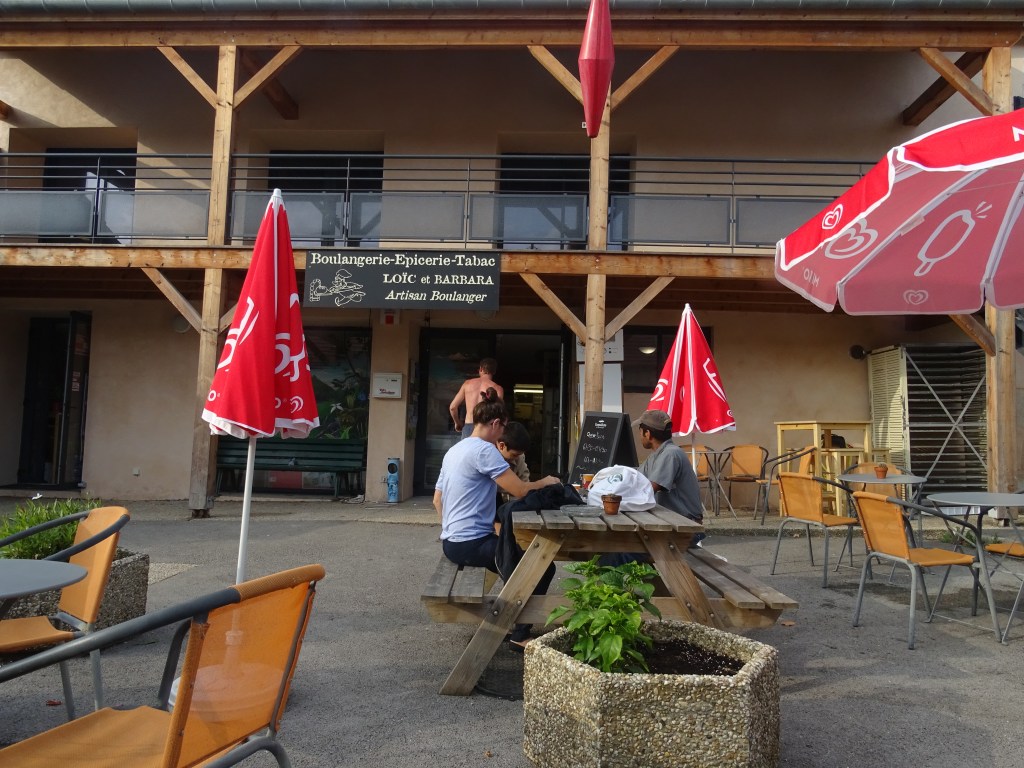
The presence of places of interest, like former Abbey of Auberive, now also Museum of Contemporary Art (focus on ‘independent art’) helps to maintain enterprises such as Boulangerie – Alimentation & Café de l’Abbatiale in Auberive. (Departement de Haute-Marne)
Boulangerie – Alimentation & Café de l’Abbatiale in Auberive, photo DM 2017
Note, added June 1st 2020
The COVID19 Corona-virus pandemie, that also struck France heavily, and led to a lock-down (including inability to move freely for > 1 km from home) for more than 2 months, might stimulate a move from the city to the country.
People often buy a bed, when entering adulthood. A bigger bed, when living (and sleeping) together.
When getting old, the number of hours in bed often increases, even when sleep is more disturbed and irregular.
Then comes the time, that those who used the bed, will pass away.
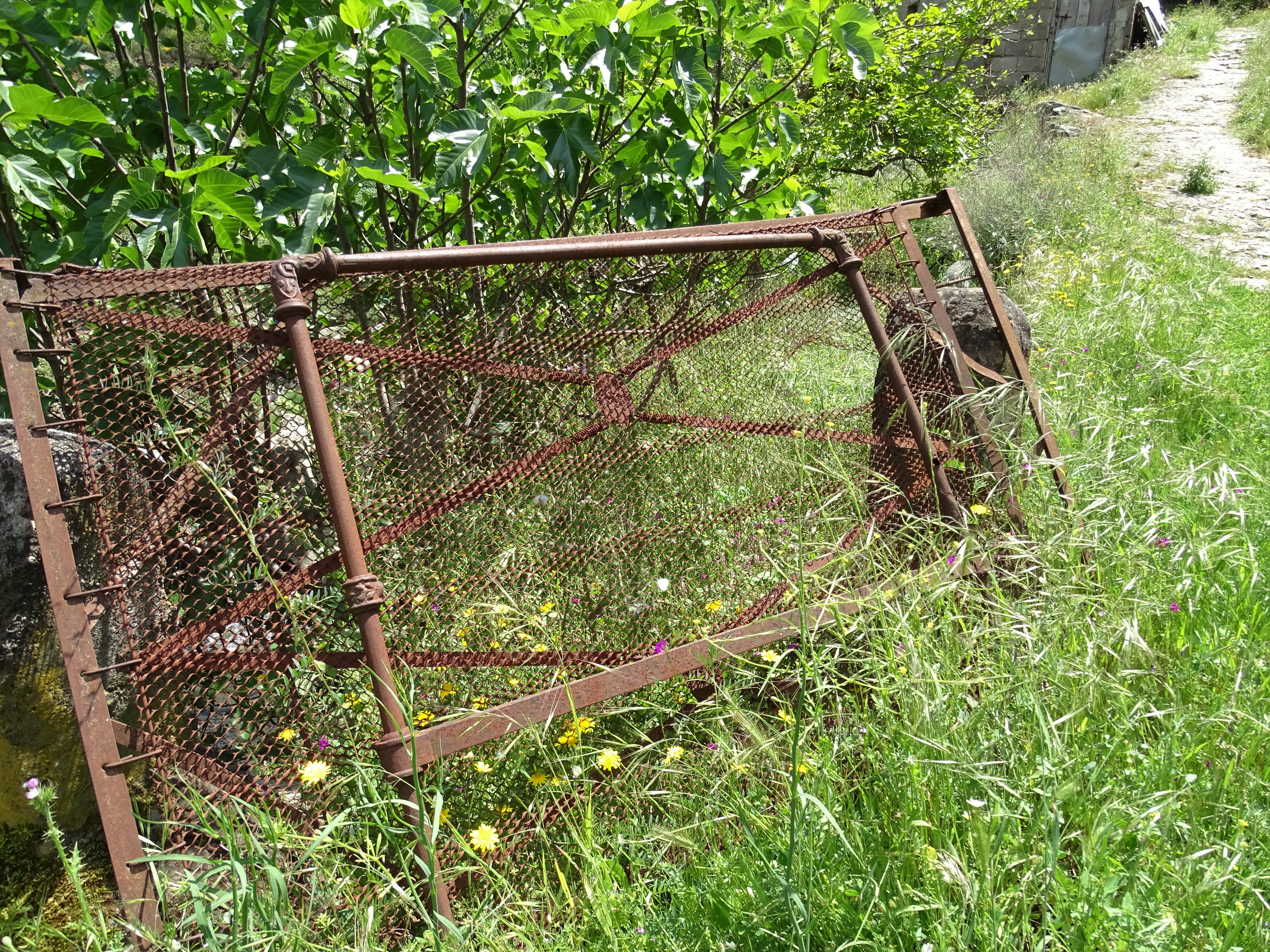
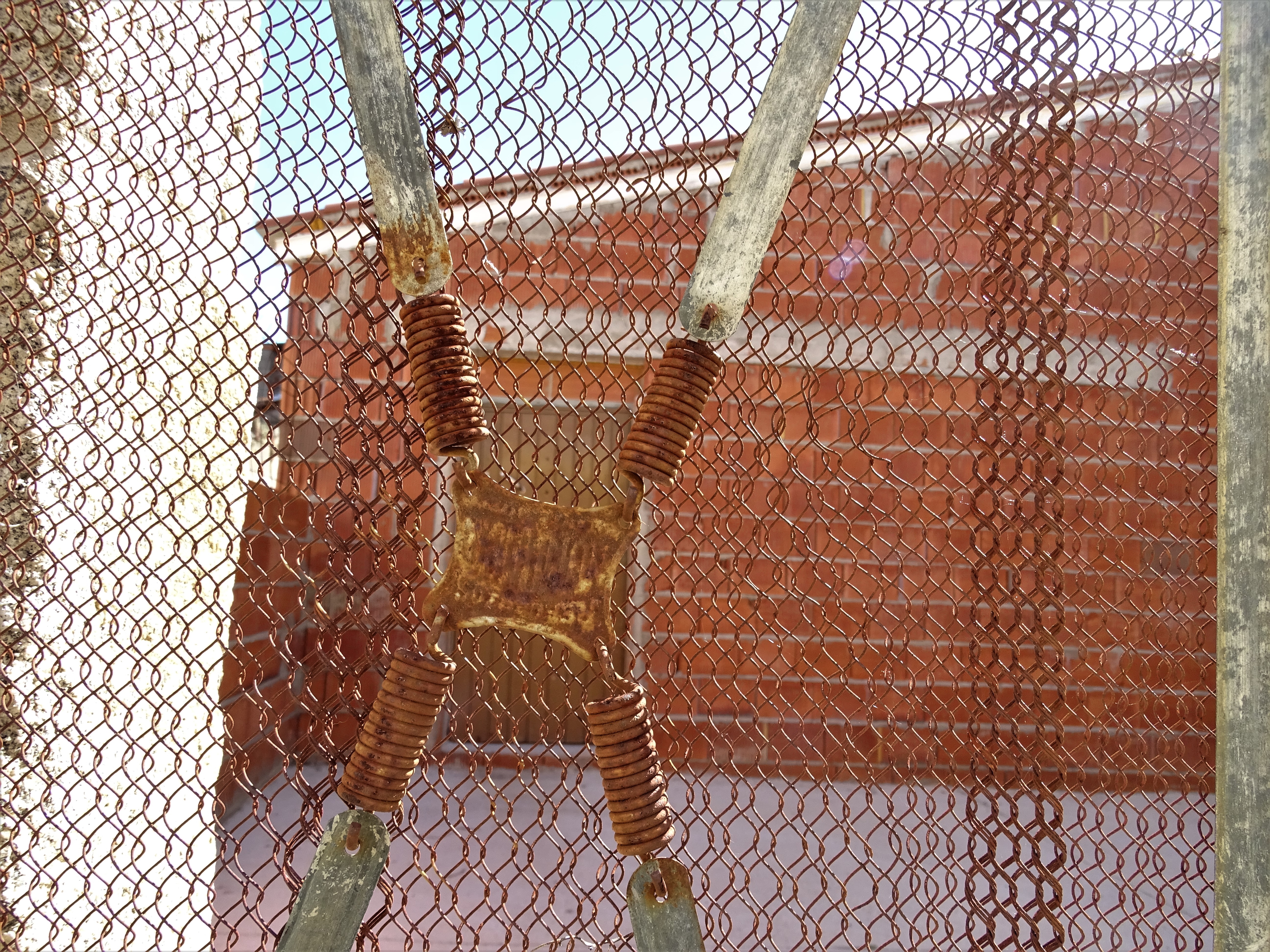
In some regions, people tend to use the bed spiral base, that is left alone, for other purposes. Preferred is their use as part of a fence or gate.
Walking in Las Hurdes (Spain) in 2018, we encountered several such transformations.
Bed spiral turned into a fence (1)
Bed spiral turned into a fence (2)
Bed spiral turned into a fence (3)
Bed spiral turned into a fence (4)
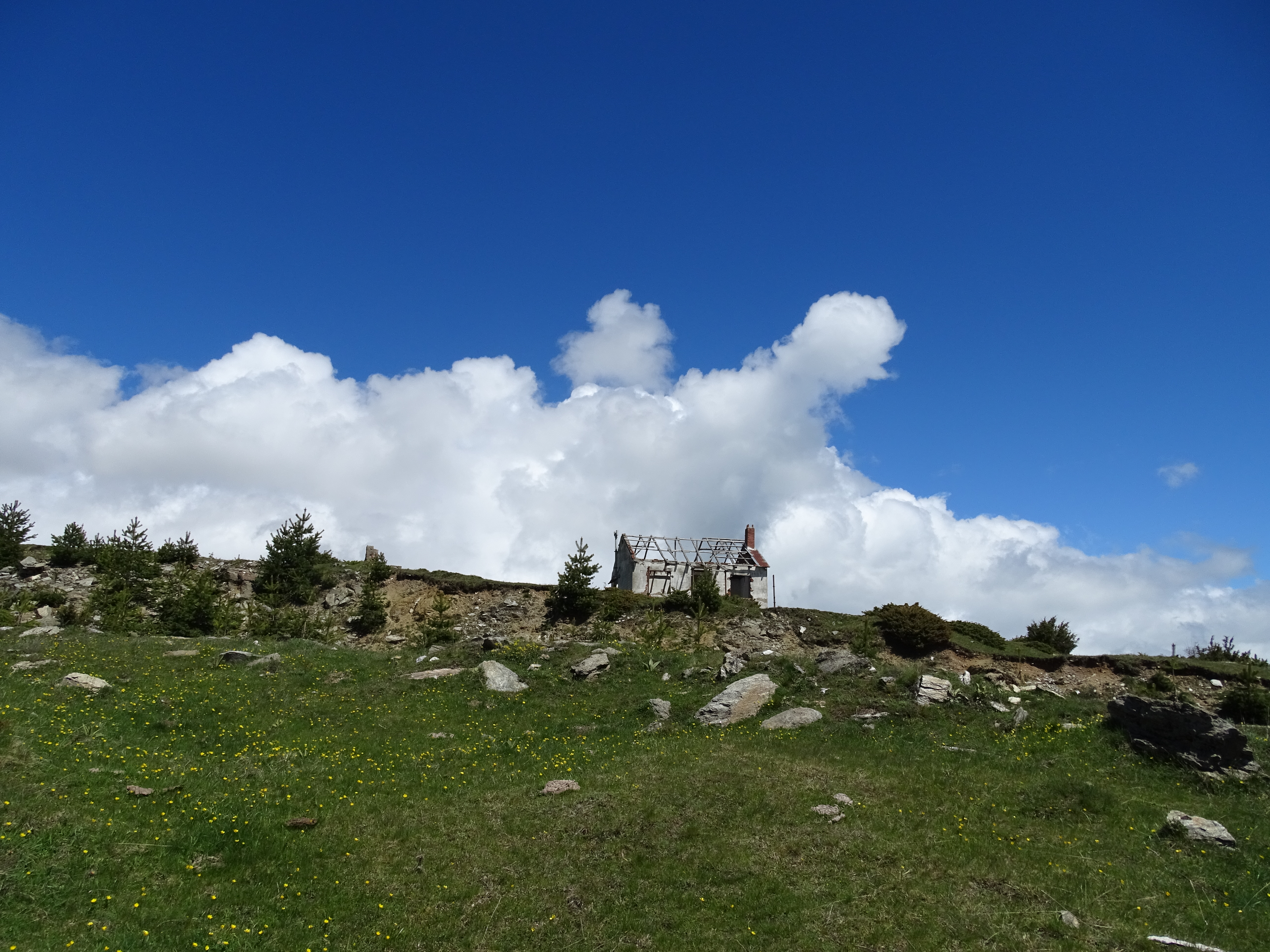
One must not be surprised by the fact, that in the same environment, the number of abandoned houses is high.
House abandoned in Las Hurdes (Spain)
It need more research, to establish whether the transformation of (usable?) bed spirals inherited from parents or grandparents, is caused by unwillingness to sleep on such elements earlier used by people that have passed away, or by the wish to have better quality. Yet, the transformation into fences or gates has significance as signal of the border of states of existence.
“Curiosity and strangers / are good partners” (Las Hurdes, Spain, photos and text Drager Meurtant, 2018-2019)
In countries like Greece, the visitor must rely on stones to get a grasp of history and important developments of culture.
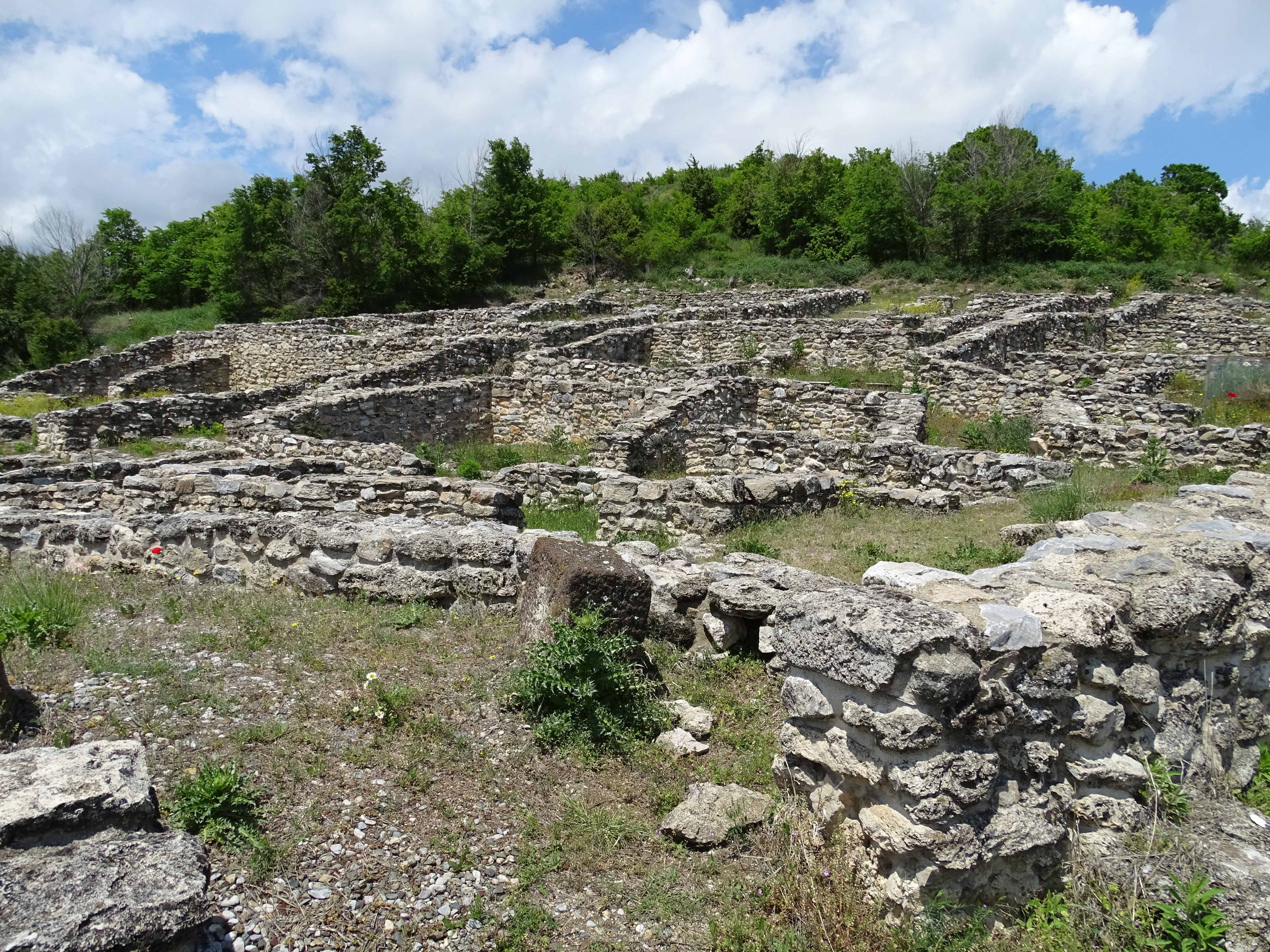
During a short journey in May 2019, In the department of Pella, Macedonia, Greece, we followed signs indicating “Ancient Archeological Site of Petres”.
When arriving there, and having parked the rented car and after walking about 400 m, the most surprising elements to us, were ancient big jars, present in many houses, that had been installed to store water (photo 1).
Looking at the plan of the small city, with rectangular houses, one starts to imagine people walking here, more than two thousand years ago. Discussing family affairs, the harvest, trade, threats… (photo 2).
The firm conclusion was: use talk, or writing, as social medium.
Information about the history of Ancient Petres:
“The ancient city occupies a natural mound to the NW of the village of Petres, in the region of Florina. Its total area reached 15-20 hectares and was protected by a fortification wall built of poros stone. The enclosed area included houses, and public buildings erected in a free layout, separated by streets, 2.5 m. wide. The city was founded in the 3rd century B.C. by Antigonos Gonatas, it flourished in the 2nd century B.C. and it ceased to exist in the 1st century B.C. It was again inhabited in the Roman period, but it moved to a different site.
The archaeological evidence leads to the conclusion that the city owed its development to its strategic position on the Egnatia Road and to its commercial exchanges with other Greek cities. The excavations of the site revealed useful information on the types of the private houses, which were continuously used in north-west Macedonia as late as the 19th century.
Excavations on the site were begun in 1982 and are still in progress, along with restoration and consolidation work of the ancient remains.
When dreams arrive, the content is not indicated on the envelope
(Jacques de Santo Torres (1888-1972)
A first dream:
Sitting in the backseat of a car, with increasing speed going down a steep slope and then, the gradual discovery that the driver is asleep, or dead?
Next, a second dream:
Walking through corridors that resemble my former school, realizing that preparations for exams at the end of this year have been poor, that time and perseverance is lacking, always being too late for class and ill-focused…
Then, a third dream :
People are waiting for me, to take charge. To deal and treat conditions of defect, of suffering. Yet, I don’t know the password and I’m not dressed to the occasion. I’m simply not instrumental…
These are dreams that threaten with defeat, that reflect one’s inner perception to be doomed to failure. I do not have a subscription to such dreams. But, once in a while, ill-managed delivery makes these land on my doorstep.
« – »
Can a dream be a memory?
Dreaming Cubistic, Drager Meurtant, August 17, 2017
Can a dream
be a memory
and if so
depends the format
on the shape of the display?
« – »
From dreams I turn to the real world. That is, if the creation of art is part of the real world, and not (more so) placed at the border of the dream-world and the dreadful daily circumstances of life. Some time ago I recited a poem standing opposite of a statue which I had made, and surrounded by spectators and listeners. That time I chose the position of the creator, and the statue was obliged to listen.
« – »
Poem for a statue
Rudimentary, Drager Meurtant (2016)
Statue, you look at me
with your fool’s eyes,
that are no eyes.
Statue, your mouth swears
my imperfection
to tell the truth.
You suck me empty
you drown my power
you feed yourself
with my imagination
and leave me hollow.
« – »
Streaks on the window
Streaks on the window (Drager Meurtant, December 4, 2017)
The streaks on the windows
don’t say nothing,
such as “when do
I see you again?”
at the exit
of the supermarket.
« – »
Bridges are encountered in several forms of dreams. As stated by an expert in dreams: “The bridge often has the significance of crossing or moving from one phase of life, activity or emphasis to another” (reference: Tony Crisp, http://dreamhawk.com/dream-dictionary/bridge-2/).
What if a bridge?
What if a bridge?, Drager Meurtant, lino-cut, 2017 (ed. 1/3)
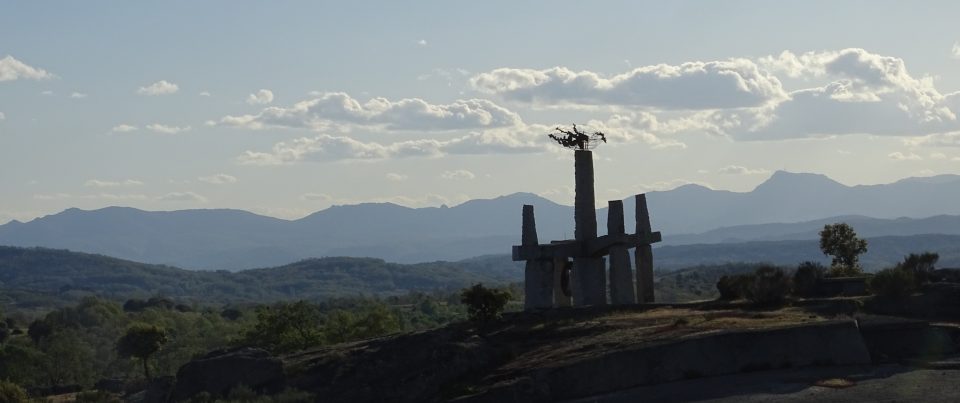
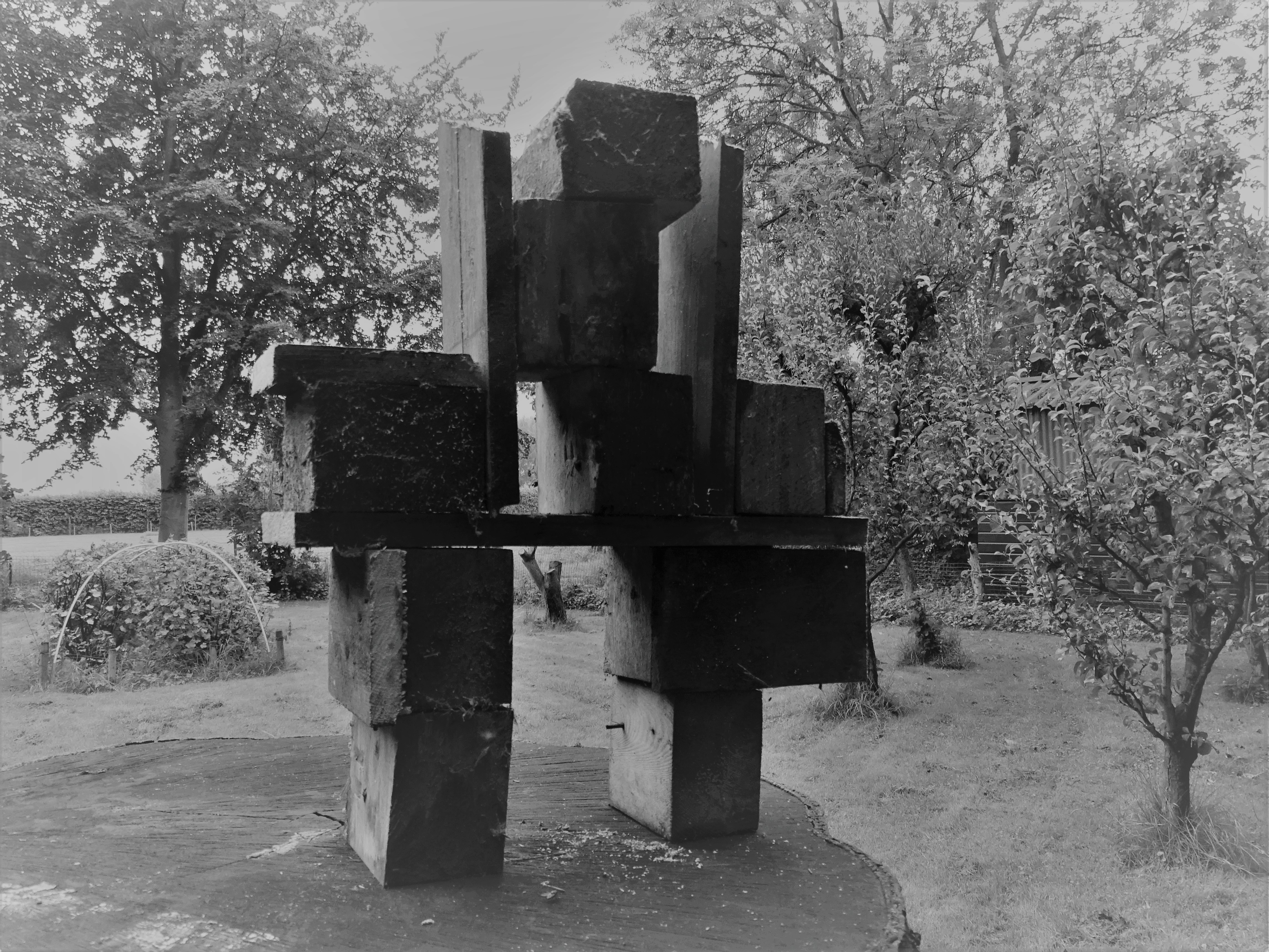
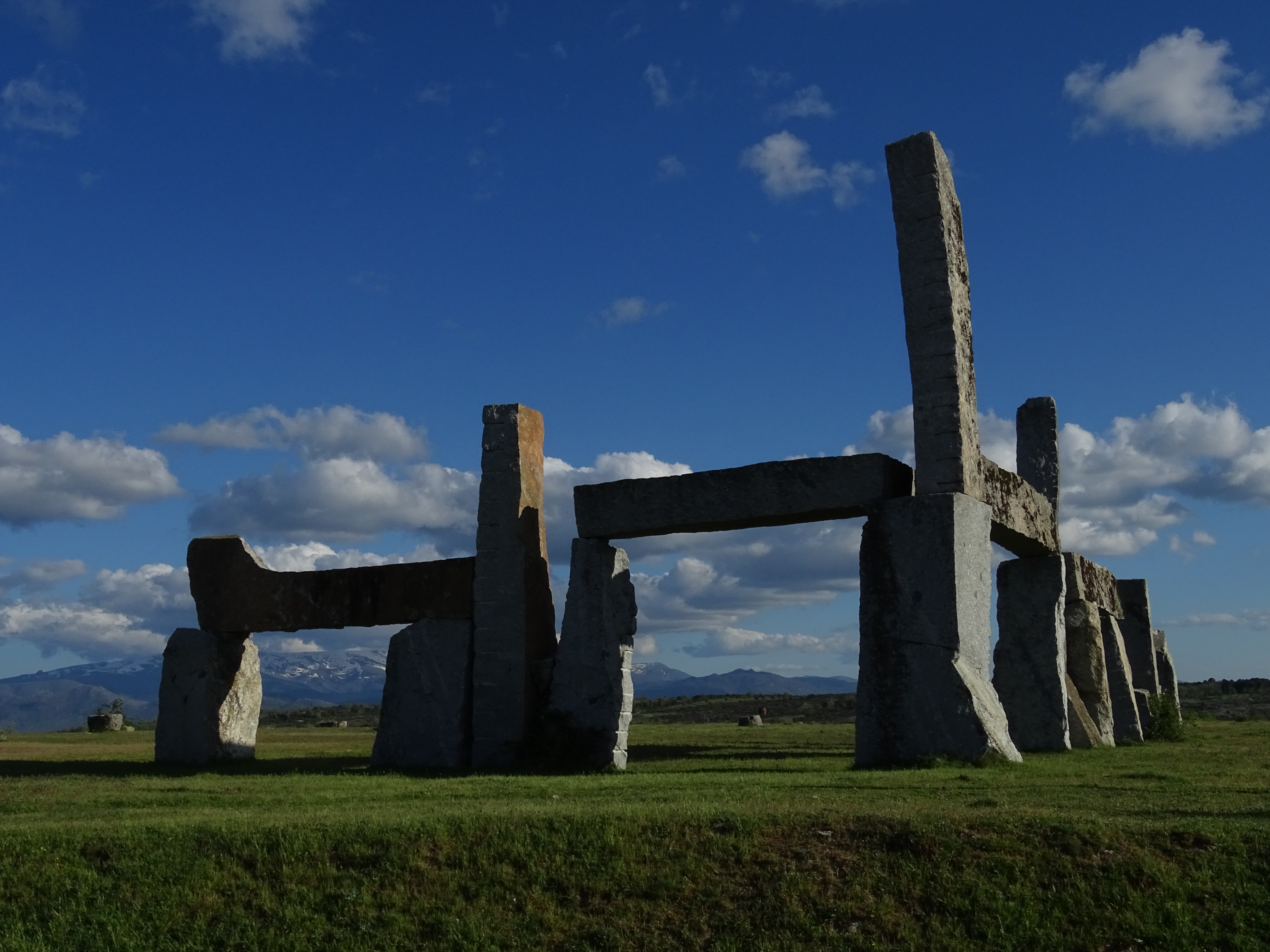
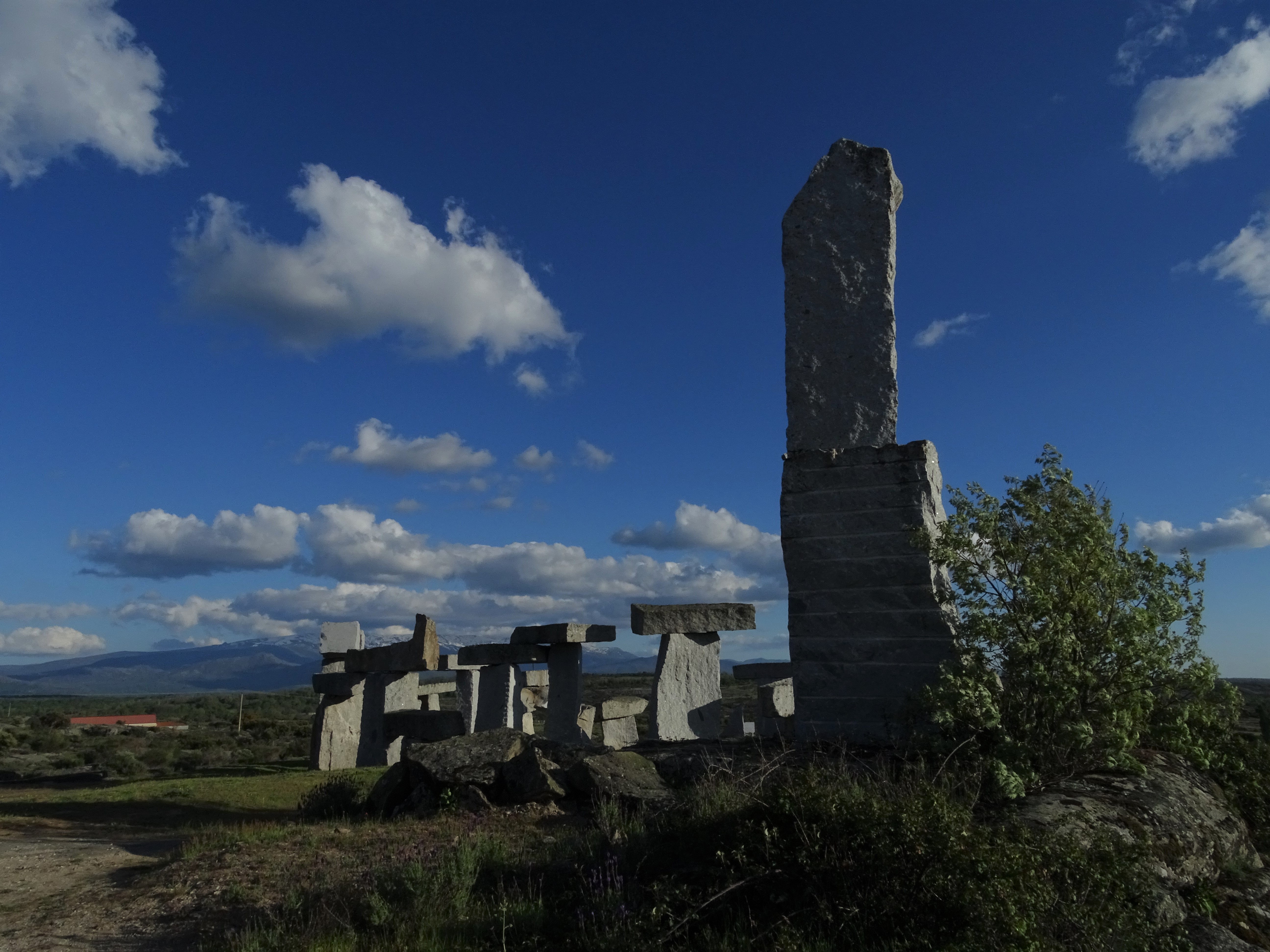
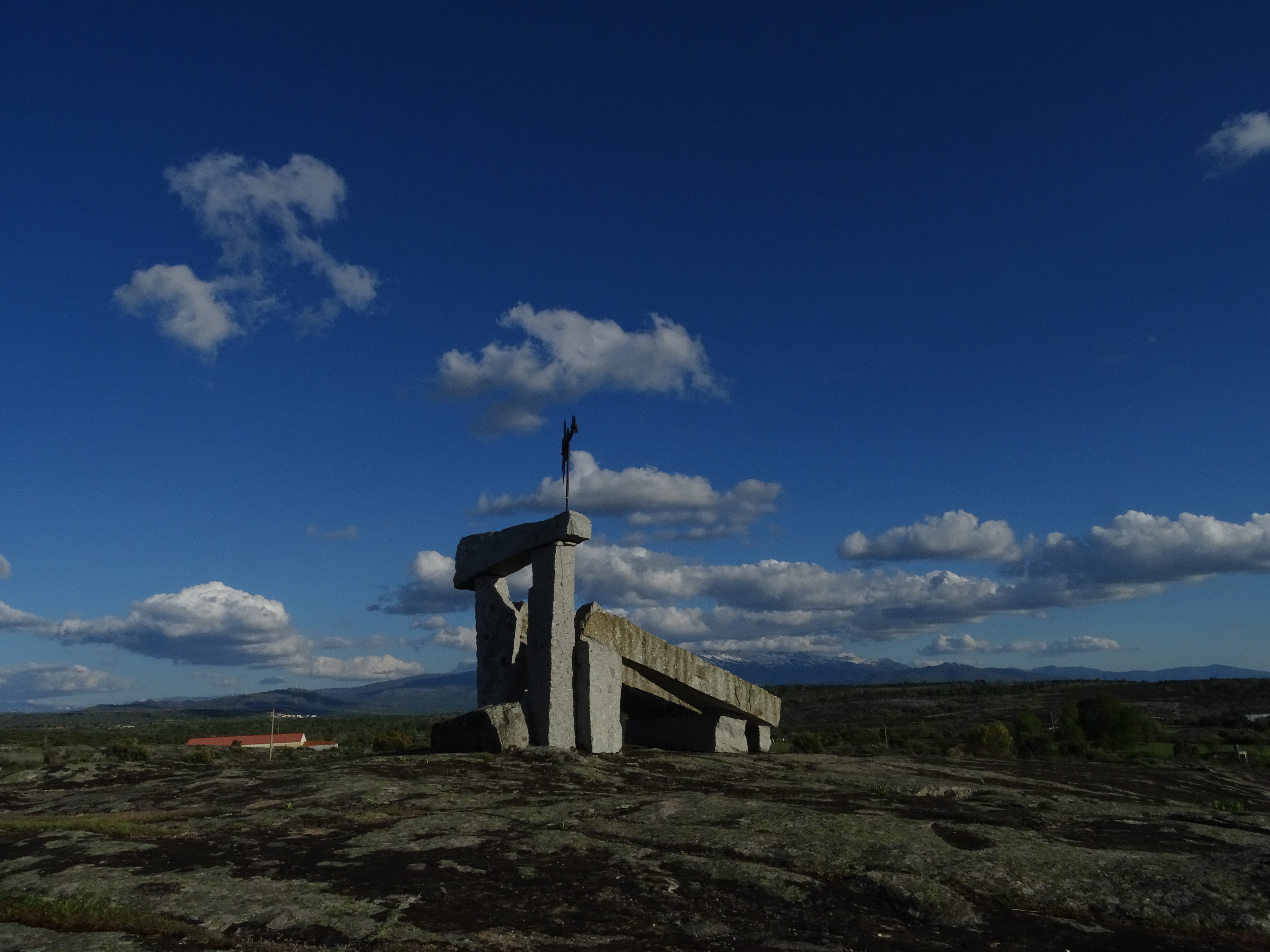
In the province of Salamanca in Spain, close to the village Los Santos, there is the amazing Parque Tématico del Granite de los Santos.
Driving small and quiet road from Salamanca to Bejar, the parc is on the left. Huge blocks of granite, derived from nearby quarry, are placed as installations (see photos).
“if you are able / to put stones together / likes tones in a composition / the wind will whistle compliments.”
“The stand-still of stones is a dream that moves at a speed, unvisible for the human eye”
“The clang of rocks, hit by a hammer, produces a pain that can be tolerated by sculptors”
The artist puts a metal figure on rock: stone age preceded iron age.



























 drager-meurtant