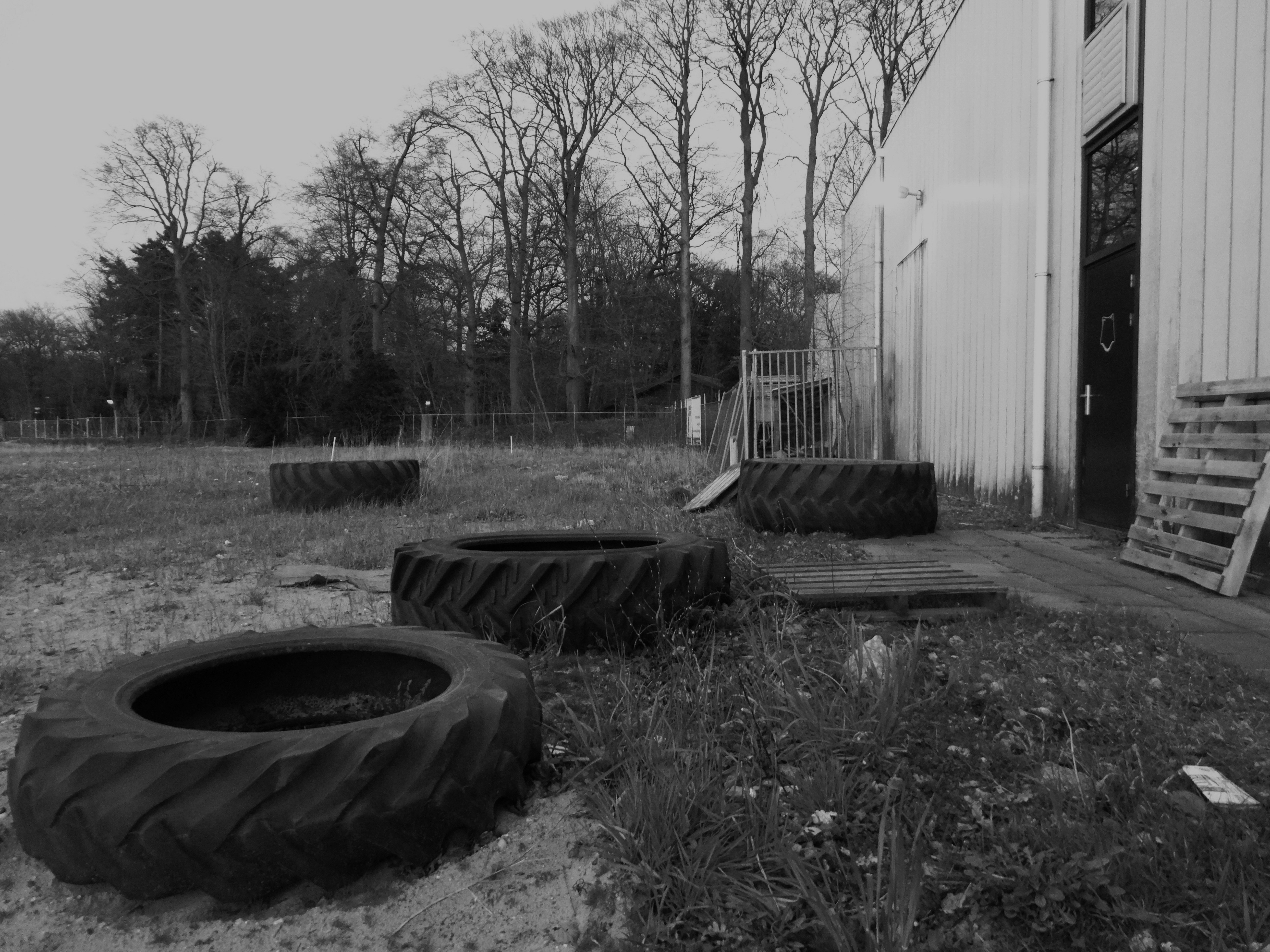
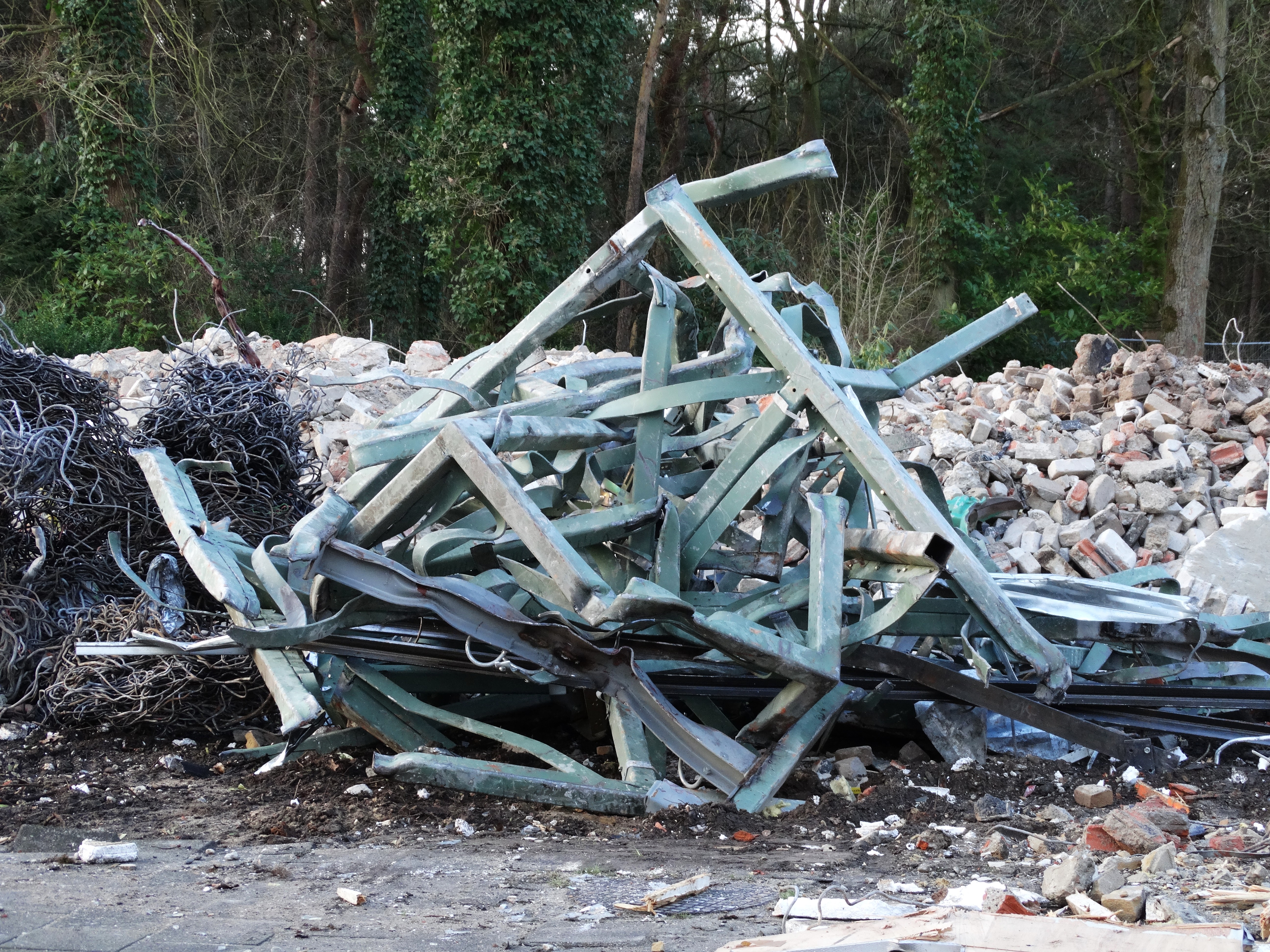
• About

drager-meurtant

~ The world is made up of elements, catched by light-writing or assemblage.

drager-meurtant

Category Archives: Dada

Judges Report Final Round Figurative Art in Three Dimensions

31 Friday May 2019

Posted by dragermeurtant in abstract, art, Art competition, Dada, Figurative art, installation, kunst, philosophy, photography, street photography, structure, Uncategorized

≈ Leave a comment

Tags

3-D, abstract, Dada, decision, fotografie, installation, instruction, jury, kunst, nothingness, photography, ready-made, report, Spain, subversive, three-dimensional, wall

Judges Report Final Round Figurative Art in Three Dimensions

XXth Competion at Art Center VIMOMUX, year 2019

After thorough deliberation, trying to reach consensus and equal imput of the members of the jury, a final decision was reached on the three submitted art-peaces created by Drager Meurtant (NL, 1951)

During the process, the five members from the jury weighed the pros and cons of artistic protuberances, by applying the elementary principles prescribed for separation of figurative versus abstract (Instruction Report #A12B-567, 1983).

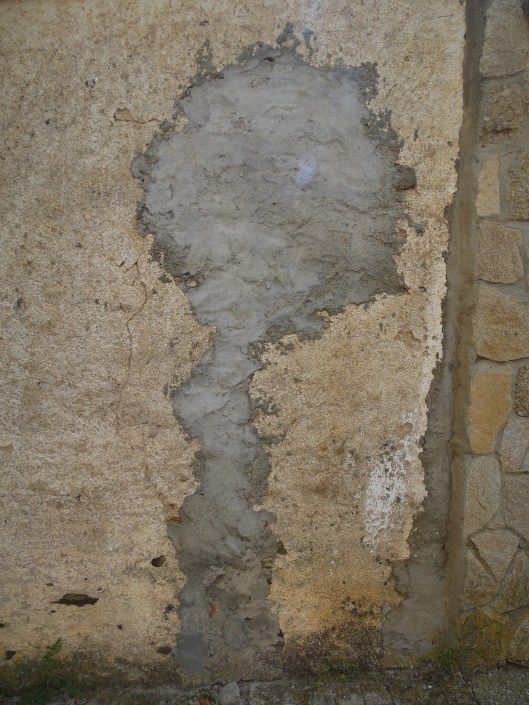
DSC08681

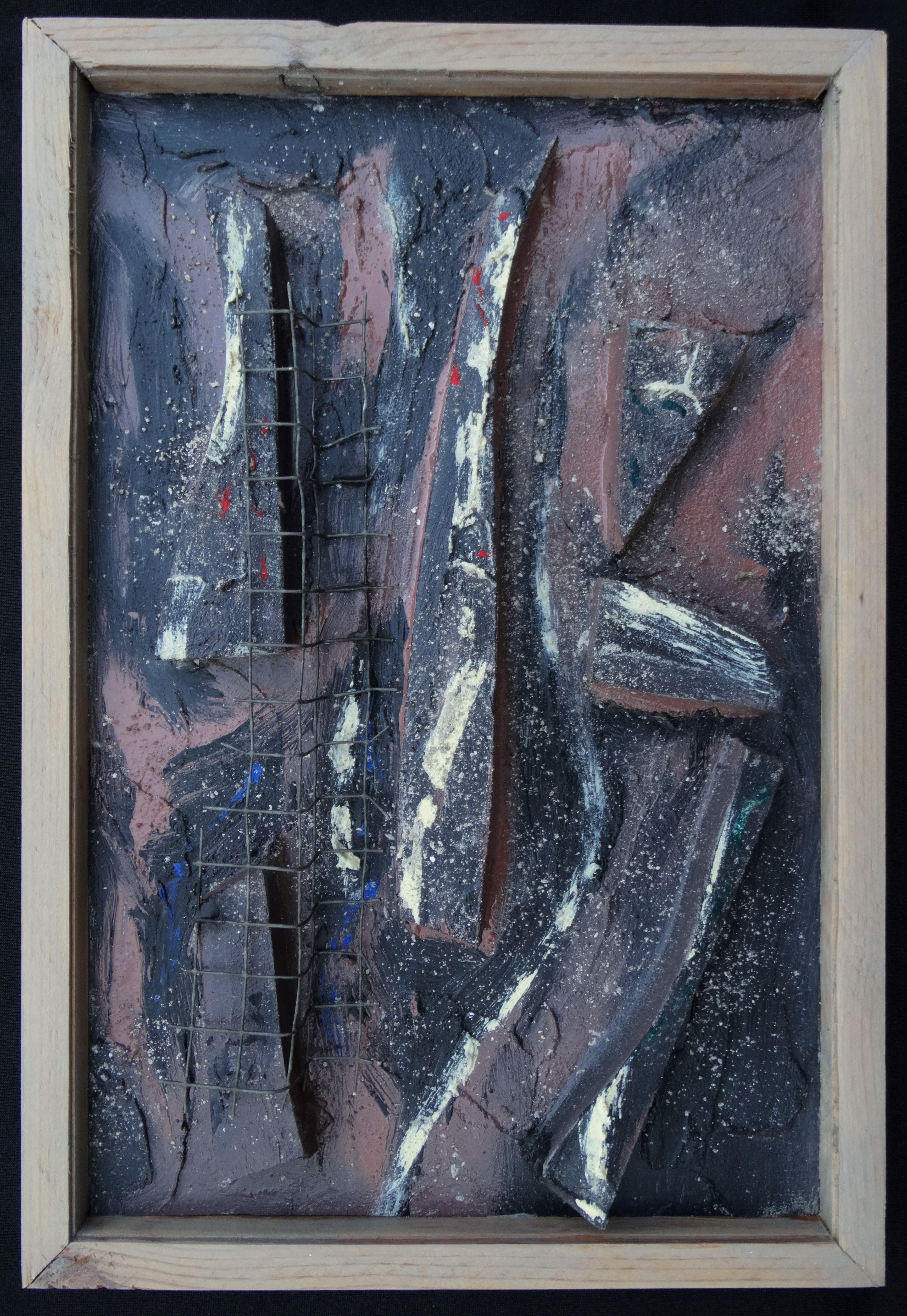
“Sorry Jean”

Art-peace One: “Sorry Jean” (2018)

Comments: the raw, primitive nature of the semi-figurative concrete relief, associates firmly with the wall and hence, the placement creates an actuality in addressing contemporary trauma. The integrative character expressed by the circumstantial placement on pre-existing background, makes the art an holistic event. The wholeness further enhances the pertinent relation with contemporary queries into the genesis of soul as sole force feeding eternality.

Decision: accept.

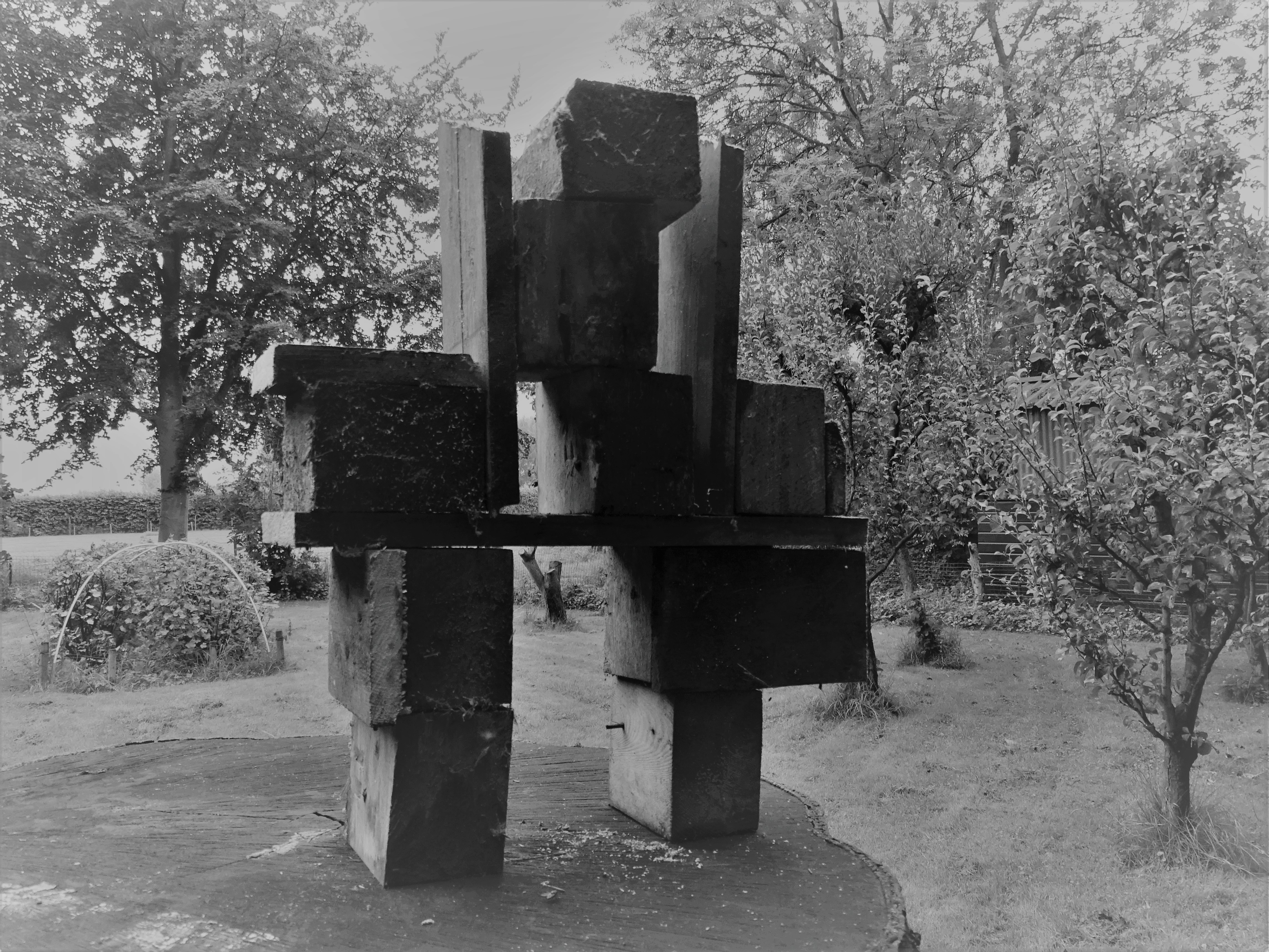
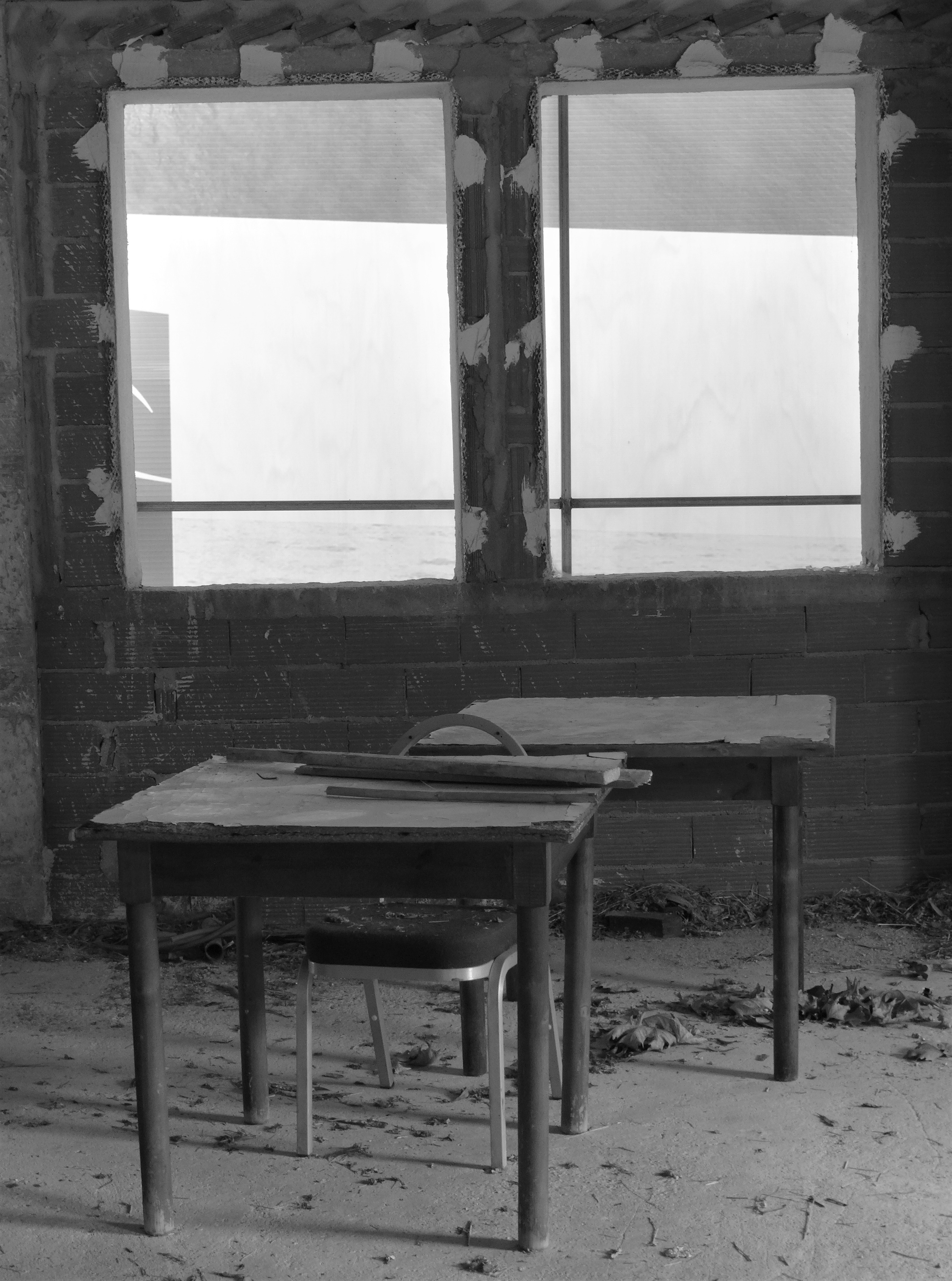
solitary traveller

“Solitary Traveller”

Art-peace Two: “Solitary Traveller” (2018)

Comments: this ready-made, sculptural figuration really transpires the solitude, as the title implicates. By referring to the multiple miniature quadrants, the depth of research is enhanced, for the validity of use of objects – that in their history served a different role – in art practice, as this was first employed by Marcel Duchamp (Bicycle Wheel, 1913) or even earlier by the DaDa artist Elsa, the Baroness of Freytag-Loringhoven, with her Enduring Ornament (1913).

The blackish color reflects the loss of relevance of this art-medium for many art-historians. The use of one-sided lighting anguishes the perception by the viewer, in it’s ineluctable blow of the flow of time towards the end, without escape. In this way, the figure announces death, as already can be derived from the two title words.

Decision: accept.

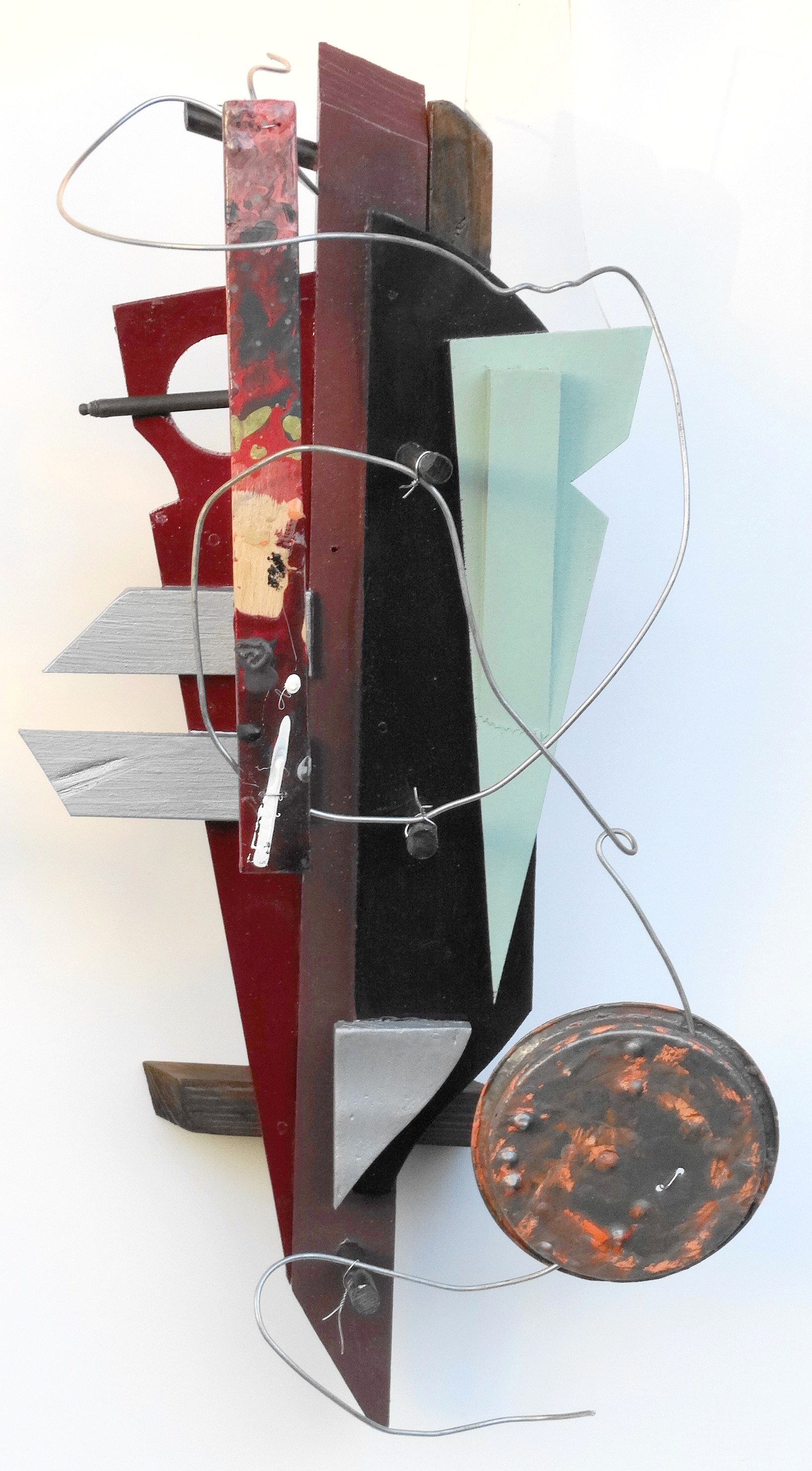
20190409_122706

“The Triangle”

Art-peace three: “The triangle” (2019)

Comments: the narrow margin lifting this work from two- into three dimensions serves a function as to elude from fixed barriers, frames and borders. The material applied, and the colors that follow at (superb) lighting are enchanting the spectator. With experience, however, the true meaning comes into vision: a play with prejudice, superstition and ordinary judgement. The host – when placed oppositive this well-crafted work, becomes a graft not able to suppress the primary reaction of being placed in a hostile environment. This conflict deepens the experience, since doubt opens the mind.

Decision: accept (special honor).

Members of the Jury:

Jacques de Santo Torres (chair)

Anna Viltan Navon (secretary)

Karl Hütting Wltack (member)

Vladimir Brosvokic (member)

Faith Runungongo (member)

The directorate of dreams

14 Thursday Mar 2019

Posted by dragermeurtant in art, Dada, graphics, landscape, mental health, nature, philosophy, photography, poem, poetry, poezie, structure, Uncategorized

≈ 3 Comments

Tags

abstract, assemblage, dreams, dromen, gedicht, grafiek, graphics, kunst, lino-cut, monoprint, philosophy, photography, poem, poetry, street-view

When dreams arrive, the content is not indicated on the envelope

(Jacques de Santo Torres (1888-1972)

A first dream:

Sitting in the backseat of a car, with increasing speed going down a steep slope and then, the gradual discovery that the driver is asleep, or dead?

Next, a second dream:

Walking through corridors that resemble my former school, realizing that preparations for exams at the end of this year have been poor, that time and perseverance is lacking, always being too late for class and ill-focused…

Then, a third dream :

People are waiting for me, to take charge. To deal and treat conditions of defect, of suffering. Yet, I don’t know the password and I’m not dressed to the occasion. I’m simply not instrumental…

These are dreams that threaten with defeat, that reflect one’s inner perception to be doomed to failure. I do not have a subscription to such dreams. But, once in a while, ill-managed delivery makes these land on my doorstep.

« – »

Can a dream be a memory?

Dreaming Cubistic, Drager Meurtant, August 17, 2017

Can a dream

be a memory

and if so

depends the format

on the shape of the display?

« – »

From dreams I turn to the real world. That is, if the creation of art is part of the real world, and not (more so) placed at the border of the dream-world and the dreadful daily circumstances of life. Some time ago I recited a poem standing opposite of a statue which I had made, and surrounded by spectators and listeners. That time I chose the position of the creator, and the statue was obliged to listen.

« – »

Poem for a statue

DSC06574 - kopie

Rudimentary, Drager Meurtant (2016)

Statue, you look at me

with your fool’s eyes,

that are no eyes.

Statue, your mouth swears

my imperfection

to tell the truth.

You suck me empty

you drown my power

you feed yourself

with my imagination

and leave me hollow.

« – »

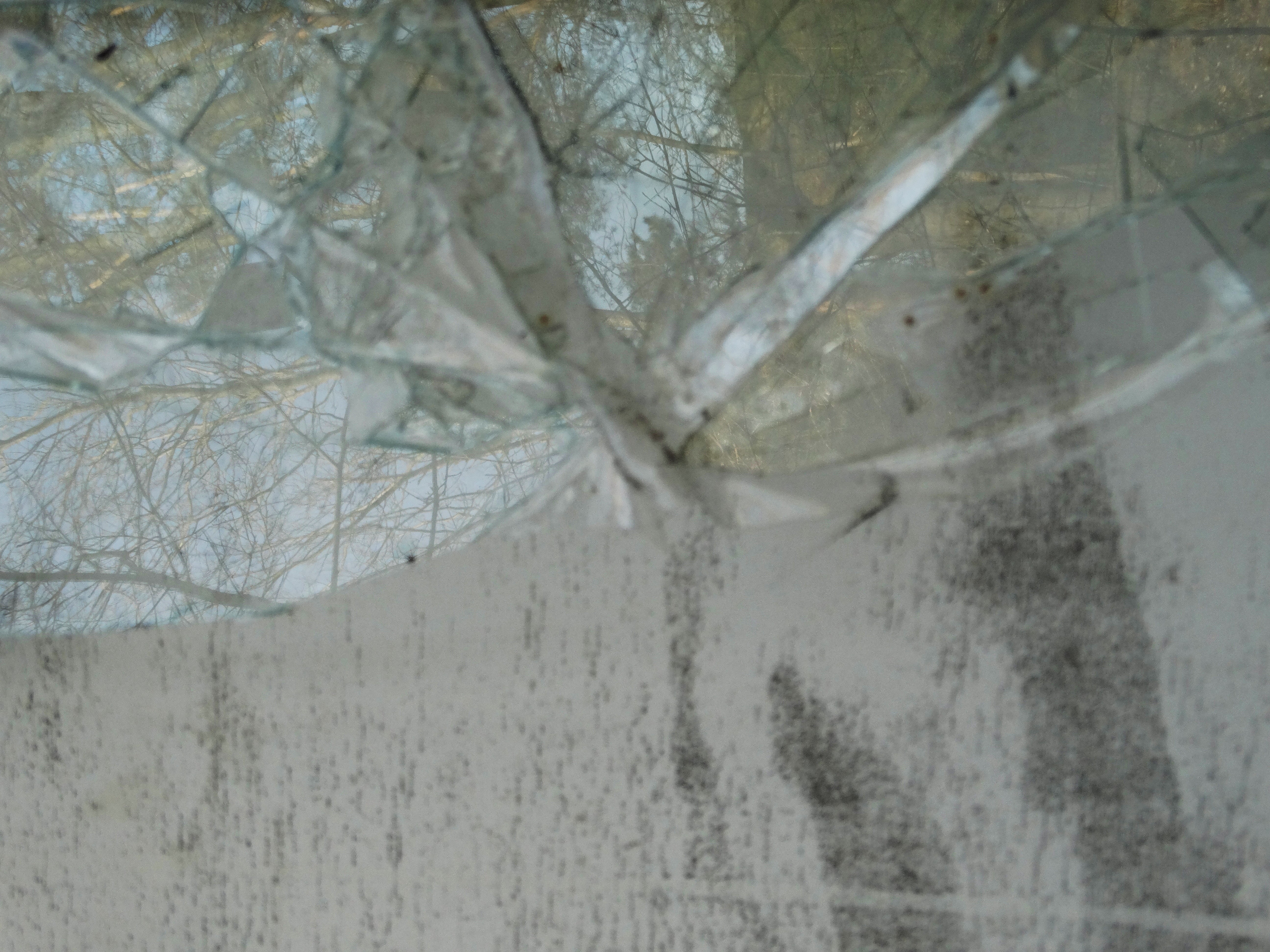
Streaks on the window

streaks on the window 4-12-2017

Streaks on the window (Drager Meurtant, December 4, 2017)

The streaks on the windows

don’t say nothing,

such as “when do

I see you again?”

at the exit

of the supermarket.

« – »

Bridges are encountered in several forms of dreams. As stated by an expert in dreams: “The bridge often has the significance of crossing or moving from one phase of life, activity or emphasis to another” (reference: Tony Crisp, http://dreamhawk.com/dream-dictionary/bridge-2/).

What if a bridge?

DSC07646

What if a bridge?, Drager Meurtant, lino-cut, 2017 (ed. 1/3)

What if

a bridge exists

only in your dream?

And the abyss

before you

is real?

« – »

Passage

DSCF0038

Untitled (Pyrenean landscape 1983, monoprint, Drager Meurtant, 2017

The other night

I ran down a gentle slope

my feet not touching ground

just kicking air

holding my breath from expiring

to continue this state of floating

as long as could be…


Moment

01 Thursday Mar 2018

Posted by dragermeurtant in abstract, art, Dada, kunst, mental health, nature, philosophy, photography, poem, poetry, poezie, street photography, structure, Uncategorized

≈ Leave a comment

Tags

abstract, condition humaine, coping, Dada, essential, fotografie, gedicht, kunst, philosophy, photography, poem, poetry

When emotions no longer
are stirred by elements
that pass.
When anger is frozen
by lack of a proper
target.
Then comes the moment
to turn the page.
DSC08495
Wanneer emoties niet langer
worden opgeroepen door elementen
die langs komen,
Als woede is bevroren
bij gebrek aan een geschikt
doel,
Dan komt het moment
de bladzij om te slaan.
(c) Drager Meurtant, text & photo, March 1, 2018

Water – H2O

14 Thursday Dec 2017

Posted by dragermeurtant in art, assemblage, Dada, kunst, painting, poem, poetry, poezie, street photography, Uncategorized

≈ 1 Comment

Tags

assemblage, collage, Dada, fotografie, gedicht, kunst, nothingness, painting, philosophy, photography, poetry, poezie

Let us linger on the state of water, as fluid.

Laat ons stilstaan bij de staat van water, als vloeistof.


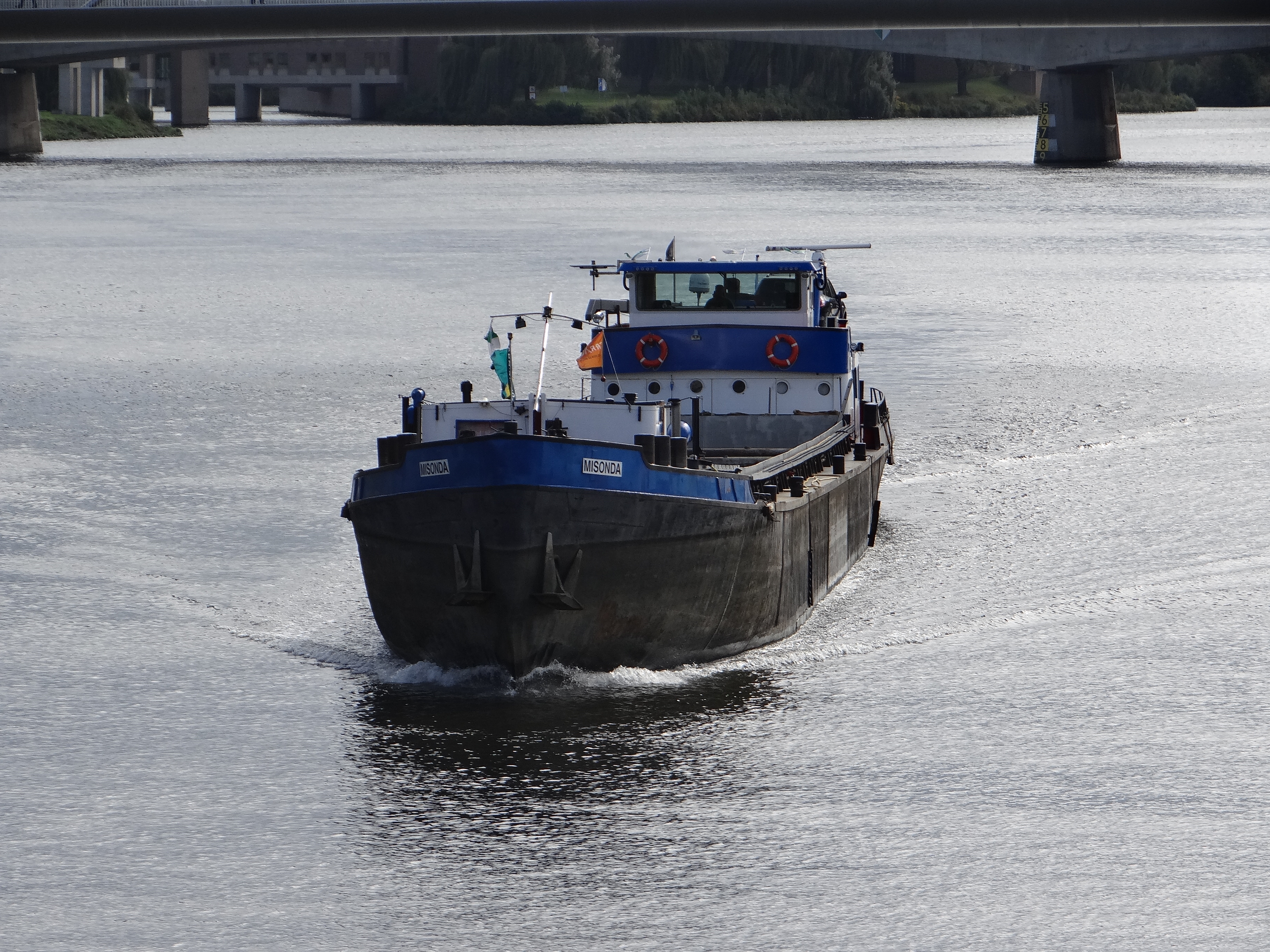
(1) Barges on the River Maas

Barges flatten the water / till waves / roll aside / from the prow, /

take distance / and break upon the river-bank. //

Reeds move / and dampen the billows. //

On the river /  the distance is crossed by foam /

that separates left from right, /

there, where the goal / has been passed. //

With eyes looking ahead / steers the skipper / the vessel /

towards another bend / in the counter current. //

Crawling crosspoint / in going / passed the mill-point.

(poem 2000, photo 2012)

DSC01584

(1) Aken op de Maas

Aken varen water, plat / tot golven, / uit de boeg / opzij rollen, /

afstand nemen / en breken op de wal. //

Het riet beweegt / en dooft de deining. //

Op de rivier / streept schuim de afstand door / scheidt links van rechts, /

daar, waar het doel / is voorbij gevaren. //

Ogen vooruit gericht, / stuurt de schipper / zijn vaartuig /

naar weer een bocht / in de tegenstroom. //

Kruipend kruispunt / in het gaan / voorbij het maalpunt.

(gedicht 2000, foto 2012)


(2) The Face of the stream

“The face of the stream / changed with the seasons . . . now it wore a gentle face”


(from: Morris West – The devil’s advocate)

the face of the stream

(Het gezicht van de rivier / veranderde met de seizoenen . . . nu was het aanzicht vriendelijk”)

(uit: Morris West – The devil’s advocate)

(painting / schilderij, 21×29 cm, 2017)


(3) Currents

Still, I don’t know / whether to swim / against the current / or to drift along. //

For the time being / I watch what / happens to others.

DSC06494

(3) Stromingen

Nog steeds weet ik niet / of ik tegen de stroom in / moet zwemmen /

of me mee / moet laten drijven. //

Voorlopig kijk ik toe / naar wat anderen overkomt.

(Assemblage-collage, 2016, 30x21x3 cm)


(all texts and artworks by Drager Meurtant, unless stated otherwise)

Now tell me . . . / Vertel eens . . .

20 Wednesday Sep 2017

Posted by dragermeurtant in Dada, kunst, mental health, philosophy, poem, poetry, poezie, retirement, society, Uncategorized

≈ 1 Comment

Tags

abandonned, coping, Dada, emptiness, fotografie, gedicht, health, kunst, philosophy, photography, poetry, poezie, state of life, verlaten

Now tell me

“Hello Doctor, / come in and / please be seated.”

(a moment of silence)

“I prefer we get / to business / right away.

Now tell me:

what use / were you / for society?”

DSC03873ZW

Vertel eens

Hallo Doctor, / kom binnen / en neem een stoel.

(een moment van stilte)

“Ik kom graag / meteen ter zake.

Vertel eens:

welk nut had U / voor de maatschappij?”

An easy path? / Een makkelijk pad?

08 Tuesday Aug 2017

Posted by dragermeurtant in art, Dada, kunst, landscape, painting, philosophy, poem, poetry, poezie, street photography, structure, Uncategorized

≈ Leave a comment

Tags

Dada, emptiness, fotografie, gedicht, kunst, painting, photography, poetry, poezie, schilderij

Obstacle

Wandering in the forest / the frst impression was / to be confronted by obstacles. //

However, at close inspection / the elements had been constructed /

to bridge a gap.

DSC07906

Obstakel

Dwalend door het bos / was de eerste indruk / te stuiten op obstakels. //

Maar, bij nadere inspectie / bleken de elementen te zijn ontworpen /

om een kloof te dichten.

____________________________________________________________________________________

Do not enter

The medium is clear / that of mixed-media. //

The intention, no … /

the aim is to provide / an easy path through the delta /

of my inner meandering.

DSC07934

Ga niet binnen

Het medium is helder / dat van gemengde techniek. //

De bedoeling, nee … /

het doel is het verschaffen / van een makkelijk pad door de delta /

van mijn innerlijke kronkels.


(text and photographs (c) Drager Meurtant, 2017)

The wholeness of elements

31 Wednesday May 2017

Posted by dragermeurtant in art, assemblage, Dada, death, installation, kunst, poezie, Uncategorized

≈ Leave a comment

Tags

assemblage, Dada, essential, fotografie, found-object, independent art, installation, kunst, philosophy, photography, poetry, poezie

An essay as Drager Meurtant, titled “Assemblages: the entrails explained”, has been published end of 2015 in Axon Journal Issue 9 (on assemblage, free on line access).

In the form of a poem, the essence of creation of assemblage can be formulated as follows:

Painting elements

Elementary pain / fits the precisionist. // When hammer hits thumb, / the outcry / of the artist / becomes the glue / of the assemblage. // And paint / drenches the pieces / into steady oneness.

painting elements

Assemblage, wood, metal, glass, paint; http://www.meurtant.exto.org (2014, in private collection)

Installations are different.

This artist must take more time to get to the essence of installations. Here are just two examples (first image, then text):

drone landed

Drone just landed in a meadow

This drone does not spy nor harm / except blades of grass / and only if pushed.
(One unique printed photo on aluminium available at 36 x 28 cm, 2013)

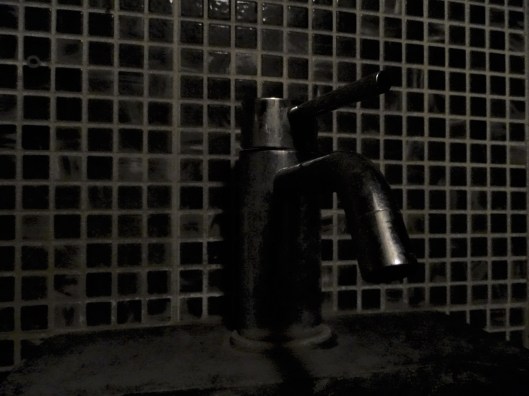
Bao strictcontor-2

Bao Strictcontor

In particular / at the end of day / is the bao strictcontor / subspecies Grohe / at its deadliest. / The bite can come / from the crane-shaped head / and also the circular mails / of the many tails / contain a stealthy poison / that at long stand-still / causes death of veterans. (80 x 40 x 25 cm, 2013)


One-hunderd-thousand miles away from nothingness

24 Wednesday May 2017

Posted by dragermeurtant in art, Dada, kunst, poezie, street photography, structure, Uncategorized

≈ Leave a comment

Tags

emptiness, nothingness, philosophy

On some occasions, one comes at a particular place or view, that appears empty, or even dull. Yet, at longer inspection, and at closer look, elements arise, that have ‘content’, or background. At further consideration, connections and interplay become visible, that demonstrate that the place (or view) is far from being empty, and its image fits within the theme “one-hundred-thousand miles away from nothingness.”

DSC04413

Road to emptiness

I looked around the corner / and you can accept my word for it / this road leads nowhere / or atmost, it leads to emptiness.

(images 1, 2 & 3 made during walk in February 2015)

“100,000 miles away from nothingness”. if you type that phrase, and search for it on the world-wide-web, a band by the name of ‘cult to follow’ appears. with a song this is nicely written, but the opposite from what I want to express.

That is, to imagine – by light-writing or photography – the state of nothingness, that was around before. Before we were, before our ancestors were. A state that lasted eons longer than the minutes of our life.
Concrete: can you from time to time make a photograph that has so little noice, sound, surface, that terms like ’emptiness, idleness, nothingness are approximated. If so, keep still…

DSC04415

Black heap and no more

(could talk more than one hour about what’s more)


DSC04405

Shattered

Whether these are memories / or reflections, /  that does not matter. // When frames crumble /  or even pillars tall / then both memories and reflections / will rumble and fall.


Imagination helps. Thus, when arriving at a spot where not much is happening, figures may appear, that start talking….

forgotten

Forgotten

P: “You forgot something.”

Q: “What are you saying?”

P: “You forgot something.”

Q: “That’s what you think.”

passing a demolition site, April 2015

Inval nabij

17 Monday Apr 2017

Posted by dragermeurtant in art, Dada, poezie, street photography

≈ Leave a comment

Tags

Dada, donker, gedicht, poezie

Zacht zuigen tenen / aan de klefheid / van net gestort beton.

In trage tred / gaan gedachten / in het rond.

Afdrukken / malen stroom, / die voeten / grijs doet stollen.

De gang / van troebel / denken / trekt / strakke cirkels.

Alles wijst / op een doorbraak.

Crumble

(c) Drager Meurtant, ongeveer 2003; foto van 2015)

Art by Assemblage: The Watt’s Experience

01 Monday Aug 2016

Posted by dragermeurtant in art, Dada, kunst

≈ Leave a comment

Tags

assemblage, independent art, installation, joshua tree desert, los angeles, noah purifoy, outdoor museum, Sabato Rodia, sam rodia, watt's towers, watts

(1) The Watt’s towers from Sabato ‘Sam’ Rodia

Sabato Rodia (1876-1965) arrived from Italy in the USA at 15 years of age, to join with his older brother who had immigrated earlier. In the USA people named Sabato ‘Sam’, or – according to some – ‘Simon’. When his brother died in a mining accident in Pennsylvania, where they lived and worked in quarries and as construction worker, Sam Rodia moved to Seattle. Here he married with Lucia Ucci and got three children, of whom one died. The couple separated 10 years later.

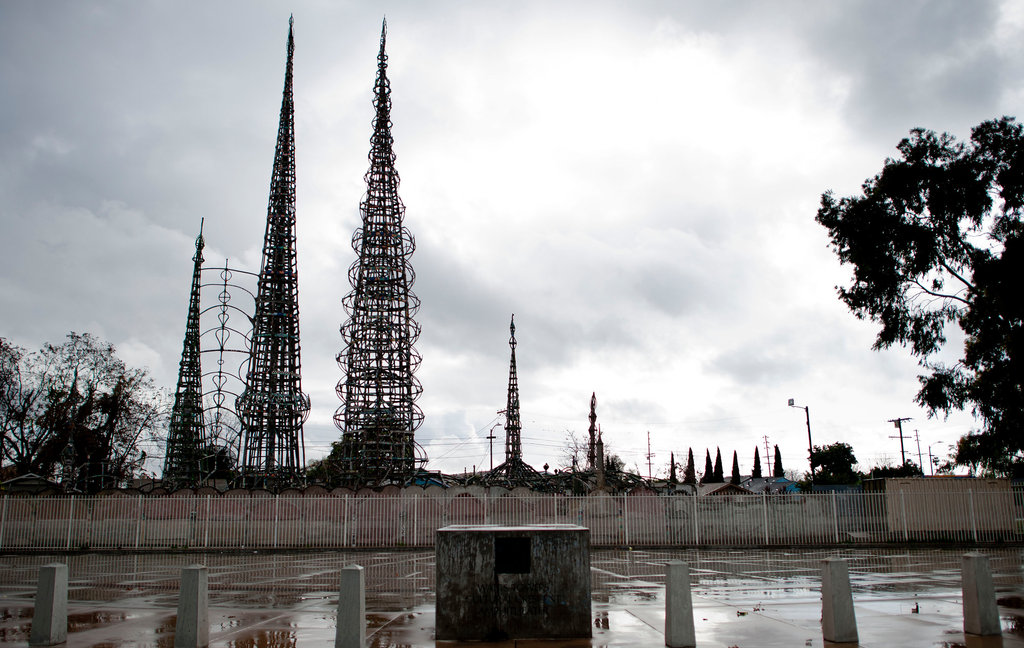
He then came to work as tile setter in California. There, in 1921, he achieved a piece of land in the community of Watts, part of Los Angeles, which he called “Nuestro Pueblo” (Our Town or Village). In his spare time he raised a wall and within the encircled space started to create an assembly of seven large towers, in themselves assemblages, of steel rebar and concrete with mosaics from tiles, broken ceramics, shells, and glass bottles.  To these towers he added pavilions, fountains and benches. The structures were coated with decorations in the shape of work tools, fruits and vegetables. Everything was done with simple hand tools and without the use of scaffold.

Rodia welcomed visits from members of the neighborhood and several marriage and other celebrations are said to have taken place under the towers. Motive for the building of these towers reportedly were, that he wanted to be engaged in a healthy and lasting project.
WATTS-1-jumbo-czwerwonka

Watt’s Towers – Overview 1, photo by Michael Czerwonka, photo as this appeared in NY Times Feb 7, 2011, with permission

Sam Rodia continued to work on the towers for over 25 years and then in 1954 he gave the lot to his neighbour and left to live elswhere. In 1959 two young film makers heard of the threat by local authorities to demolish the towers on the presumption these were a hazard. They – with other young artists – set up a Committee for Simon Rodia’s Towers in Watts, that despite lack of grand names succeeded in preserving the towers for the future. After proof was obtained that the towers were safe the Watt’s Towers were listed as national heritage in 1965 and 10 years later became an art center for the city.

Already around 1960 recognition came that Rodia had made a special art assemblage, from art professionals in academia. Yet, he died in Martinez without returning to Watts in 1954.

lucien-den-arends-wattstowers.jpg

Watt’s Towers – Overview 2, photo by Lucien den Arend, http://www.wattstowers.us, with permission

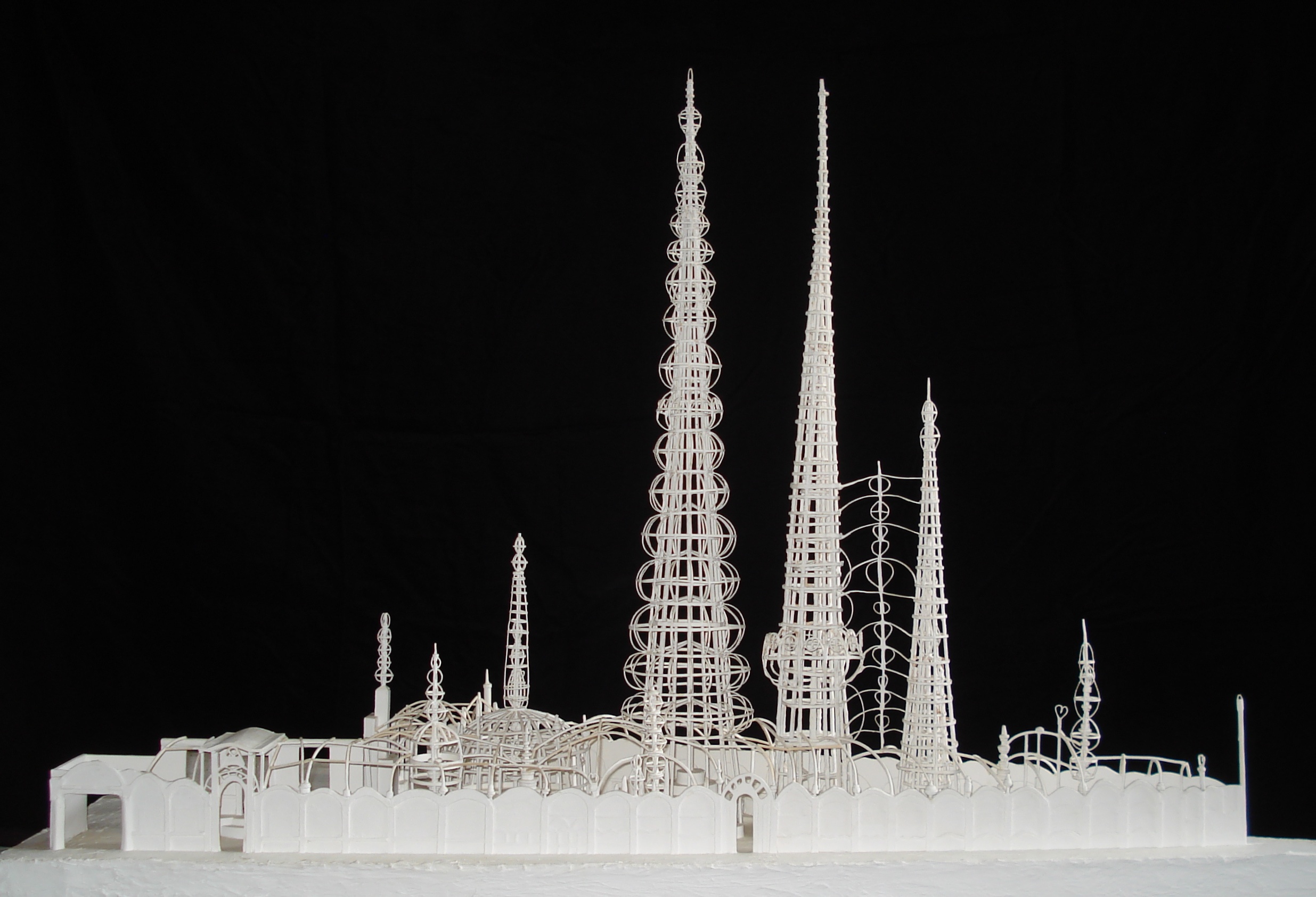
While preparing this essay, I encountred many nice photo’s on flickr. Some have been posted here (with permission) but I give you the consideration to follow the links yourself. One image from a scale model of the Watt’s Towers that was made by the architect Larry Harris – I think – enhances the perception of the project as you can see below.
Larry Harris - scale model Watt's Towers large.jpg

Larry Harris – Scale Model of Watt’s Towers (1996-1997), from flickr, with permission

Details of the collage – assemblage art as created by Sam Rodia by use of parts of tiles, bottles etcetera, are seen in the following three images.
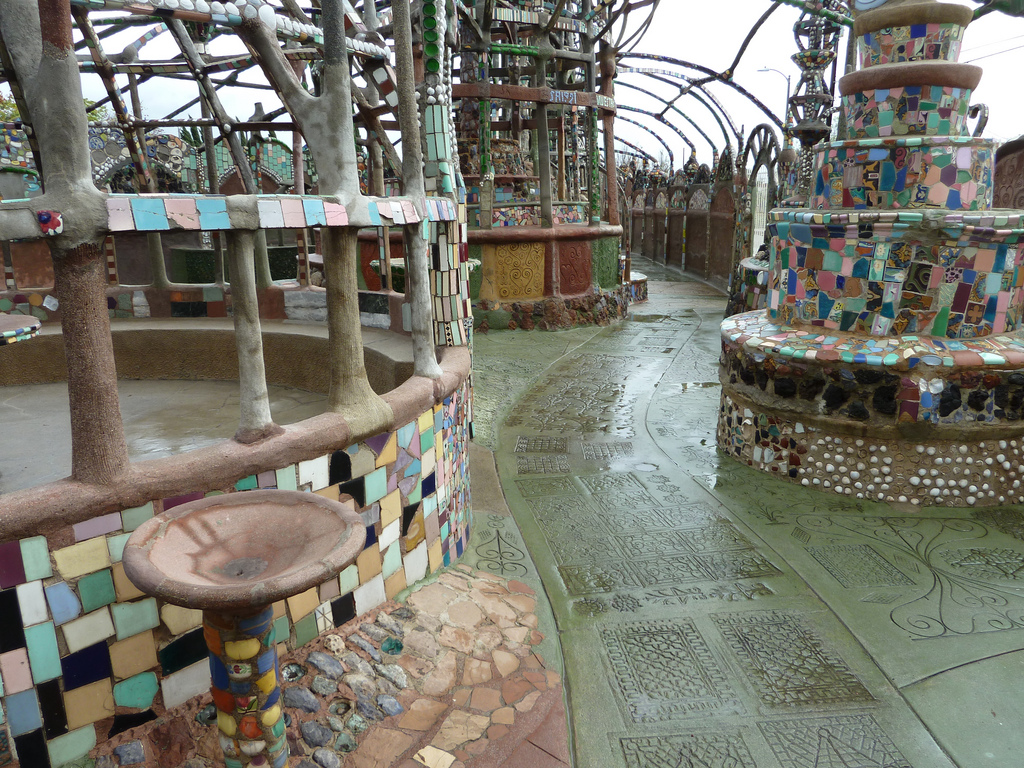
steve silverman watts tower detail-2.jpg

Watt’s Towers – detail 1, photo by Stephen Silverman, with permission (see album on http://www.flickr.com)

Steve Silverman Watts Tower detail.jpg

Watt’s Tower – detail 2, photo by Stephen Silverman, with permission
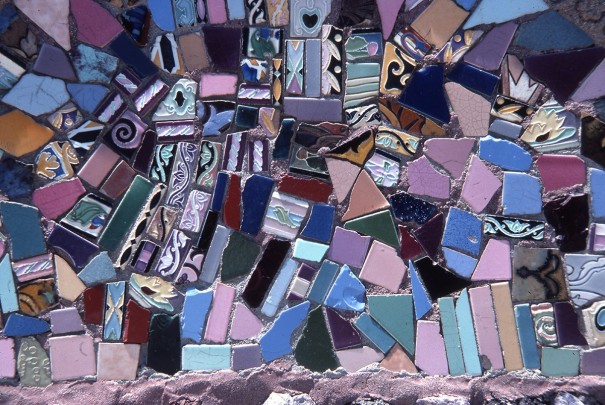
rodia watt's tower mosaic seymour rosen - Spaces.jpg

Watt’s Towers – detail 3 (tiles), by photo by Seymour Rosen (ca.1976), SPACES – Saving and Preserving Arts and Cultural Environments (www.spacesarchives.org), with permission

In 1962, the committee for Simon Rodia’s Towers in Watts, mentioned above, formed the Watts Tower Cultural Center that would offer art classes and exhibitions in which local inhabitants could take part. With the arrival in 1964 of Noah Purifoy as the first black director of the center, the committee hoped to realize a nucleus for community-based art in Watts. This community had changed much in demography following World War Two, after the influx of many African-Americans into this – in former years predominantly Mexican-populated area – and which at that time was economically depraved. A few years later these poor social circumstances were at the basis of major disturbances.

(2) The Watt’s rebellion

The African American artist Noah Purifoy (1917-2004) was teacher at this Watt’s Towers Art Center in 1965 when an arrest of a black motocyclist by a white policemen, – considered as injust by onlookers -, led to riots. These riots can be seen as result of long-term neglect, oppression and feeling by Watt’s inhabitants of injustice from the side of authorities. Between the 11th and 19th August hundreds of stores were looted, cars and buildings burned. After intervention of a large force of the National guard, 34 people were dead, over 1000 thousand injured and economic damage assessed as over 40 million USD. (Take some time and read extended testimony from artists like John Outterbridge in ref. 3).

Noah Purifoy saw the massive collective violance and together with fellow artists started collecting debris and rubble spread on the streets in the first days after violence started.

From the debris he and seven fellow artists (Judson Powell, Arthur Secunda, Gordon Wagner, Max Neufeldt, Ruth Saturensky, Debby Brewer) collected, they constructed assemblages / installations, collectively named 66 Signs of Neon, that were fitted from “fire-molded wood collided with smashed-in windows, burnt railroad-ties with scorched steel” (writing by Yael Lipschutz). The artists by use of this material originating from destruction, created an echo of the rebellion and an appeal to be constructive. From the resulting art-works the artists formed a landmark group exhibition about the rebellion that traveled to nine venues between 1966 and 1969. This exhibition was in line with the increased attention for street art and – life in photography and creative art and for the approach by people like Marcel Duchamp to transfer found objects into art.

noah purifoy pressure, 1966

Noah Purifoy – Pressure, c1966. A metal can scathed by the fire during the ‘Watt’s riots. the pereception of destruction is enhanced by putting this found object in the white frame. Image found at website from the Hammer Museum (www.hammer.ucle.edu), posted with permission of the Noah Purifoy Foundation

(3) The Watt’s Tower Art Center

Noah Purifoy had a professional training in social work and had a strong belief in the healing power of art education. In an interview with Richard Cándida Smith, the artist shared his strong motive:

“Within [each person] there’s a creative process going on all the time, and it’s merely expressed in an object called art. One’s life should also encompass the creative process. We were trying to experiment with how you do that, how you tie the art process in with existence” (referred to in ref 4).

With his colleague Judson Powell and with a basis at the Watt’s Tower Art Center, they were determined to increase perspectives for – in particular younger – people of Watts. With their belief that art could transform consciousness, and with the artworks created from found debris, it was to become clear that creativity can be exploited by use of the cheapest material.

In following years, Purifoy as chair of a committe of education in LA instigated a state-supported art in education program “California Learning Design – that ran at nine schools in the state. Artists were employed half-time for one year at such a school and together with regular teachers they shaped a program of teaching into which students, artists, and the community came to interact by physically ‘mixing these elements’.

(4) Noah Purifoy in Joshua Tree

Noah-Purifoy-Outdoor-Desert-Art-Museum-of-Assemblage-Sculpture_49.jpg

Noah Purifoy Outdoor Desert Art Museum of Assemblage, Sculpture <Welcome> photo by Ed Glendinning (#48-15), found at http://www.edglenphoto.com, with permission

In the late 1980’s, after eleven years of public policy work for the California Arts Council, where Purifoy initiated programs such as Artists in Social Institutions, bringing art into the state prison system, Purifoy moved his practice to the Joshua Tree in the Mojave desert. He lived there for the last fifteen years of his life, while lacking a pension – and created ten acres of large-scale sculpture constructed entirely from junked materials. The members of the surrounding community as well as entrepreneurs gave him discarded material, or gear that (legally) no longer was accepted in construction. The large scuptures he made, were meant to communicate with the environment, both nearby as well as the landscape at distance. The wear-and-tear of heat / cold plus strong wind became part of the time-line of the assemblages. (See images and the movie on vimeo (https://vimeo.com/397505164).
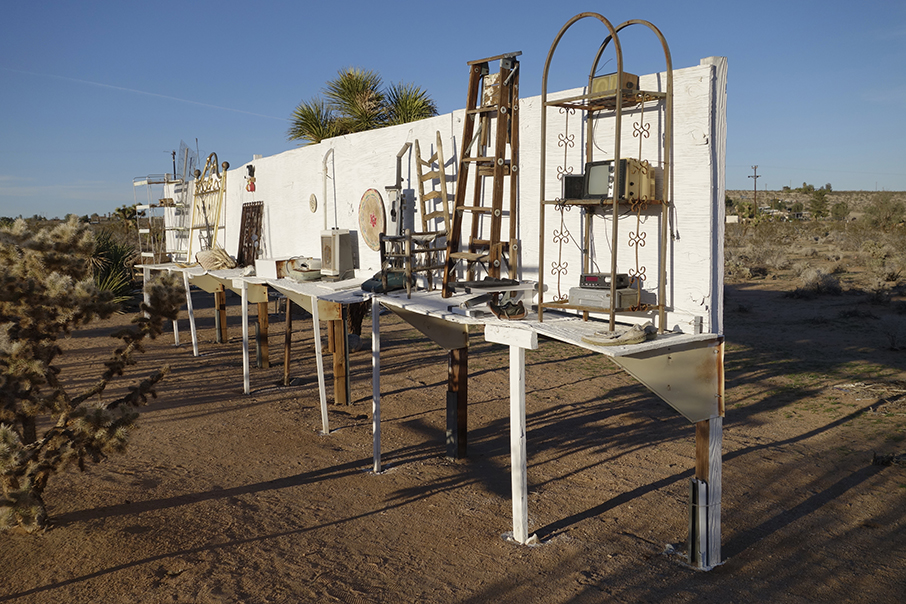
Noah-Purifoy-Outdoor-Desert-Art-Museum-of-Assemblage-Sculpture_12.jpg

Noah Purifoy Outdoor Desert Art Museum of Assemblage – Sculpture, photo by Ed Glendinning (# 12-15), with permission

Noah-Purifoy-Outdoor-Desert-Art-Museum-of-Assemblage-Sculpture_16.jpg

Noah Purifoy Outdoor Dsert Museum of Assemblage – Sculpture, photo by Ed Glendinning (#16-15), with permission.

The large scuptures Noah Purifoy made in the Joshua Tree Desert, were meant to communicate with the environment, both nearby as well as the landscape at distance….

Noah-Purifoy-Outdoor-Desert-Art-Museum-of-Assemblage-Sculpture_39.jpg

Noah Purifoy Outdoor Desert Art Museum of Assemblage – Sculpture, photo by Ed Glendinning (#38-15), with permission

As written in Richard Cándida Smith article (“Learning from Watt’s Towers: Assemblage and Community-based Art in California”): “One plumbing contractor donated several dozen toilets that could no longer be installed in California due to changed water-conservation law.”

Noah-Purifoy-Outdoor-Desert-Art-Museum-of-Assemblage-Sculpture_18

Noah Purifoy Outdoor Desert Art Museum of Assemblage – Sculpture, photo by Ed Glendinning (# 18-15), with permission

 And, the last photo chosen by me – being interested also in (abstract) collage, and which might underscore the interest Noah Purifoy had in art from the Dutch painter Mondrian…

Noah-Purifoy-Outdoor-Desert-Art-Museum-of-Assemblage-Sculpture_11.jpg

Noah Purifoy Outdoor Desert Art Museum of Assamblage – sculpture (collage), photo by Ed Glendinning (#11-15)

(5) Notes:

(a) In February 2016 (running till August) it was memorized that 50 years ago the Watt’s rebellion took place under the event title “50 years later and I still can’t breath”.

(b) citations provided with permission by respective authors.

(text by Mrs Yael Lipschutz accessed in September 2015, no longer available at the internet as far as I could see by search on July 31st 2016.)

(c) There is still need to support the preservation of the Watt’s Towers. Let us hope support from LA City will be stronger in the next year. http://spacesarchives.org/blog/2016/03/25/act-now-support-the-watts-towers-candidacy-for-unesco-world-heritage-site-status/

(6) Advise for further reading:

For more views and images of the Watt’s Towers and the Noah Purifoy Outdoor Dserert Art Museum of Assemblage Sculpture visit the links containing texts and many more photographs:

(1) Thomas Pynchon. “” A Journey into the Mind of Watts”, NY Times June 12, 1966 http://www.nytimes.com/books/97/05/18/reviews/pynchon-watts.html?_r=1

(2) Richard Cándida Smith. “Rodia, Simon“; http://www.anb.org/articles/17/17-01372.html; American National Biography Online Feb. 2000.
Copyright © 2000
American Council of Learned Societies. Published by Oxford University Press.

(3) Richard Cándida Smith. “Learning from Watts Towers: Assemblage and Community-based Art in California” Oral History, Autumn 2009: pp 49-56. http:// history.berkeley.edu/sites/default/files/Learning%20from%20Watts%20Towers.pdf

(4) Richard Cándida Smith. “The Modern Moves West: California Artists and Democratic Culture in the Twentieth Century”. University of Pennsylvania Press, Philadelphia, 2009, on Rodia: pp 45-54, on Purifoy: pp 154-181.
(5) Haggerty Museum of Art Staf : “Watts: Art and Social Change in Los Angeles 1965-2002“, 2003. http://www.marquette.edu/haggerty/documents/WATTS_catalogue.pdf

(6) Cameron Shaw. “Make Art not War. Watts and the Junk Art Conversation”, November 2010, East of Borneo. http://www.eastofborneo.org/articles/make-art-not-war-watts-and-the-junk-art-conversation

(7) Thomas Harrison. “Without precedent: The Watt’s Towers”, California Italian Studies 1, 2010. http://escholarship.org/uc/item/3v06b8jt

(8) Adam Nagourney. “A hidden treasure struggles in Los Angeles“, NY Times, Feb 7, 2011. http://www.nytimes.com/2011/02/08/us/08watts.html?_r=0

(9) Rubén Martínez. “Assembly required: the desert cure – the transformative art of Noah Purifoy”. Boom: A Journal of California, vol 2, Summer 2012. http://rubenmartinez.la/wp-content/uploads/2012/11/Boom-Purifoy-Column1.pdf

(10) Tanja M. Laden: “Junk Dada: The stories behind Noah Purifoy’s Joshua Tree Sculptures”, September 2015; http://www.kcet.org/shows/artbound/junk-dada-the-stories-behind-noah-purifoys-joshua-tree-sculptures

(11) Julia Felsenthal. “Noah Purifoy’s “Junk Dada”is an Art Show for the Post-Ferguson World”, June 15, 2015. http://www.vogue.com/13270774/noah-purifoy-lacma-junk-dada/

(12) Katie Grinnan. “Material Communication: Noah Purifoy at LACMA”. X-tra Contemporary Art Quarterly, Spring 2016, Vol. 18, no 3. http://x-traonline.org/article/material-communications-noah-purifoy-at-lacma/

Please also visit:

http://www.lacma.org/sites/default/files/Noah-Purifoy-Media-Advisory-2.4.15.pdf

http://www.wattstowers.org/

http://www.wattstowers.us/

http://noahpurifoy.com

http://www.cityprojectca.org/videos: several movies about the importance to save the Watt’s Towers.

http://www.edglenphoto.com

http://www.spacesarchives.org
← Older posts
Newer posts →

Subscribe

  • Entries (RSS)
  • Comments (RSS)

Archives

  • February 2026
  • January 2026
  • November 2025
  • October 2025
  • September 2025
  • August 2025
  • July 2025
  • June 2025
  • May 2025
  • April 2025
  • March 2025
  • February 2025
  • January 2025
  • December 2024
  • November 2024
  • October 2024
  • September 2024
  • August 2024
  • July 2024
  • June 2024
  • May 2024
  • April 2024
  • March 2024
  • January 2024
  • September 2023
  • July 2023
  • April 2023
  • November 2022
  • June 2022
  • May 2022
  • February 2022
  • December 2021
  • September 2021
  • July 2021
  • April 2021
  • March 2021
  • January 2021
  • December 2020
  • November 2020
  • October 2020
  • June 2020
  • March 2020
  • February 2020
  • January 2020
  • December 2019
  • October 2019
  • August 2019
  • June 2019
  • May 2019
  • March 2019
  • August 2018
  • March 2018
  • December 2017
  • September 2017
  • August 2017
  • July 2017
  • June 2017
  • May 2017
  • April 2017
  • January 2017
  • August 2016
  • February 2016
  • September 2015
  • May 2015

Categories

  • abstract
  • animal
  • archeology
  • art
  • Art competition
  • assemblage
  • creation
  • Dada
  • death
  • Decay
  • defense
  • destruction
  • development
  • exhibition
  • Figurative art
  • France
  • graphics
  • Greece
  • History
  • houses
  • inconspicious
  • inside
  • installation
  • internet
  • italy
  • kunst
  • landscape
  • Le Pays
  • Mailart
  • mental health
  • mountain hike
  • mushrooms
  • nature
  • natuur
  • outdoor
  • painting
  • philosophy
  • photography
  • poem
  • poetry
  • poezie
    • poetry
  • retirement
  • river
  • rocks
  • society
    • demography
  • Spain
  • stones
  • stray-cats
  • street photography
  • street-photography
  • structure
  • tentoonstelling
  • travel
  • Uncategorized
  • unrest
  • Urban nature

Meta

  • Create account
  • Log in

Blog at WordPress.com.

  • Subscribe Subscribed
    • drager-meurtant
    • Join 44 other subscribers
    • Already have a WordPress.com account? Log in now.
    • drager-meurtant
    • Subscribe Subscribed
    • Sign up
    • Log in
    • Report this content
    • View site in Reader
    • Manage subscriptions
    • Collapse this bar
 

Loading Comments...