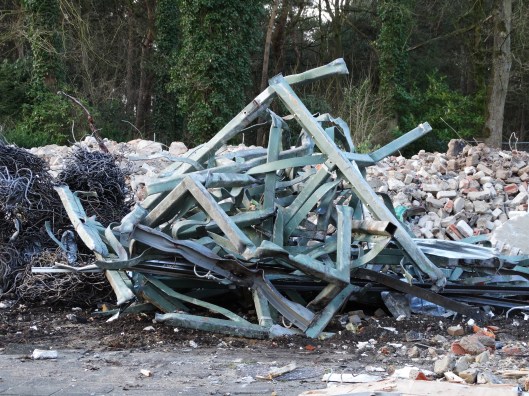
• About

drager-meurtant

~ The world is made up of elements, catched by light-writing or assemblage.

drager-meurtant

Author Archives: dragermeurtant

An easy path? / Een makkelijk pad?

08 Tuesday Aug 2017

Posted by dragermeurtant in art, Dada, kunst, landscape, painting, philosophy, poem, poetry, poezie, street photography, structure, Uncategorized

≈ Leave a comment

Tags

Dada, emptiness, fotografie, gedicht, kunst, painting, photography, poetry, poezie, schilderij

Obstacle

Wandering in the forest / the frst impression was / to be confronted by obstacles. //

However, at close inspection / the elements had been constructed /

to bridge a gap.

DSC07906

Obstakel

Dwalend door het bos / was de eerste indruk / te stuiten op obstakels. //

Maar, bij nadere inspectie / bleken de elementen te zijn ontworpen /

om een kloof te dichten.

____________________________________________________________________________________

Do not enter

The medium is clear / that of mixed-media. //

The intention, no … /

the aim is to provide / an easy path through the delta /

of my inner meandering.

DSC07934

Ga niet binnen

Het medium is helder / dat van gemengde techniek. //

De bedoeling, nee … /

het doel is het verschaffen / van een makkelijk pad door de delta /

van mijn innerlijke kronkels.


(text and photographs (c) Drager Meurtant, 2017)

Wrong mindset

01 Saturday Jul 2017

Posted by dragermeurtant in art, kunst, mental health, poezie

≈ Leave a comment

Tags

coping, fotografie, gedicht, gezondheid, health, nothingness, philosophy, photography, poetry, poezie

Motive

Over the past months, I had to adress problems of the mind. Outside of me (see “Neighbour”) and inside me (see “Pressing”)

Motief

In de afgelopen maanden, moest ik aandacht geven aan een aantal problemen van de geest, in de omgeving, zie “Buurman”, en van binnen, zie “Drukkend” )

(1) Neighbour

“My neighbour is a person / with some fixations.”

“Mijn buurman is iemand / met fixaties.”


(2) Pressing

My thoughts / are creeping in front of me / in the twilight,

between coiling branches / of bushes left and right,

aimless / and estranged.

And I’m stuck and / bound / by the channels that /

I feed.

Drukkend

Mijn gedachten / kruipen voor me uit / in het schemer,

tussen de kronkelende takken / van struiken links en rechts,

doelloos / en vervreemd.

En ik zit eraan vast / gebonden / door de kanalen die /

ik voed.

(01-07-2017, (c) Drager Meurtant)

Contemplations

16 Friday Jun 2017

Posted by dragermeurtant in Uncategorized

≈ Leave a comment

In this posting, some contemplations are given (form poem + image, in English and in Dutch)

(1) Feather

When I escape through a narrow / cleft, dancing, / the reproach will resonate / that I evade God. // When this poems falls / touches ground, / the earth will not tremble. // Light as a feather / writes my pencil.

Veder

Als ik de dans ontspring, / zal het verwijt klinken, dat ik God ontwijk. // Als het gedicht valt, de grond raakt, trilt de aarde niet. // Vederlicht / schrijft m’n pen.

(2) Need of War

Now what / if they want to take this stronghold? // Then there is no other choice / and blood will feed the soil / and our sons and daughters will die / for the great honor / of serving the mighty ME. //

But what, if there ain’t nothing in it? // Then their death will be in vain / and even more to admire.

De noodzaak van oorlog

En wat te doen / als de vijand deze versterking in wil nemen? // Dan is er geen andere keus / en bloed zal de bodem voeden / en onze zonen en dochters zullen sterven / voor de grote eer / de machtige MIJ te dienen. //

Maar wat / als er niets in steekt? // Dan zal hun dood ijdel zijn / en des te meer te vereren.

3. Beyond the earth

Beyond the earth / there was no sense / of black and white. // There was no recollection / and no mirror. // There was only / a void of movement / and lice.

Voorbij de aarde
Voorbij de aarde / was er geen besef / van zwart en wit. // Er was geen herinnering / en geen spiegel. // Er was alleen / een leegte van bewegen / en luizen.

The wholeness of elements

31 Wednesday May 2017

Posted by dragermeurtant in art, assemblage, Dada, death, installation, kunst, poezie, Uncategorized

≈ Leave a comment

Tags

assemblage, Dada, essential, fotografie, found-object, independent art, installation, kunst, philosophy, photography, poetry, poezie

An essay as Drager Meurtant, titled “Assemblages: the entrails explained”, has been published end of 2015 in Axon Journal Issue 9 (on assemblage, free on line access).

In the form of a poem, the essence of creation of assemblage can be formulated as follows:

Painting elements

Elementary pain / fits the precisionist. // When hammer hits thumb, / the outcry / of the artist / becomes the glue / of the assemblage. // And paint / drenches the pieces / into steady oneness.

painting elements

Assemblage, wood, metal, glass, paint; http://www.meurtant.exto.org (2014, in private collection)

Installations are different.

This artist must take more time to get to the essence of installations. Here are just two examples (first image, then text):

drone landed

Drone just landed in a meadow

This drone does not spy nor harm / except blades of grass / and only if pushed.
(One unique printed photo on aluminium available at 36 x 28 cm, 2013)

Bao strictcontor-2

Bao Strictcontor

In particular / at the end of day / is the bao strictcontor / subspecies Grohe / at its deadliest. / The bite can come / from the crane-shaped head / and also the circular mails / of the many tails / contain a stealthy poison / that at long stand-still / causes death of veterans. (80 x 40 x 25 cm, 2013)


One-hunderd-thousand miles away from nothingness

24 Wednesday May 2017

Posted by dragermeurtant in art, Dada, kunst, poezie, street photography, structure, Uncategorized

≈ Leave a comment

Tags

emptiness, nothingness, philosophy

On some occasions, one comes at a particular place or view, that appears empty, or even dull. Yet, at longer inspection, and at closer look, elements arise, that have ‘content’, or background. At further consideration, connections and interplay become visible, that demonstrate that the place (or view) is far from being empty, and its image fits within the theme “one-hundred-thousand miles away from nothingness.”

DSC04413

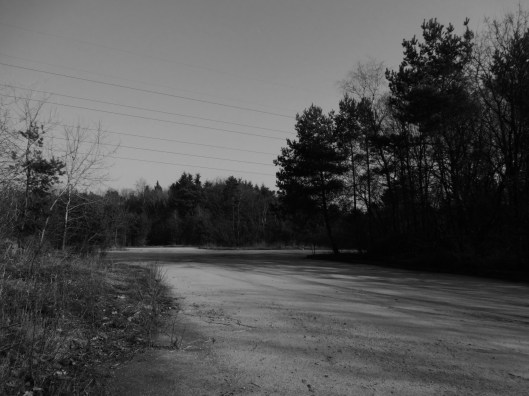
Road to emptiness

I looked around the corner / and you can accept my word for it / this road leads nowhere / or atmost, it leads to emptiness.

(images 1, 2 & 3 made during walk in February 2015)

“100,000 miles away from nothingness”. if you type that phrase, and search for it on the world-wide-web, a band by the name of ‘cult to follow’ appears. with a song this is nicely written, but the opposite from what I want to express.

That is, to imagine – by light-writing or photography – the state of nothingness, that was around before. Before we were, before our ancestors were. A state that lasted eons longer than the minutes of our life.
Concrete: can you from time to time make a photograph that has so little noice, sound, surface, that terms like ’emptiness, idleness, nothingness are approximated. If so, keep still…

DSC04415

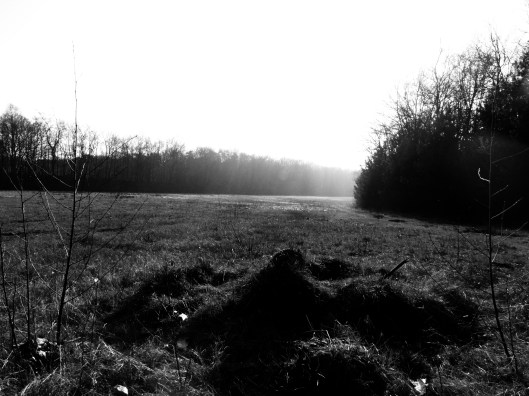
Black heap and no more

(could talk more than one hour about what’s more)


DSC04405

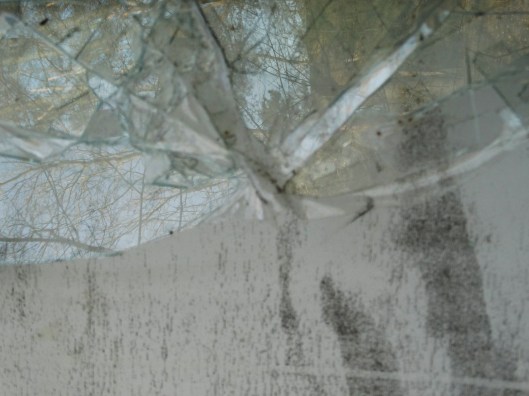
Shattered

Whether these are memories / or reflections, /  that does not matter. // When frames crumble /  or even pillars tall / then both memories and reflections / will rumble and fall.


Imagination helps. Thus, when arriving at a spot where not much is happening, figures may appear, that start talking….

forgotten

Forgotten

P: “You forgot something.”

Q: “What are you saying?”

P: “You forgot something.”

Q: “That’s what you think.”

passing a demolition site, April 2015

About light

01 Monday May 2017

Posted by dragermeurtant in art, kunst, poezie, Uncategorized

≈ 1 Comment

Tags

essence, essential, fotografie, gedicht, kunst, photography, poetry, poezie

Drowning / Verdrinking

DSC05498

When light falls / on the surface / it hesitates half a second / before drowning

Als licht valt / op het oppervlak / aarzelt het een halve seconde / alvorens te verdrinken.

(And a second thought / En een tweede overdenking)

Piles / Stapels

DSC05892

One by one / I will withdraw / the words spoken / until this poem / is an empty hull.

Eén voor één / zal ik de woorden terugnemen / die zijn gesproken / tot dit gedicht / een lege huls is.

(And the last consideration for today / de laatste overdenking vandaag)

On Guard / Op Wacht

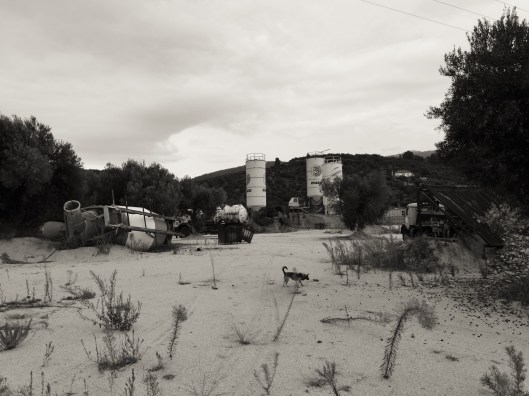
DSC03835

There is one dog / on guard. // And that is more / than enough.

Er loopt één waakhond. // En dat is meer / dan genoeg.

Inval nabij

17 Monday Apr 2017

Posted by dragermeurtant in art, Dada, poezie, street photography

≈ Leave a comment

Tags

Dada, donker, gedicht, poezie

Zacht zuigen tenen / aan de klefheid / van net gestort beton.

In trage tred / gaan gedachten / in het rond.

Afdrukken / malen stroom, / die voeten / grijs doet stollen.

De gang / van troebel / denken / trekt / strakke cirkels.

Alles wijst / op een doorbraak.

Crumble

(c) Drager Meurtant, ongeveer 2003; foto van 2015)

One poem – Eén gedicht

10 Monday Apr 2017

Posted by dragermeurtant in art, Uncategorized

≈ Leave a comment

Tags

collage, kunst, poetry, poezie

(in English)

Crossing

The images that cross / the web of / my experiences,

at times get stuck in / old scars, without / paying attention /

to gates or / prohibitory signs. //

Those images do not / shed light or give/ clarity. //

Those images burn / their shadow on / the projection of /

memories.


(In Nederlands)

Kruising

De beelden die kruisen / door het web van / m’n ervaringen, /

kunnen vastlopen in oude / littekens, zonder / acht te slaan /

op hekken of / verbodsborden / geplaatst uit lijfsbehoud. //

Die beelden geven geen / zicht of helderheid.//

Die beelden branden / hun schaduwen op / de projectie van /

herinneringen.


Collage:

A World cut to pieces – Een wereld aan stukken

DSCF0105

note: elements from travel guide of Yugoslavia (1980)

nota: elementen uit reisgids van joegoslavië (1980)

(c) Drager Meurtant, April 2017

Death on the internet

28 Saturday Jan 2017

Posted by dragermeurtant in death, internet, society, Uncategorized

≈ Leave a comment

Tags

poetry, survival death internet heritance sociology humanity

Existential information

From time to time I check old emails, to see which of these at that moment has become obsolete and can be discarded. On some such occasions I may decide ‘to give it a try’: and will send an email to find out whether the connection still exists. And at the age past sixty, the occasions occur with increasing frequency on which the server responds with a text like ‘this address is not known at ‘YouMailMe-dot-Com’. Or, somewhat more striking, a reply comes with a text like this: “Thank you for your mail. My father died one year ago but we kept this address for a while, in order to inform those people we had not been able to locate to send a notice of his death.”

When posting photo’s on websites like www.flickr.com, I noticed another phenomenon typical of the digital era, expressed by the message on such website (or group within the website) that you and I visit, telling: “welcome <back> dear guest. And let us not forget the good work by Verena Ashley Connover (name invented by DM) who left us, but whose photos you still can find in the postings of our group”. Or, “Remember Verena, whose album we still cherish with joy”.

Some time ago I wrote a comment to an artist, via his website containing artwork that appealed to me. My words were aimed to express my appreciation, and a few weeks later were answered by a reply to my mailbox, telling that the artist’s son, out of esteem and admiration for his father, kept the website online for continued digital accessibility of his father’s artworks.

With graves in my country being excavated often at 50 years or even less after burial, one may wonder at which time the heirs of an individual might decide to stop such a website, or when welcoming messages like the above are erased/deleted.

My perception became more grounded, that a search nowadays on the web for signs of (life of) someone, with increasing frequency results in the impression that the person is indeed alive and kicking, whereas the truth is different.

dsc03769

The creation of a memorial

It is of course, an option to transform the website of someone that died, or the account of a deceased member on a social medium into a place to commemorate. When I searched the internet some months ago (April, 2016) with the words “a website to commemorate”, there was an immediate find.

And next, dear readers, I tested the web what it would produce for the words “death on the internet”, and no surprise, there is a Wikipedia page appearing. (https://en.wikipedia.org/wiki/Death_and_the_Internet).

In it, the phrase can be found “As the Internet age progresses it will come to a point where inactive accounts of deceased people will outnumber those of active users”.

And focus is on the position / attitude of several social media and large email providers, as to how these deal with the death of stakeholders.

For heirs and sometimes friends of a deceased, the responsibility arises how to deal with the digital inheritance, next to the need to organize a proper farewell of a friend or family-member.

The Wikipedia page mentioned above, even indicates the existence of organizations that safeguard one’s ‘digital inheritance’ and which only yield access to those persons that have been supplied by an ‘activation code’ by the holder during his/her lifetime. See it complimentary to the testimony you have arranged.

dsc03776

wired 

The unknown death

The above situation, of people that at first sight may seem alive, but only their presence on the internet has remained while their physical presence has ended is paralleled by a gap that will persist for the next 10-20 years. And now I’m talking about people of the present time, that do not exist on the internet. They have no account. They do not belong to people of whom a company or newspaper will announce a in memoriam after their death. These may be schoolmates of me, that I search for traces of digital existence, and no such trace is to be found. And we tend to forget that some people have no digital existence.

This short notice has no motto, no advise. It is just aimed to express my surprise.

(c) Drager Meurtant, 28-01-2017

Art by Assemblage: The Watt’s Experience

01 Monday Aug 2016

Posted by dragermeurtant in art, Dada, kunst

≈ Leave a comment

Tags

assemblage, independent art, installation, joshua tree desert, los angeles, noah purifoy, outdoor museum, Sabato Rodia, sam rodia, watt's towers, watts

(1) The Watt’s towers from Sabato ‘Sam’ Rodia

Sabato Rodia (1876-1965) arrived from Italy in the USA at 15 years of age, to join with his older brother who had immigrated earlier. In the USA people named Sabato ‘Sam’, or – according to some – ‘Simon’. When his brother died in a mining accident in Pennsylvania, where they lived and worked in quarries and as construction worker, Sam Rodia moved to Seattle. Here he married with Lucia Ucci and got three children, of whom one died. The couple separated 10 years later.

He then came to work as tile setter in California. There, in 1921, he achieved a piece of land in the community of Watts, part of Los Angeles, which he called “Nuestro Pueblo” (Our Town or Village). In his spare time he raised a wall and within the encircled space started to create an assembly of seven large towers, in themselves assemblages, of steel rebar and concrete with mosaics from tiles, broken ceramics, shells, and glass bottles.  To these towers he added pavilions, fountains and benches. The structures were coated with decorations in the shape of work tools, fruits and vegetables. Everything was done with simple hand tools and without the use of scaffold.

Rodia welcomed visits from members of the neighborhood and several marriage and other celebrations are said to have taken place under the towers. Motive for the building of these towers reportedly were, that he wanted to be engaged in a healthy and lasting project.

WATTS-1-jumbo-czwerwonka

Watt’s Towers – Overview 1, photo by Michael Czerwonka, photo as this appeared in NY Times Feb 7, 2011, with permission

Sam Rodia continued to work on the towers for over 25 years and then in 1954 he gave the lot to his neighbour and left to live elswhere. In 1959 two young film makers heard of the threat by local authorities to demolish the towers on the presumption these were a hazard. They – with other young artists – set up a Committee for Simon Rodia’s Towers in Watts, that despite lack of grand names succeeded in preserving the towers for the future. After proof was obtained that the towers were safe the Watt’s Towers were listed as national heritage in 1965 and 10 years later became an art center for the city.

Already around 1960 recognition came that Rodia had made a special art assemblage, from art professionals in academia. Yet, he died in Martinez without returning to Watts in 1954.

lucien-den-arends-wattstowers.jpg

Watt’s Towers – Overview 2, photo by Lucien den Arend, http://www.wattstowers.us, with permission

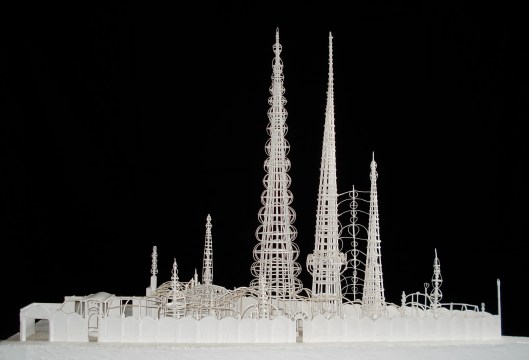
While preparing this essay, I encountred many nice photo’s on flickr. Some have been posted here (with permission) but I give you the consideration to follow the links yourself. One image from a scale model of the Watt’s Towers that was made by the architect Larry Harris – I think – enhances the perception of the project as you can see below.
Larry Harris - scale model Watt's Towers large.jpg

Larry Harris – Scale Model of Watt’s Towers (1996-1997), from flickr, with permission

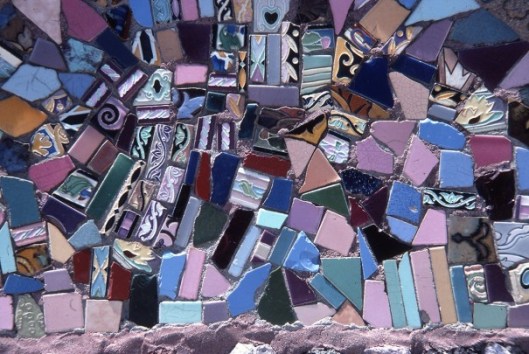
Details of the collage – assemblage art as created by Sam Rodia by use of parts of tiles, bottles etcetera, are seen in the following three images.

steve silverman watts tower detail-2.jpg

Watt’s Towers – detail 1, photo by Stephen Silverman, with permission (see album on http://www.flickr.com)

Steve Silverman Watts Tower detail.jpg

Watt’s Tower – detail 2, photo by Stephen Silverman, with permission
rodia watt's tower mosaic seymour rosen - Spaces.jpg

Watt’s Towers – detail 3 (tiles), by photo by Seymour Rosen (ca.1976), SPACES – Saving and Preserving Arts and Cultural Environments (www.spacesarchives.org), with permission

In 1962, the committee for Simon Rodia’s Towers in Watts, mentioned above, formed the Watts Tower Cultural Center that would offer art classes and exhibitions in which local inhabitants could take part. With the arrival in 1964 of Noah Purifoy as the first black director of the center, the committee hoped to realize a nucleus for community-based art in Watts. This community had changed much in demography following World War Two, after the influx of many African-Americans into this – in former years predominantly Mexican-populated area – and which at that time was economically depraved. A few years later these poor social circumstances were at the basis of major disturbances.

(2) The Watt’s rebellion

The African American artist Noah Purifoy (1917-2004) was teacher at this Watt’s Towers Art Center in 1965 when an arrest of a black motocyclist by a white policemen, – considered as injust by onlookers -, led to riots. These riots can be seen as result of long-term neglect, oppression and feeling by Watt’s inhabitants of injustice from the side of authorities. Between the 11th and 19th August hundreds of stores were looted, cars and buildings burned. After intervention of a large force of the National guard, 34 people were dead, over 1000 thousand injured and economic damage assessed as over 40 million USD. (Take some time and read extended testimony from artists like John Outterbridge in ref. 3).

Noah Purifoy saw the massive collective violance and together with fellow artists started collecting debris and rubble spread on the streets in the first days after violence started.

From the debris he and seven fellow artists (Judson Powell, Arthur Secunda, Gordon Wagner, Max Neufeldt, Ruth Saturensky, Debby Brewer) collected, they constructed assemblages / installations, collectively named 66 Signs of Neon, that were fitted from “fire-molded wood collided with smashed-in windows, burnt railroad-ties with scorched steel” (writing by Yael Lipschutz). The artists by use of this material originating from destruction, created an echo of the rebellion and an appeal to be constructive. From the resulting art-works the artists formed a landmark group exhibition about the rebellion that traveled to nine venues between 1966 and 1969. This exhibition was in line with the increased attention for street art and – life in photography and creative art and for the approach by people like Marcel Duchamp to transfer found objects into art.
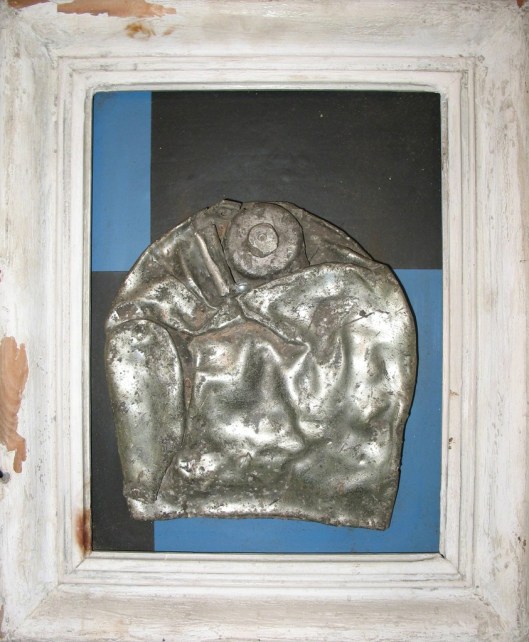
noah purifoy pressure, 1966

Noah Purifoy – Pressure, c1966. A metal can scathed by the fire during the ‘Watt’s riots. the pereception of destruction is enhanced by putting this found object in the white frame. Image found at website from the Hammer Museum (www.hammer.ucle.edu), posted with permission of the Noah Purifoy Foundation

(3) The Watt’s Tower Art Center

Noah Purifoy had a professional training in social work and had a strong belief in the healing power of art education. In an interview with Richard Cándida Smith, the artist shared his strong motive:

“Within [each person] there’s a creative process going on all the time, and it’s merely expressed in an object called art. One’s life should also encompass the creative process. We were trying to experiment with how you do that, how you tie the art process in with existence” (referred to in ref 4).

With his colleague Judson Powell and with a basis at the Watt’s Tower Art Center, they were determined to increase perspectives for – in particular younger – people of Watts. With their belief that art could transform consciousness, and with the artworks created from found debris, it was to become clear that creativity can be exploited by use of the cheapest material.

In following years, Purifoy as chair of a committe of education in LA instigated a state-supported art in education program “California Learning Design – that ran at nine schools in the state. Artists were employed half-time for one year at such a school and together with regular teachers they shaped a program of teaching into which students, artists, and the community came to interact by physically ‘mixing these elements’.

(4) Noah Purifoy in Joshua Tree

Noah-Purifoy-Outdoor-Desert-Art-Museum-of-Assemblage-Sculpture_49.jpg

Noah Purifoy Outdoor Desert Art Museum of Assemblage, Sculpture <Welcome> photo by Ed Glendinning (#48-15), found at http://www.edglenphoto.com, with permission

In the late 1980’s, after eleven years of public policy work for the California Arts Council, where Purifoy initiated programs such as Artists in Social Institutions, bringing art into the state prison system, Purifoy moved his practice to the Joshua Tree in the Mojave desert. He lived there for the last fifteen years of his life, while lacking a pension – and created ten acres of large-scale sculpture constructed entirely from junked materials. The members of the surrounding community as well as entrepreneurs gave him discarded material, or gear that (legally) no longer was accepted in construction. The large scuptures he made, were meant to communicate with the environment, both nearby as well as the landscape at distance. The wear-and-tear of heat / cold plus strong wind became part of the time-line of the assemblages. (See images and the movie on vimeo (https://vimeo.com/397505164).

Noah-Purifoy-Outdoor-Desert-Art-Museum-of-Assemblage-Sculpture_12.jpg

Noah Purifoy Outdoor Desert Art Museum of Assemblage – Sculpture, photo by Ed Glendinning (# 12-15), with permission

Noah-Purifoy-Outdoor-Desert-Art-Museum-of-Assemblage-Sculpture_16.jpg

Noah Purifoy Outdoor Dsert Museum of Assemblage – Sculpture, photo by Ed Glendinning (#16-15), with permission.

The large scuptures Noah Purifoy made in the Joshua Tree Desert, were meant to communicate with the environment, both nearby as well as the landscape at distance….
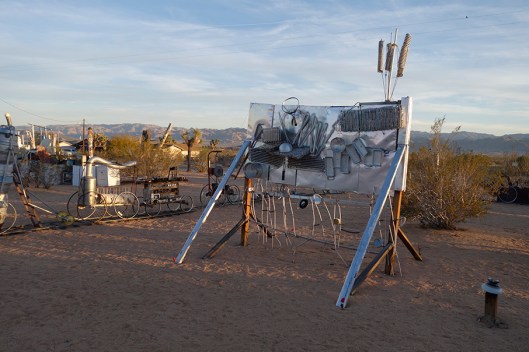
Noah-Purifoy-Outdoor-Desert-Art-Museum-of-Assemblage-Sculpture_39.jpg

Noah Purifoy Outdoor Desert Art Museum of Assemblage – Sculpture, photo by Ed Glendinning (#38-15), with permission

As written in Richard Cándida Smith article (“Learning from Watt’s Towers: Assemblage and Community-based Art in California”): “One plumbing contractor donated several dozen toilets that could no longer be installed in California due to changed water-conservation law.”

Noah-Purifoy-Outdoor-Desert-Art-Museum-of-Assemblage-Sculpture_18

Noah Purifoy Outdoor Desert Art Museum of Assemblage – Sculpture, photo by Ed Glendinning (# 18-15), with permission

 And, the last photo chosen by me – being interested also in (abstract) collage, and which might underscore the interest Noah Purifoy had in art from the Dutch painter Mondrian…

Noah-Purifoy-Outdoor-Desert-Art-Museum-of-Assemblage-Sculpture_11.jpg

Noah Purifoy Outdoor Desert Art Museum of Assamblage – sculpture (collage), photo by Ed Glendinning (#11-15)

(5) Notes:

(a) In February 2016 (running till August) it was memorized that 50 years ago the Watt’s rebellion took place under the event title “50 years later and I still can’t breath”.

(b) citations provided with permission by respective authors.

(text by Mrs Yael Lipschutz accessed in September 2015, no longer available at the internet as far as I could see by search on July 31st 2016.)

(c) There is still need to support the preservation of the Watt’s Towers. Let us hope support from LA City will be stronger in the next year. http://spacesarchives.org/blog/2016/03/25/act-now-support-the-watts-towers-candidacy-for-unesco-world-heritage-site-status/

(6) Advise for further reading:

For more views and images of the Watt’s Towers and the Noah Purifoy Outdoor Dserert Art Museum of Assemblage Sculpture visit the links containing texts and many more photographs:

(1) Thomas Pynchon. “” A Journey into the Mind of Watts”, NY Times June 12, 1966 http://www.nytimes.com/books/97/05/18/reviews/pynchon-watts.html?_r=1

(2) Richard Cándida Smith. “Rodia, Simon“; http://www.anb.org/articles/17/17-01372.html; American National Biography Online Feb. 2000.
Copyright © 2000
American Council of Learned Societies. Published by Oxford University Press.

(3) Richard Cándida Smith. “Learning from Watts Towers: Assemblage and Community-based Art in California” Oral History, Autumn 2009: pp 49-56. http:// history.berkeley.edu/sites/default/files/Learning%20from%20Watts%20Towers.pdf

(4) Richard Cándida Smith. “The Modern Moves West: California Artists and Democratic Culture in the Twentieth Century”. University of Pennsylvania Press, Philadelphia, 2009, on Rodia: pp 45-54, on Purifoy: pp 154-181.
(5) Haggerty Museum of Art Staf : “Watts: Art and Social Change in Los Angeles 1965-2002“, 2003. http://www.marquette.edu/haggerty/documents/WATTS_catalogue.pdf

(6) Cameron Shaw. “Make Art not War. Watts and the Junk Art Conversation”, November 2010, East of Borneo. http://www.eastofborneo.org/articles/make-art-not-war-watts-and-the-junk-art-conversation

(7) Thomas Harrison. “Without precedent: The Watt’s Towers”, California Italian Studies 1, 2010. http://escholarship.org/uc/item/3v06b8jt

(8) Adam Nagourney. “A hidden treasure struggles in Los Angeles“, NY Times, Feb 7, 2011. http://www.nytimes.com/2011/02/08/us/08watts.html?_r=0

(9) Rubén Martínez. “Assembly required: the desert cure – the transformative art of Noah Purifoy”. Boom: A Journal of California, vol 2, Summer 2012. http://rubenmartinez.la/wp-content/uploads/2012/11/Boom-Purifoy-Column1.pdf

(10) Tanja M. Laden: “Junk Dada: The stories behind Noah Purifoy’s Joshua Tree Sculptures”, September 2015; http://www.kcet.org/shows/artbound/junk-dada-the-stories-behind-noah-purifoys-joshua-tree-sculptures

(11) Julia Felsenthal. “Noah Purifoy’s “Junk Dada”is an Art Show for the Post-Ferguson World”, June 15, 2015. http://www.vogue.com/13270774/noah-purifoy-lacma-junk-dada/

(12) Katie Grinnan. “Material Communication: Noah Purifoy at LACMA”. X-tra Contemporary Art Quarterly, Spring 2016, Vol. 18, no 3. http://x-traonline.org/article/material-communications-noah-purifoy-at-lacma/

Please also visit:

http://www.lacma.org/sites/default/files/Noah-Purifoy-Media-Advisory-2.4.15.pdf

http://www.wattstowers.org/

http://www.wattstowers.us/

http://noahpurifoy.com

http://www.cityprojectca.org/videos: several movies about the importance to save the Watt’s Towers.

http://www.edglenphoto.com

http://www.spacesarchives.org
← Older posts
Newer posts →

Subscribe

  • Entries (RSS)
  • Comments (RSS)

Archives

  • February 2026
  • January 2026
  • November 2025
  • October 2025
  • September 2025
  • August 2025
  • July 2025
  • June 2025
  • May 2025
  • April 2025
  • March 2025
  • February 2025
  • January 2025
  • December 2024
  • November 2024
  • October 2024
  • September 2024
  • August 2024
  • July 2024
  • June 2024
  • May 2024
  • April 2024
  • March 2024
  • January 2024
  • September 2023
  • July 2023
  • April 2023
  • November 2022
  • June 2022
  • May 2022
  • February 2022
  • December 2021
  • September 2021
  • July 2021
  • April 2021
  • March 2021
  • January 2021
  • December 2020
  • November 2020
  • October 2020
  • June 2020
  • March 2020
  • February 2020
  • January 2020
  • December 2019
  • October 2019
  • August 2019
  • June 2019
  • May 2019
  • March 2019
  • August 2018
  • March 2018
  • December 2017
  • September 2017
  • August 2017
  • July 2017
  • June 2017
  • May 2017
  • April 2017
  • January 2017
  • August 2016
  • February 2016
  • September 2015
  • May 2015

Categories

  • abstract
  • animal
  • archeology
  • art
  • Art competition
  • assemblage
  • creation
  • Dada
  • death
  • Decay
  • defense
  • destruction
  • development
  • exhibition
  • Figurative art
  • France
  • graphics
  • Greece
  • History
  • houses
  • inconspicious
  • inside
  • installation
  • internet
  • italy
  • kunst
  • landscape
  • Le Pays
  • Mailart
  • mental health
  • mountain hike
  • mushrooms
  • nature
  • natuur
  • outdoor
  • painting
  • philosophy
  • photography
  • poem
  • poetry
  • poezie
    • poetry
  • retirement
  • river
  • rocks
  • society
    • demography
  • Spain
  • stones
  • stray-cats
  • street photography
  • street-photography
  • structure
  • tentoonstelling
  • travel
  • Uncategorized
  • unrest
  • Urban nature

Meta

  • Create account
  • Log in

Blog at WordPress.com.

  • Subscribe Subscribed
    • drager-meurtant
    • Join 46 other subscribers
    • Already have a WordPress.com account? Log in now.
    • drager-meurtant
    • Subscribe Subscribed
    • Sign up
    • Log in
    • Report this content
    • View site in Reader
    • Manage subscriptions
    • Collapse this bar
 

Loading Comments...