The day of December two thousand and twenty, started with haze and drizzle, that kept some sort of lock over the day.
Still, face covered with mask in the train, we went to the city of Amsterdam, to visit the museum of photography ‘Foam’. Rarely do I make photos of photos. But there are other elements. My photos taken in the museum are given below, together with a few from the journey back home.
stubborn element (detail)stubborn element (whole)
Now more than in earlier times, there is the need for refreshment of air within buildings.
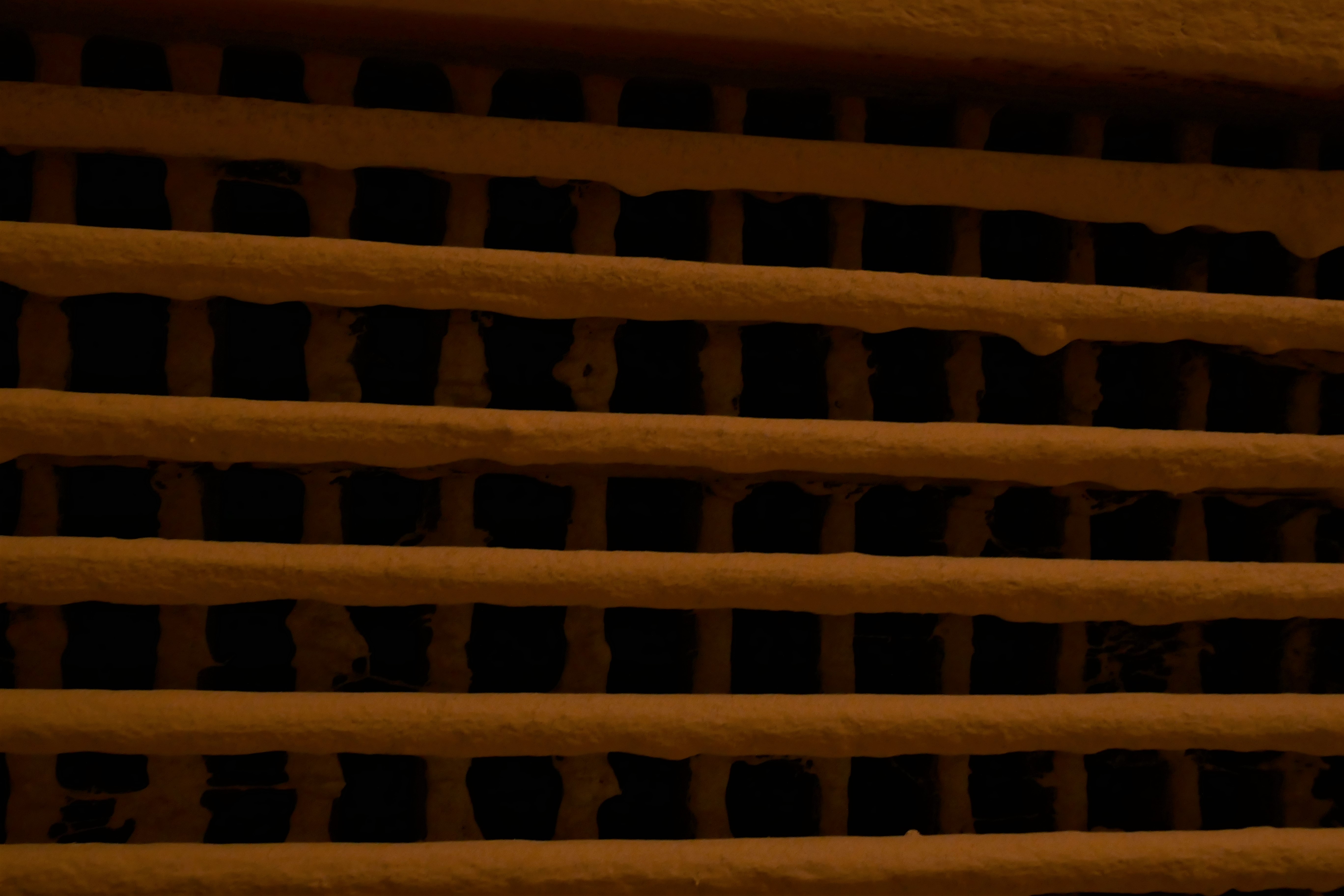
grate for air vent (one)Grate for air vent (two)
The artist Jan Schoonhoven might have found inspiration.
Grate for air vent (detail of one, B&W)
Somewhat hidden, there is a call for connectivity, dating from more than half a century ago.
electric wire and plugs
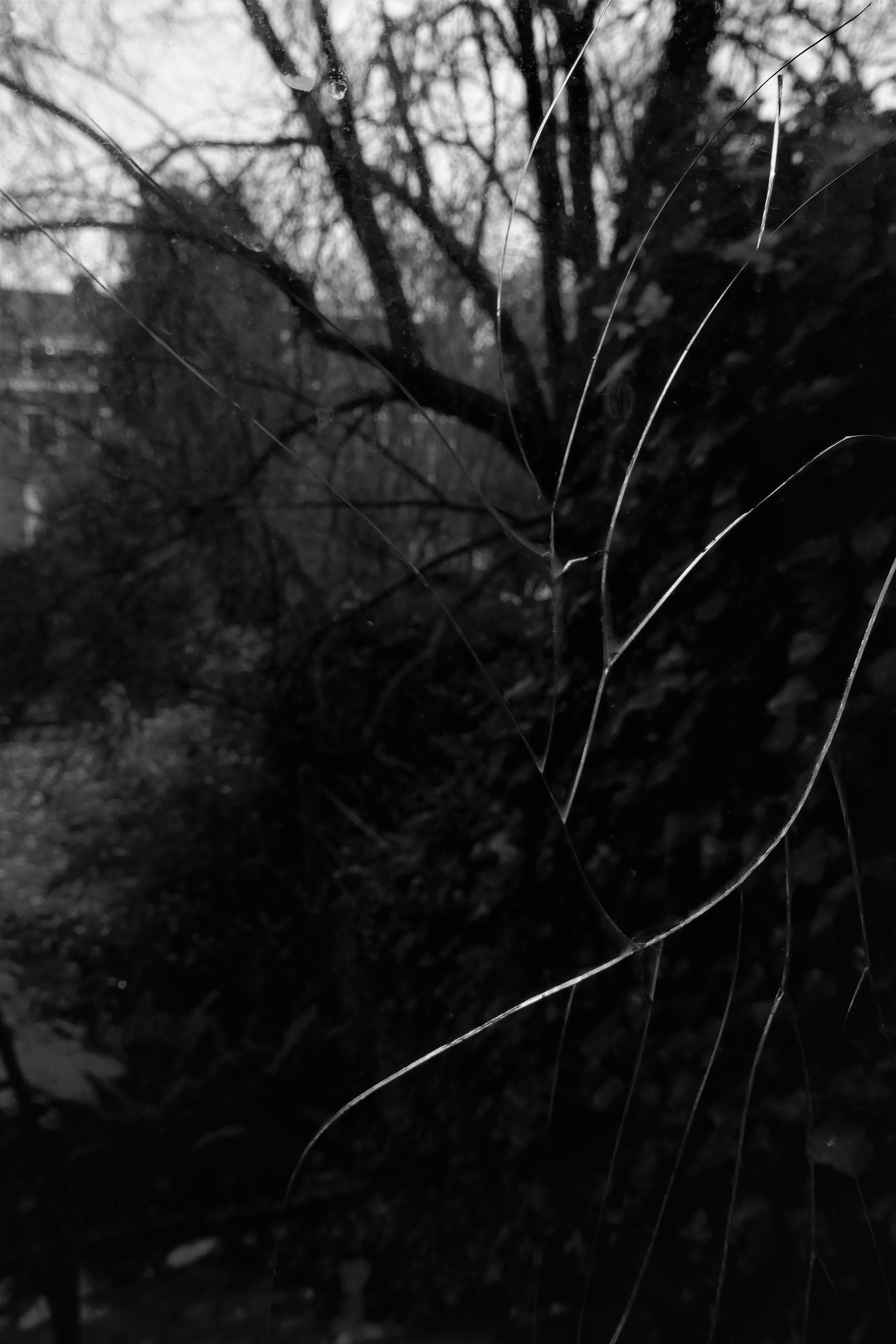
A crack in the window captures the focus.
crack in the window, museum Foam
Outside is different, but the view is still influenced. And strong light placed near historic facades of homes deviates the focus.
two lights near historic facade
While looking outside through the train windows, images are mirrors of movement.
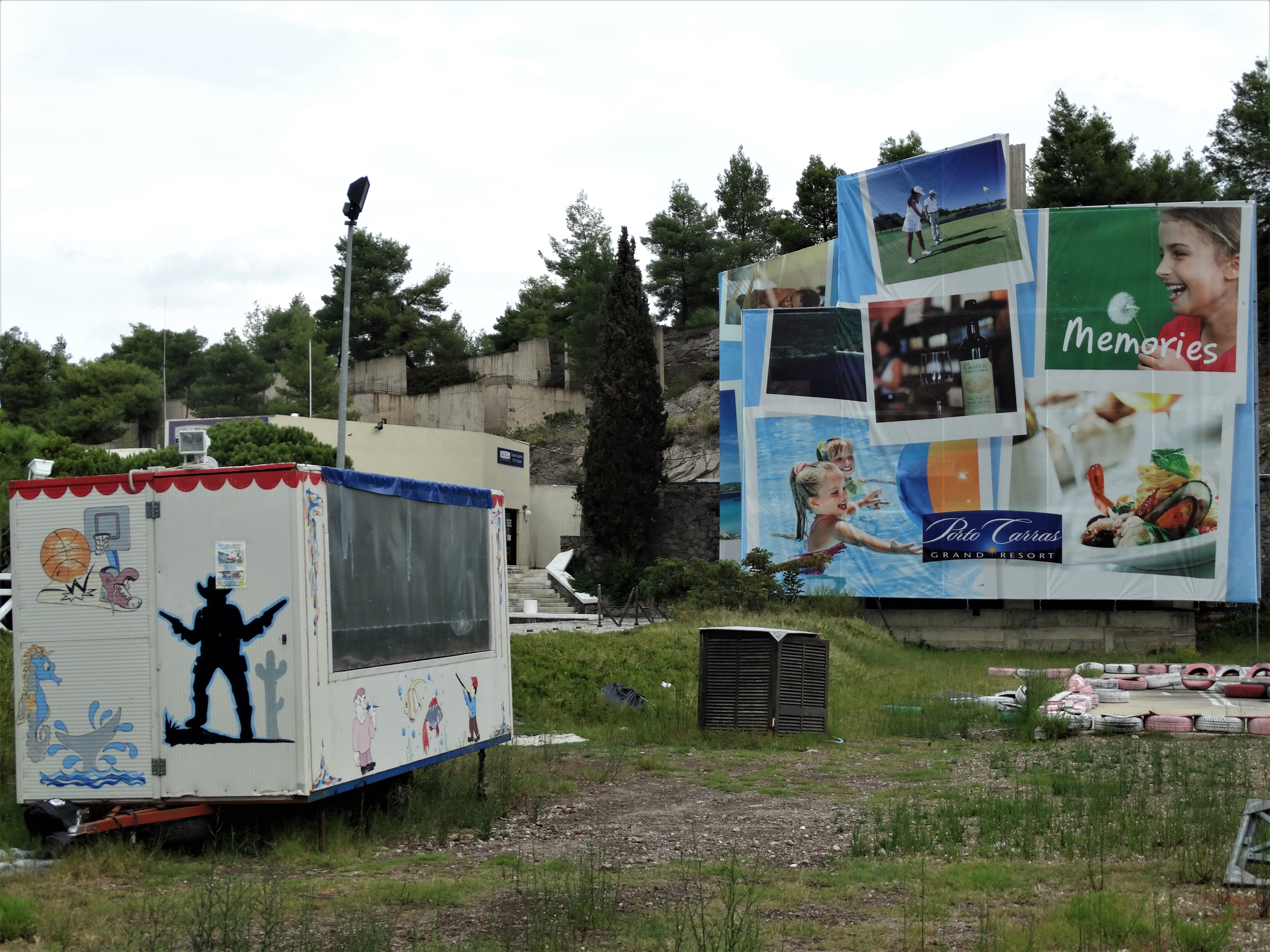
Early autumn 2014, we stayed for some days in big Sun Resort in Greece (Halkidiki, Macedonia). The economic crisis of 2009 had been tempered, but the effects were still visible. Expansion of the resort that had started about eight years earlier, had stopped around 2009-2010, and rapidly, structures that were not finalized got in part demolished.
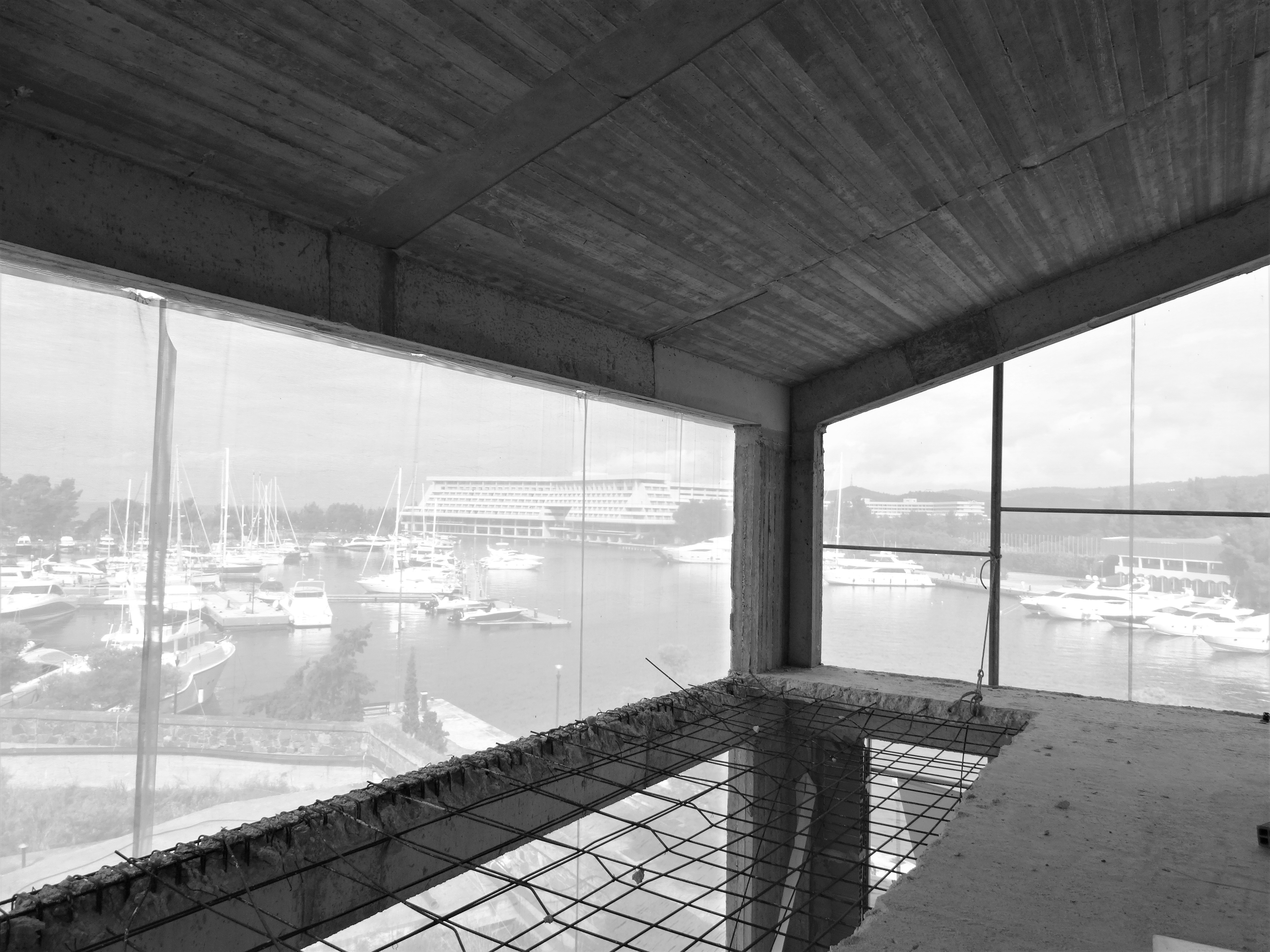
view from unfinished building to the port and hotel of sun resort
This building stands on the south side of the port. From behind the open, unfinished form is seen. From the harbor, the appearance is ‘better’. A screen suggested a finished structure.
building on the edge of the port, from behind
A little further a second, longer unfinished building.
under construction
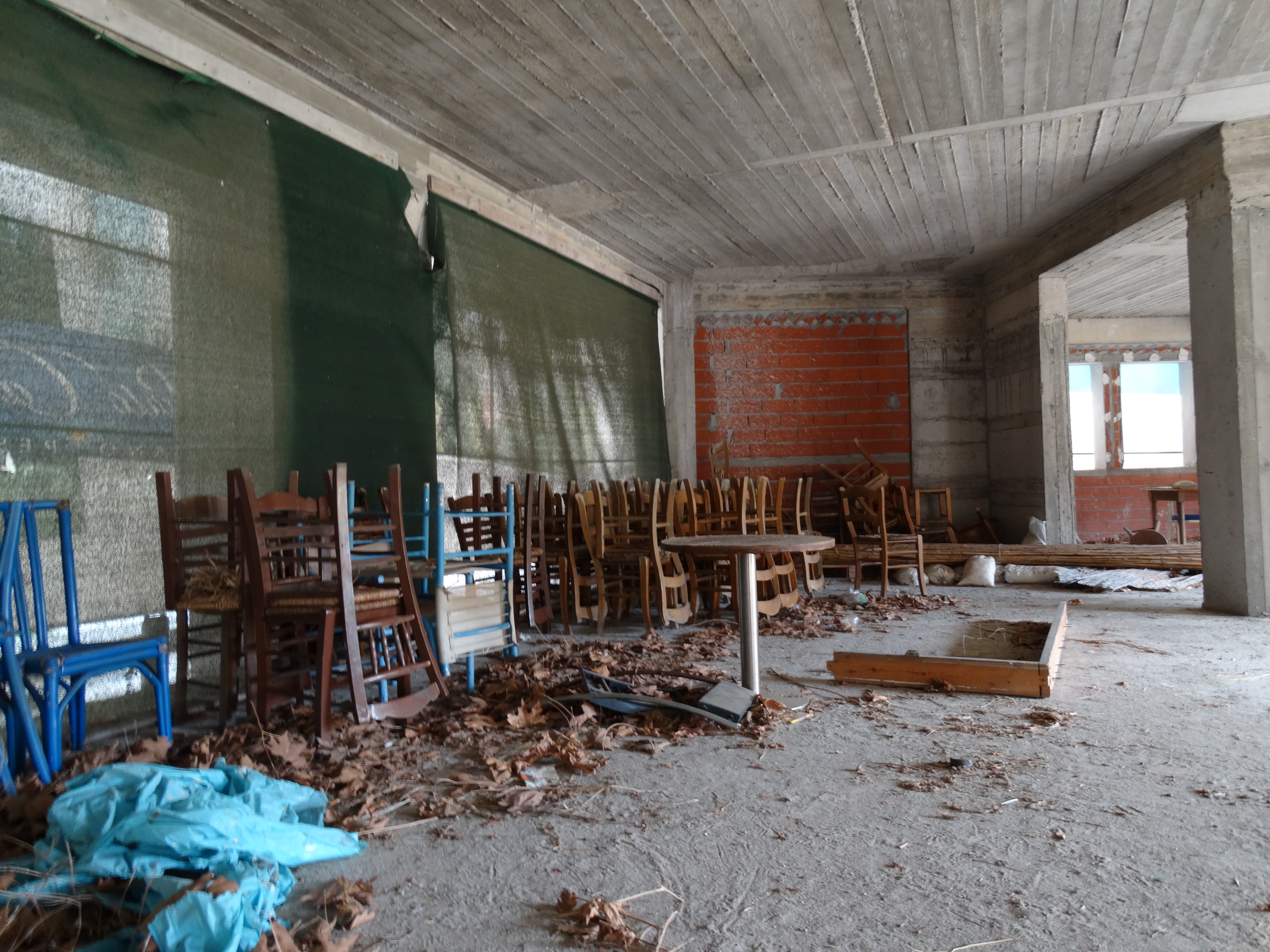
A room of this second building contains stacks of chairs and tables. To the left, again, screens have been placed on which the appearance of a nice finished building is depicted.
furniture
A look from inside through such a screen shows only abstracted forms.
screen in abstraction
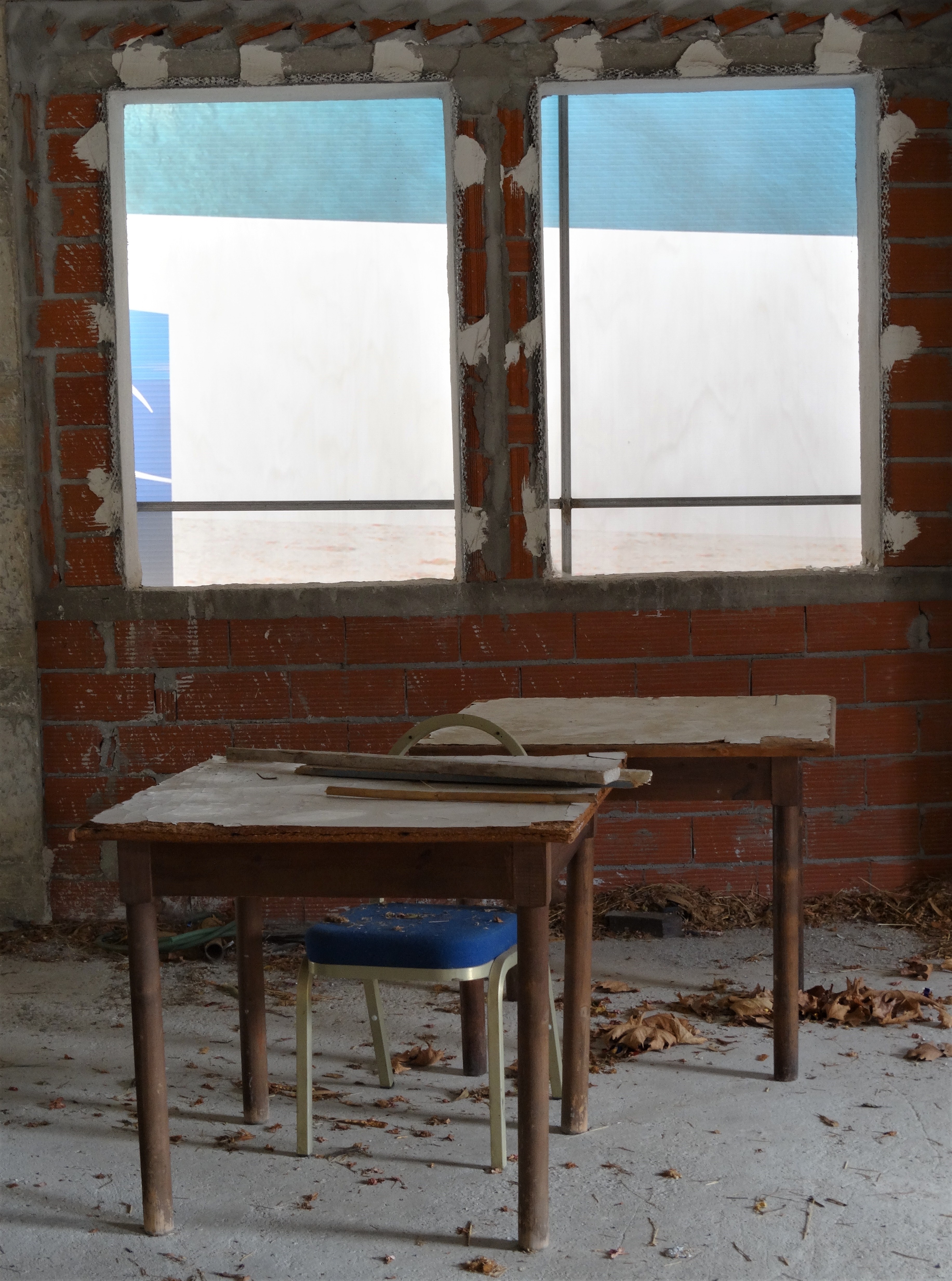
A small, intimate setting.
two tables, one chair
A bit further away from the big hotel and port, attempts to remove old buildings and replace these with new ones, have been suspended. Digging has created a temporary pond.
reflections in time
Note the historic remnants of original dwellings.
past and presence got stuck in time
As part of the expanded sun resort, an open movie theater was created.
on the agenda “Ben Hur”
Other play and fun places were installed, but had been abandoned for some time: good for memories.
all what is left…
Now, November 2020, an even bigger crisis has started. This week, news about first effective vaccine against COVID19 arrived. However, expectations are it will take one year or longer, to treat people at risk, which concerns most of us.
No surprise, that situation at this sun resort has remained much the same, in as far I could discern today from examination of google earth map of the area.
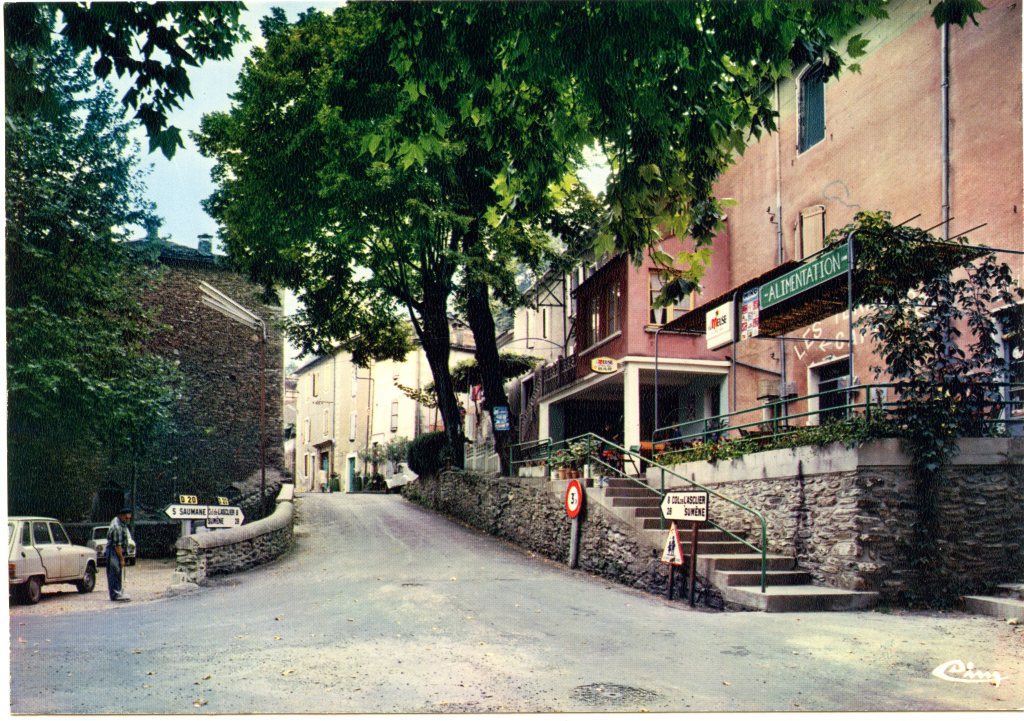
Up until about thirty years ago, villages in France each had their ‘alimentation*’, ‘boulangerie’, boucherie and one or more cafes. In larger villages – as in cities – there was also the ‘quincaillerie’.
Elder men sat on benches smoking pipe while looking at others playing ‘petanque’.
Alimentation in Les Plantiers, (Departement Gard,) about 1980, postcard
As prehistory tells, the earliest humanoid presence in France dates from > 1.5 million years. Up untill 5.000 years ago pockets of human inhabitation consisted of small settlements. In the neolithic period (circa 4500-1700 bc) agriculture was adopted, with parallel development of appropriate tools to work the land and store produced foods. As such, potteries became established. Settlements increased in size.
The following era’s were defined – in archeological terms – by the metal that dominated in tools (and ornaments), with iron, copper, followed by bronze. A major change occurred with the colonization of France (‘Gaul’) by the Roman Empire, of which period many remains are still scattered across the country.
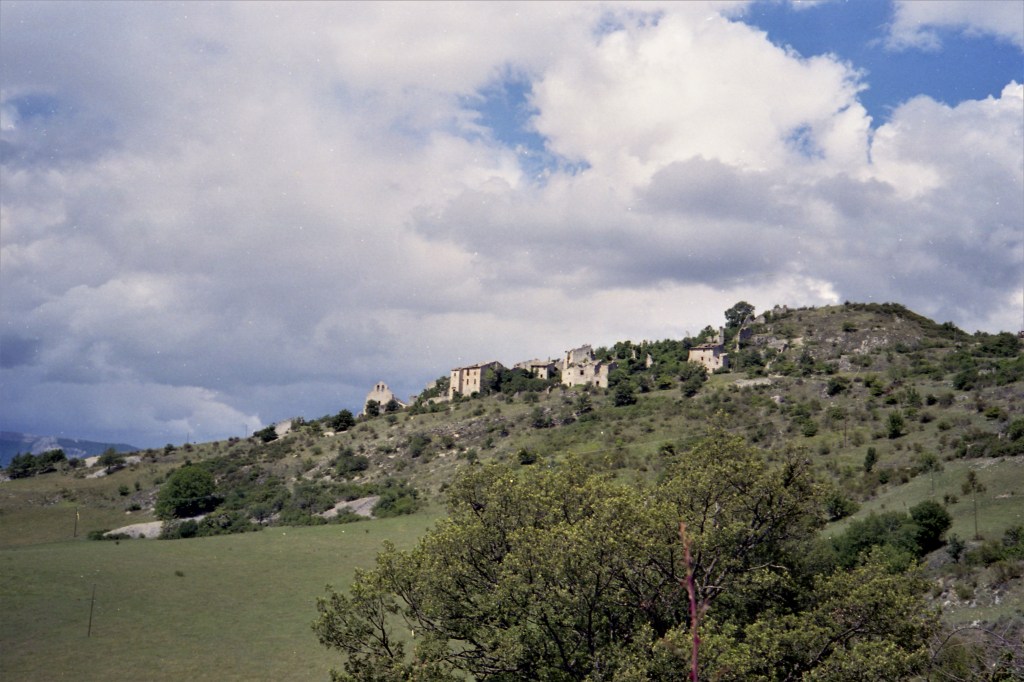
With industrialization in the 19th century the rate increased at which urbanization occurred – with people departing from agricutural regions, a process that continues up to today. Examples of ‘villages abandonnées’ are found all over France’s rural areas. In some regions erosion added to the abandonment of villages.
Abandonned village in The Provence, ca 1980, photo DM
In addition, there occurred the devastating effect of “La grande Guerre” (WW-I), in particular in the north of France. Whole villages were destroyed to the ground, never to be rebuild. In the area above Verdun several of these destroyed villages (‘villages detruits’) can be found. In villages that survived – which ever the size – memorials were raised incised with long lists of victims.
Mort pour la France (Grancey le Chateau, Dep. Côte d’Or) photo DM 2017
However, despite the fact that grenates and bodies were being dug up for decades after the war, life gradually resumed it’s normal course.
Farmer ploughing, Haute-Marne, photo DM 2017
Society in these areas for most of the 20th century still can be defined as people with their connection to their family, work, village, the church, the school, and trade at markets and shops. For travel – if not by car – many railways served to link villages and cities.
Gare de Veynes-Devoluy, (Dep. Hautes-Alpes), photo DM 1997.
Now in 2017
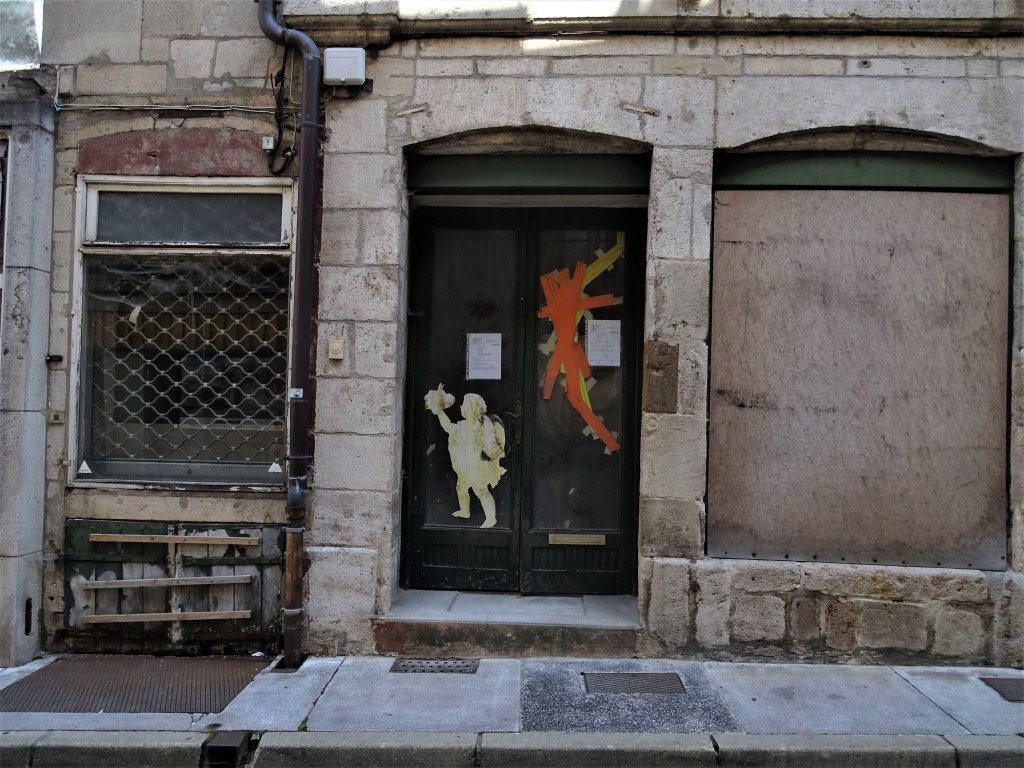
Many villages no longer have their ‘alimentation’ or even ‘boulangerie’. People must go to large shopping centers on the outskirts of larger cities.
Abandonned bakery (‘boulangerie’, in Langres, Dep. Haute-Marne), photo DM 2017.
In small cities like Langres, the same pressure closing smaller stores exists, but the population plus tourists serve to maintain the economy of others.
Boulangerie Maison Gallien, Langres, photo DM 2017
Yet, even in Langres this nice bakery, “Boulangerie Maison Gallien” is threatened with closure, since neighbours – unlike in previous times – now complain about the noise of the bakery at 4 o’clock in the morning. (sign on door: “Nuisances Sonores – une boulangerie en difficulté”, or “Noise Disturbences – a bakery in problems”, post from Le Journal de la Haute-Marne). Likely, ‘modern city people’ working from 8.30 till 17 hours, tolerate less than earlier inhabitants.
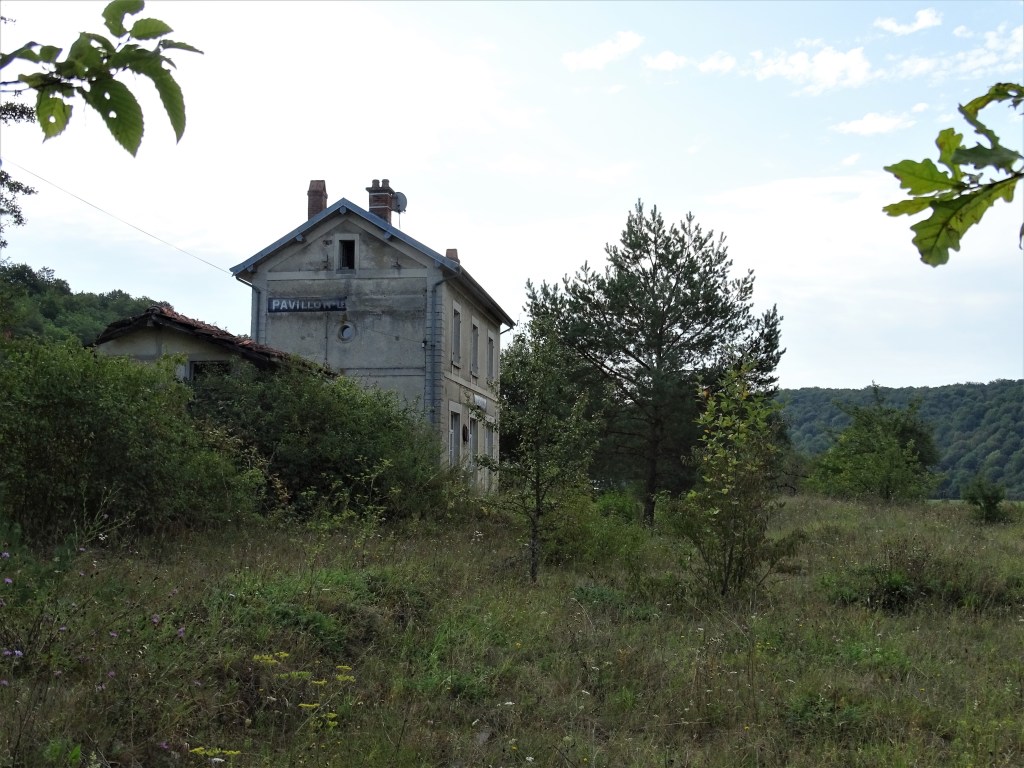
Many railroads have ceased to exist. Schools have closed or are threatened with closure. The ‘cementos’ of society crumbles. Foreigners (mostly dutch) buying houses for use during holidays stop decay of abandoned houses to some extent, but leave emptiness during many months in the year.
Grancey le Chateau-Neuvilles, Le Pavillon (Dep. Côte d’Or) . Abandonned railway station and former track. photo DM 2017
Perspective
The sometimes exorbitant prices of houses / appartments and of living in large cities such as Paris, plus the unhealthy environment (pollution) and the increased number of retired people are all factors that lead to a move out of these cities towards the country. The existence of rapid trains supports this option. For retailers of small shops, however, future remains uncertain.
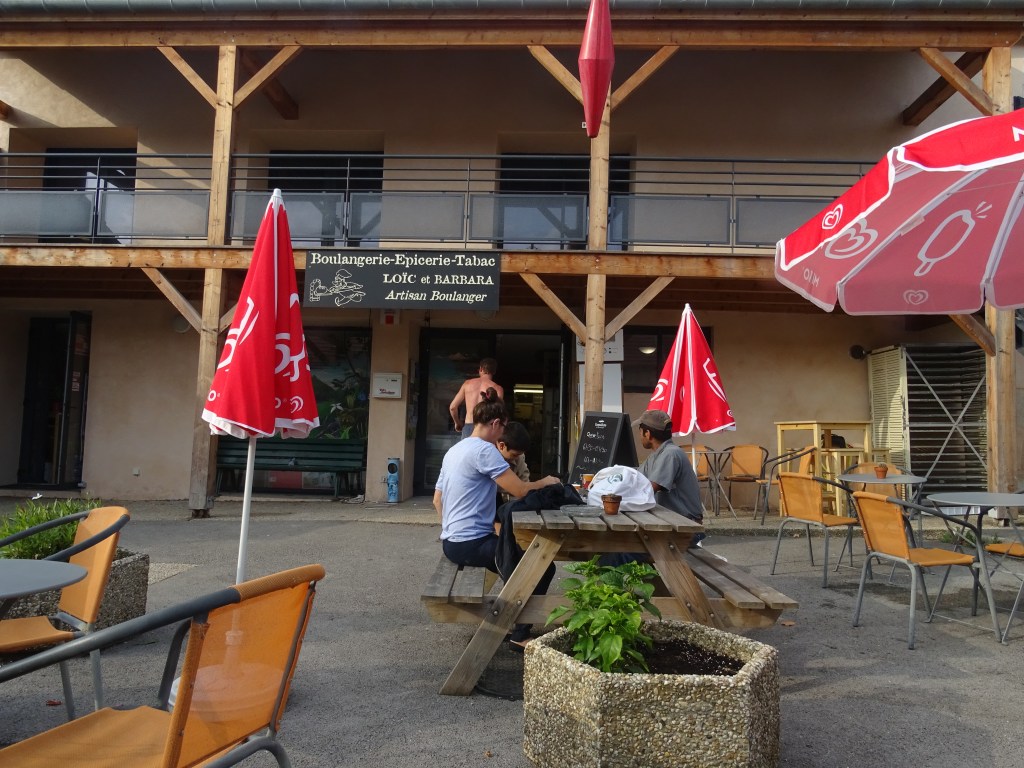
The presence of places of interest, like former Abbey of Auberive, now also Museum of Contemporary Art (focus on ‘independent art’) helps to maintain enterprises such as Boulangerie – Alimentation & Café de l’Abbatiale in Auberive. (Departement de Haute-Marne)
Boulangerie – Alimentation & Café de l’Abbatiale in Auberive, photo DM 2017
Note, added June 1st 2020
The COVID19 Corona-virus pandemie, that also struck France heavily, and led to a lock-down (including inability to move freely for > 1 km from home) for more than 2 months, might stimulate a move from the city to the country.
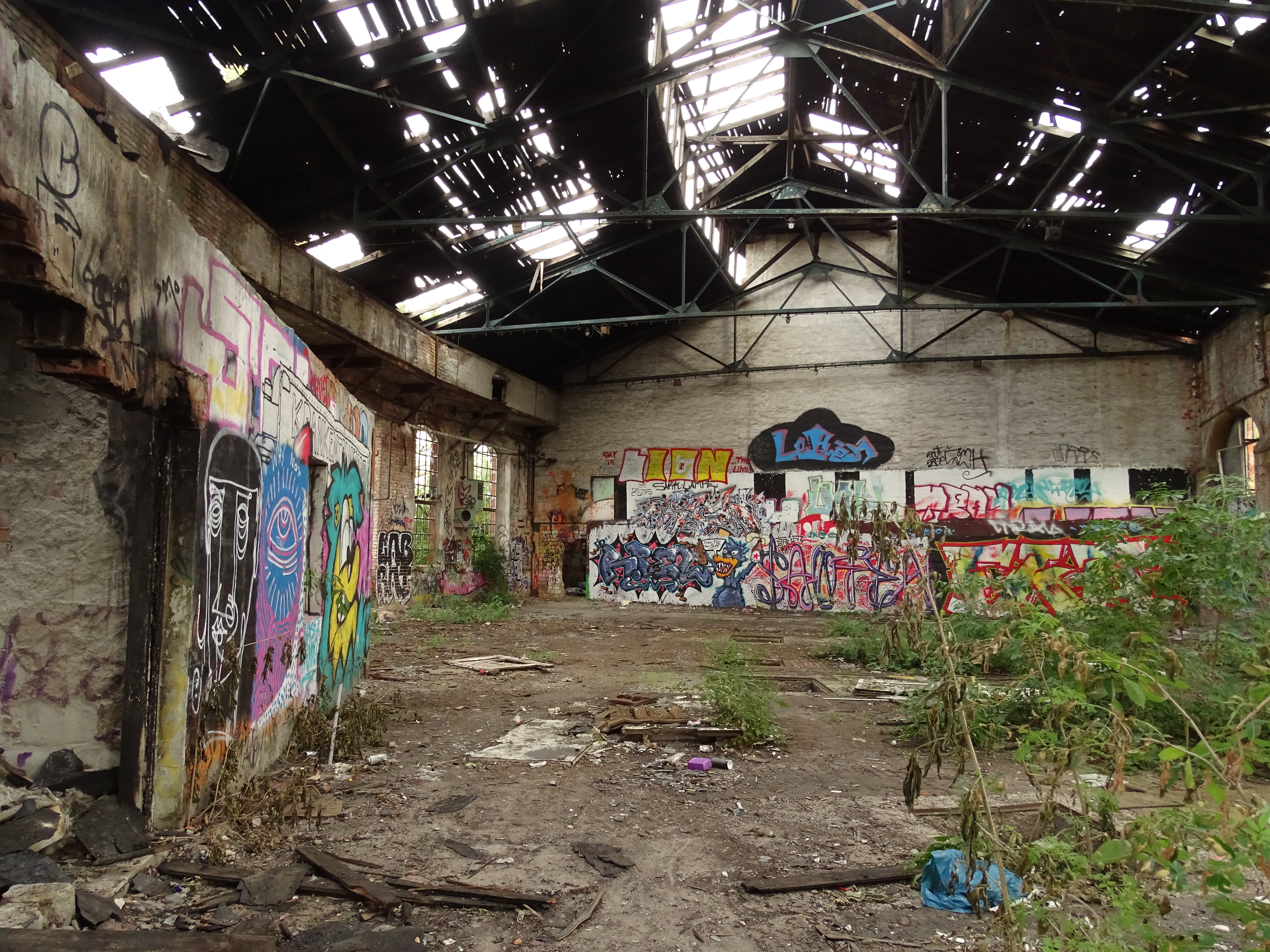
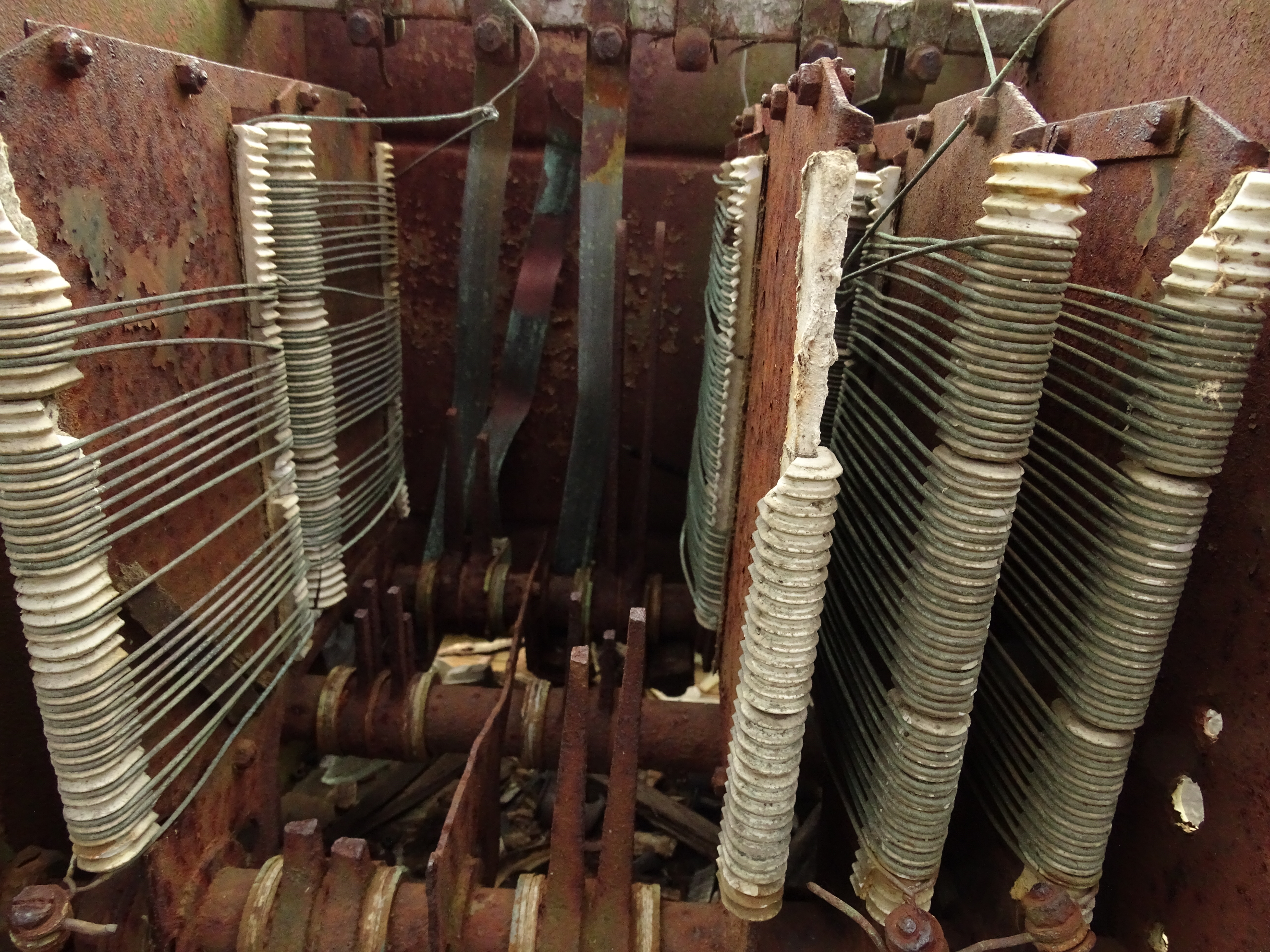
With railways becoming the most important means of transport over land in the 19th century, repair units also had to be established.
Already in 1842, a repair unit for trains was established south of Leipzig (Germany) as the “Bahnbetriebswerk Bayerischer Bahnhof”.
Build in a half-circle, the repair unit allowed several locks to be examined and repaired.
During the second world-war, heavy damage was suffered, with some units repaired after the war, untill around 2000 it was no longer was kept functioning.
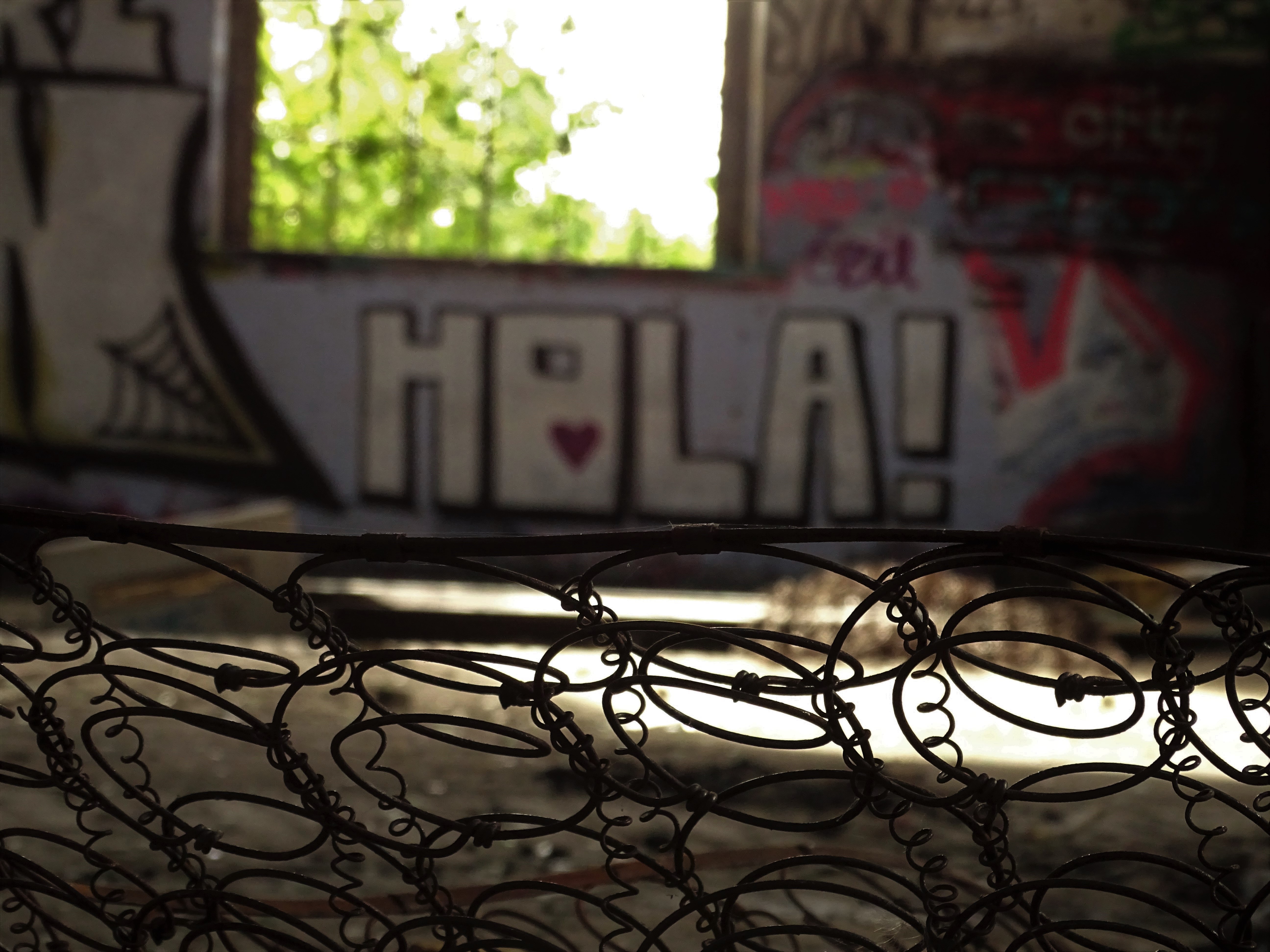
Now, kids can play with skates, and grafitti artists take the opportunity to decorate the abandoned place.
Turning circle allowing trains to enter different sections of the repair unit.
Rijdend van Rijssel (N. Frankrijk) naar het Noorden, passeerden we Bossuit. De kerk-ruine deed ons stoppen en de camera pakken.
Driving from Rijssel / Lille (N. France) to the north, we passed Bossuit. The Church-ruin made us halt and take the camera.
Centrale hof (Z-zijde) / central court (S-side)
Central hof (N-zijde) / central court (N-side)
Alkoof / Alcove
Hoek / Corner
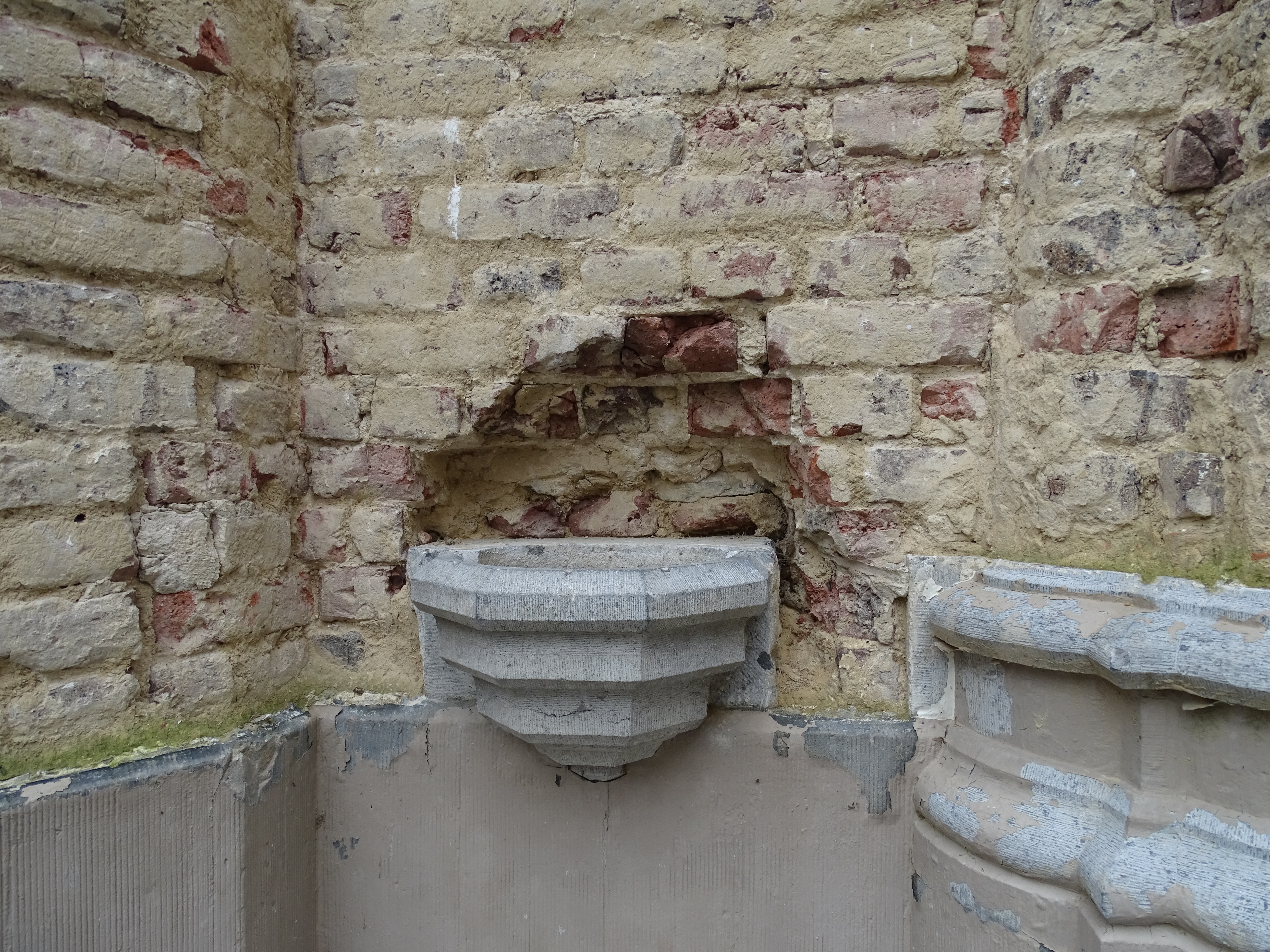
Wijwater-font / bassin for holy-water
Spin-rag / spider web
Meter / meter
Toren / tower
Historie:
De huidige Sint-Amelbergakerk in Bossuit (Avelgem, Belgie) werd in 1857 opgetrokken naar een ontwerp van de Kortrijkse architect P.N. Croquison, en verving toen een oude vermoedelijk Romaanse kerk. De kerktoren moest na de Eerste Wereldoorlog heropgebouwd worden.
In 2008 werd de kerk ontrokken aan het gebruik voor religieuze diensten.
Tot gebruik als kunstruimte werd toen besluiten, en de Brits-Amerikaanse kunstenares Ellen Harvey maakte ontwerp, waarbij invulling als publieke ruimte doel was, met behoud van de kerk als centrale positie de textuur van het dorp. Het dak, deuren en ramen en vloer werden weggenomen en tegen de muren werden klimplanten geplaatst. Er werd een nieuwe terrazzovloer aangelegd. In de vloer werd in licht grijs de schaduw van de kerk van Avelgem verwerkt die in de Eerste Wereldoorlog werd verwoest. Lijnen en volumes, eveneens in het grijs, verwijzen naar de ribben van de gewelven, de contouren van de zuilen, de hoofd- en zijaltaren.
The Sint-Amelga Church in Bossuit (Avelgem, Belgium) was raised in 1857, following a design by architect from Kortrijk, P.N. Croquison, and replaced probably an old Roman church. The tower of the church had to be reconstructed after World-War I.
In 2008, the church was placed out of service for religious purpose.
It was decided to transform the church to an art-space, with function as public space. The British artist Ellen Harvey made a design, that stripped the church of roof, doors and windows and floor, and placement of plants against the wall. The ruin was aimed to remain central in the texture of ther village. A new terazzofloor was laid, with in it was woven the shadow of the church in Avelgem that was destroyed in Word-War-I. Lines and volumes point to ribs of arches, contours of pillars, head and side altars,
People often buy a bed, when entering adulthood. A bigger bed, when living (and sleeping) together.
When getting old, the number of hours in bed often increases, even when sleep is more disturbed and irregular.
Then comes the time, that those who used the bed, will pass away.
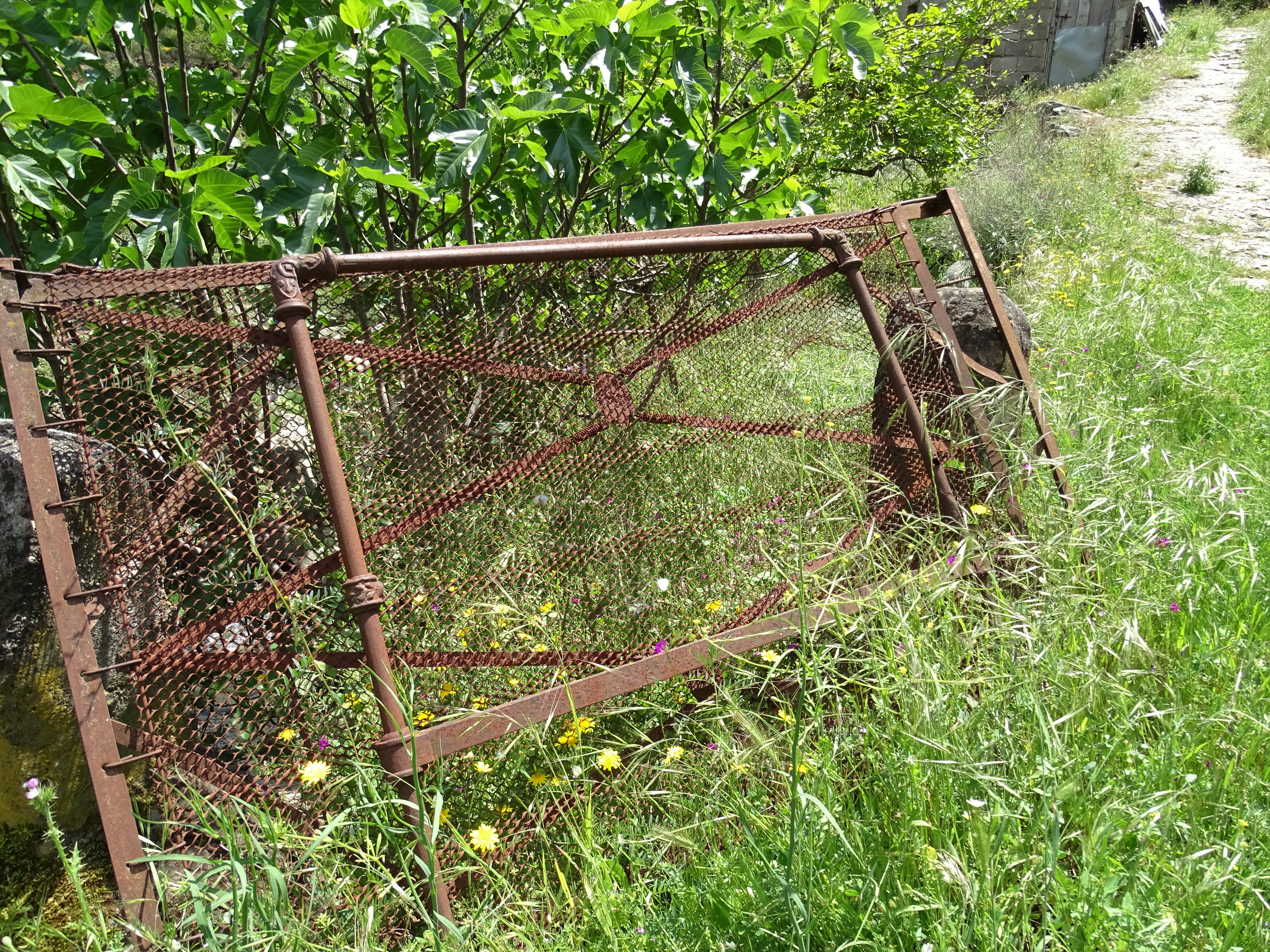
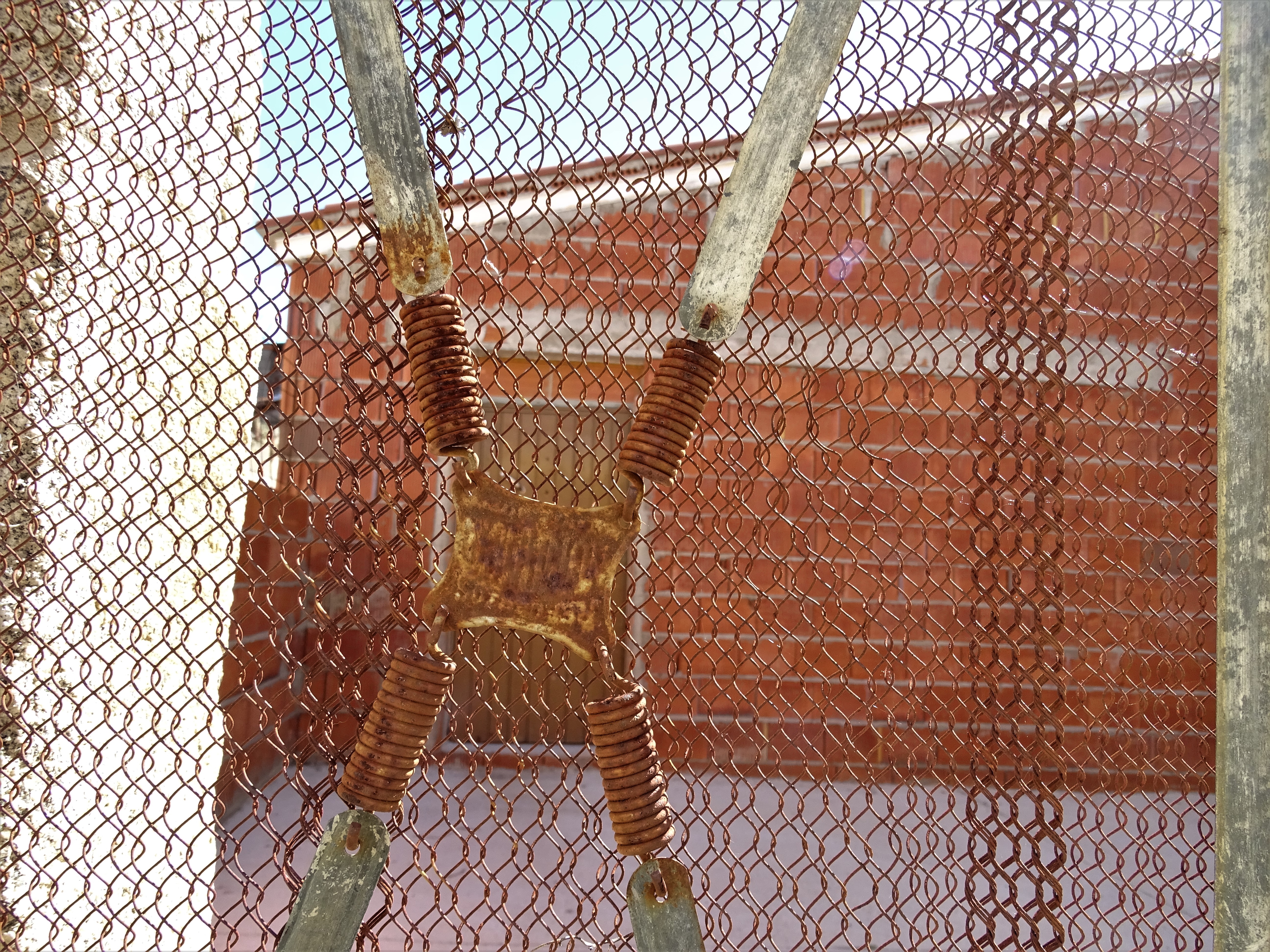
In some regions, people tend to use the bed spiral base, that is left alone, for other purposes. Preferred is their use as part of a fence or gate.
Walking in Las Hurdes (Spain) in 2018, we encountered several such transformations.
Bed spiral turned into a fence (1)
Bed spiral turned into a fence (2)
Bed spiral turned into a fence (3)
Bed spiral turned into a fence (4)
One must not be surprised by the fact, that in the same environment, the number of abandoned houses is high.
House abandoned in Las Hurdes (Spain)
It need more research, to establish whether the transformation of (usable?) bed spirals inherited from parents or grandparents, is caused by unwillingness to sleep on such elements earlier used by people that have passed away, or by the wish to have better quality. Yet, the transformation into fences or gates has significance as signal of the border of states of existence.
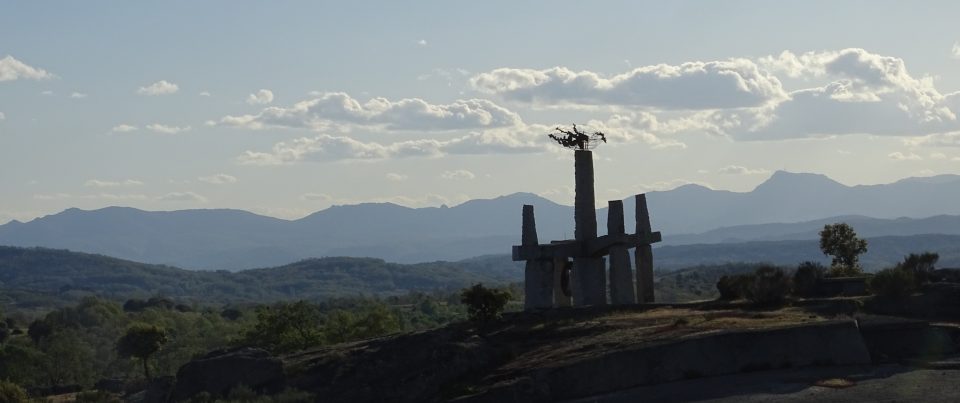
“Curiosity and strangers / are good partners” (Las Hurdes, Spain, photos and text Drager Meurtant, 2018-2019)








































 drager-meurtant